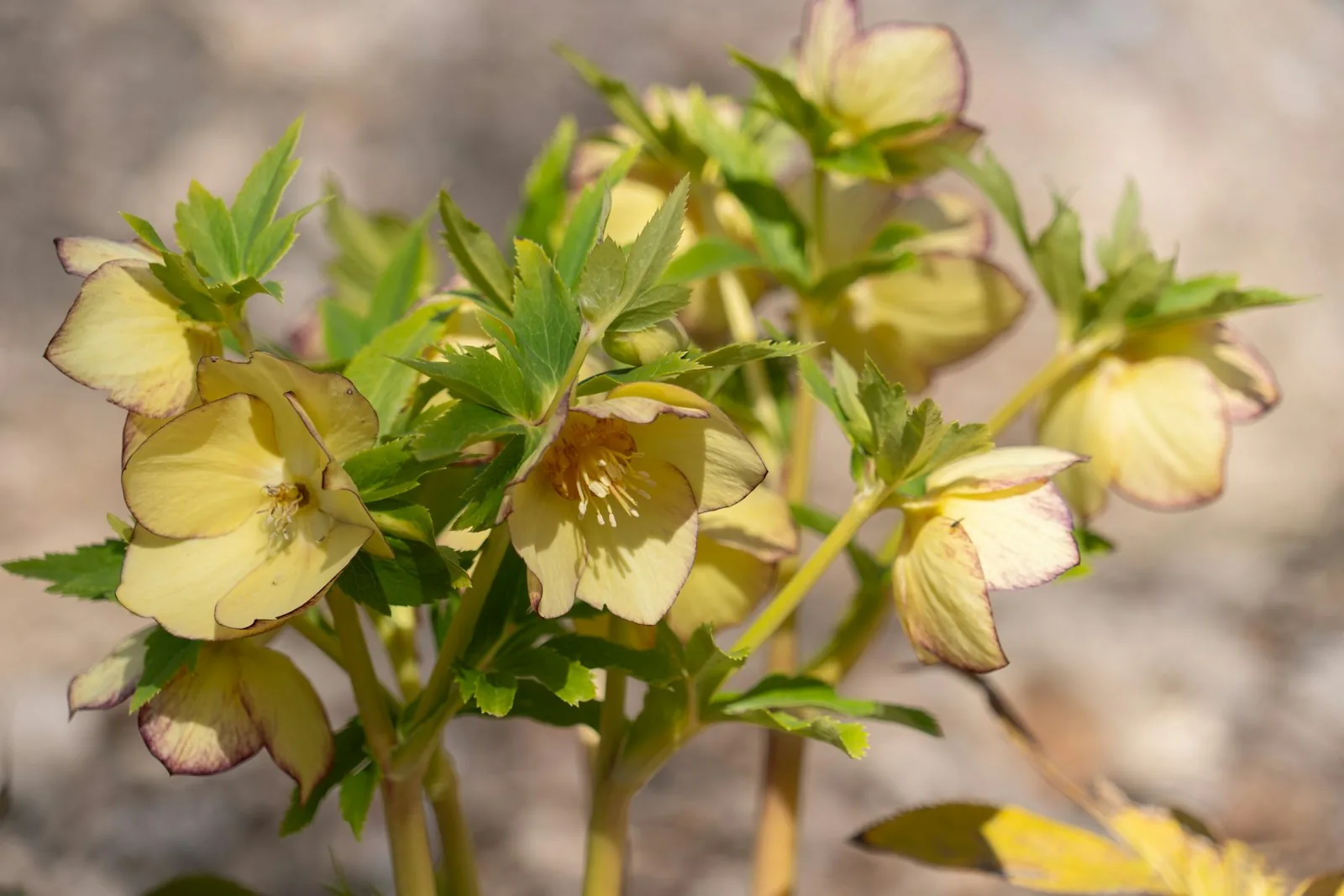
Helleborus orientalis — Lenten rose — blooms when almost nothing else in a temperate garden is alive. In zones 6–7, flowers emerge in February and March, sometimes through snow. The nodding, cup-shaped flowers in cream, pink, purple, deep plum, and white persist for months before fading to green seed heads. The plant is evergreen in most of its range, providing year-round structure in shaded borders. Per Missouri Botanical Garden, it is "perhaps one of the most rewarding late winter/early spring flowering plants available."
I don't grow hellebores in my Melville yard — the combination of full sun in most planting areas and the deer pressure that makes shade-garden plants targets has kept them off my plant list. This guide is sourced from Extension publications and botanical garden resources.
This article contains affiliate links. As an Amazon Associate, we earn from qualifying purchases - at no extra cost to you. We only recommend products we have personally tested or that are the universal first recommendation from university Extension publications. See our full disclosure.
Species and naming — Helleborus orientalis vs. hybrids
The plants sold as "Lenten rose" in U.S. garden centers are most commonly Helleborus x hybridus — complex hybrids involving H. orientalis and other species. Per Missouri Botanical Garden, the name H. orientalis is often used loosely in commerce to include these hybrids, which perform similarly in the garden. All are treated identically for care purposes.
Helleborus niger — Christmas rose. Blooms slightly earlier than Lenten rose (December–January), white flowers. Per NC State Extension Plant Toolbox, it is more demanding in its soil requirements and less adaptable than Lenten rose.
Helleborus foetidus — stinking hellebore. Pale green flowers, deeply divided leaves. Per Missouri Botanical Garden, it tolerates more drought and poorer soil than Lenten rose and is a useful option for dry shade.
For most gardeners, H. orientalis and its hybrids are the starting point — the most available, most adaptable, and most reliably winter-hardy Helleborus species for eastern U.S. gardens.
More like this, monthly
Get the seasonal care notes — no upsell, unsubscribe any time.
One email per month from Thomas: what to plant, what to prune, what's about to break. Cited the same way as the guides.
Free. No spam. Same author as the guide you just read.
Got it — check your inbox to confirm. Welcome.
Keep deer and rabbits out
Liquid Fence uses egg-and-garlic scent. One application lasts 30 days and works on both deer and rabbits. Read our full pick.