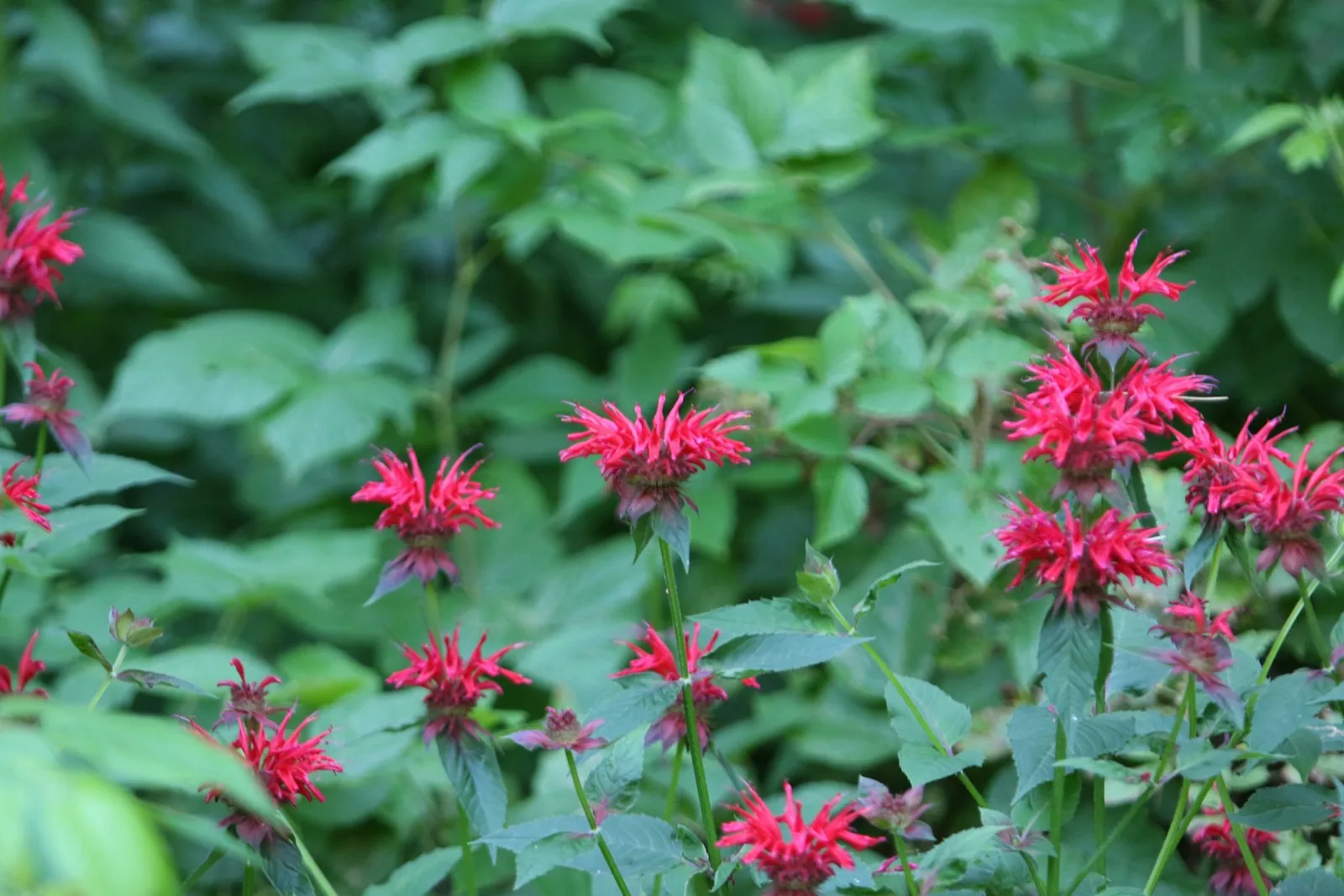
Bee Balm Care: Growing Monarda didyma
title: "Bee Balm Care: Growing Monarda in Your Garden"
—- title: "Bee Balm Care: Growing Monarda in Your Garden" slug: bee-balm-care hub: plants category: Species guide description: "Complete guide to growing bee balm (Monarda didyma) in zones 3–9. Prevent powdery mildew, divide correctly, and maximize bloom. Extension-sourced." date: 2026-06-10 updated: 2026-06-10 author: "Thomas A." reading_time: 9 scientific: "Monarda didyma" zones_min: 3 zones_max: 9 sun: "full sun" deer_resistant: true native: true pollinator: true bloom: "summer" height_min: 2 height_max: 4 —-
Monarda didyma — bee balm, bergamot, Oswego tea — is a native North American perennial with showy summer flowers that attract hummingbirds, bees, and butterflies. It is also a spreader and a powdery mildew magnet if planted incorrectly. Per Missouri Botanical Garden, "plants can spread rather aggressively by underground rhizomes." That warning belongs at the top, not buried in the fine print.
I don't grow bee balm in my Long Island yard — the combination of my yard's high humidity, moderate shade, and the deer pressure that already taxes my other perennials made it a lower priority. This guide is sourced from university Extension publications.
Which monarda do you have?
Monarda didyma — scarlet bee balm. Red flowers, native to the eastern Appalachians. The species most commonly sold in garden centers and the parent of most modern cultivars. Per NC State Extension Plant Toolbox, it grows 2–4 feet tall in zones 4–9.
Monarda fistulosa — wild bergamot. Lavender-pink flowers, native to eastern and central North America. More drought-tolerant than M. didyma per Missouri Botanical Garden, and generally more disease-resistant. A better choice for drier sites or where powdery mildew is a persistent problem.
Hybrids and named cultivars — most garden-center bee balms are M. didyma hybrids or M. didyma x M. fistulosa hybrids selected for disease resistance. 'Jacob Cline' (red), 'Raspberry Wine' (wine-red), 'Marshall's Delight' (pink), and 'Fireball' (red compact) are widely cited by extension publications for improved mildew resistance over the straight species.
USDA hardiness zones
Per Missouri Botanical Garden, Monarda didyma is hardy in USDA zones 4–9. The species is native to North America and reliably cold-hardy throughout the eastern United States. The lower limit is zone 3 for M. fistulosa per NC State Extension.
Light
Full sun is ideal — 6 or more hours of direct sun daily. Per Penn State Extension, bee balm tolerates light shade but blooms best and has the least powdery mildew in full sun with good air movement. In hot, humid zones 7–9, light afternoon shade may reduce heat stress on the flowers without significantly harming the plant.
The relationship between light and powdery mildew is direct: plants in partial shade develop mildew earlier and more severely than plants in full sun. Per Clemson Extension HGIC, improved air circulation and sun exposure are the primary non-chemical controls for powdery mildew.
Watering
Per Missouri Botanical Garden, bee balm "prefers consistently moist soils" and is not drought-tolerant. Aim for 1–1.5 inches of water per week during the growing season, per Penn State Extension general perennial guidance. The plant performs best with consistent moisture — it naturally grows along stream banks and woodland edges in the wild.
Water at the base of the plant, not overhead. Wet foliage in humid conditions accelerates powdery mildew. Drip irrigation or soaker hoses are better than overhead sprinklers for bee balm beds.
Soil
Per Missouri Botanical Garden, bee balm "prefers moist, organically rich, well-drained soils" with a pH of 6.0–6.7. Amend planting beds with 2–3 inches of compost worked into the top foot of soil before planting. Unlike perennial salvia or yarrow, bee balm does benefit from reasonably fertile, moisture-retentive soil — it is not a plant for dry, lean conditions.
Fertilizing
Per Clemson Extension HGIC, a single application of a balanced slow-release fertilizer in early spring is sufficient for most perennials including bee balm. Apply at the label rate in early spring when shoots are 2–3 inches tall. Avoid high-nitrogen fertilizers, which produce lush, disease-susceptible growth. Per NC State Extension, excessive nitrogen increases powdery mildew severity.
Spreading and division
Per Missouri Botanical Garden, bee balm spreads "aggressively" by underground rhizomes and should be divided every 2–3 years to control its spread and rejuvenate the clump. Division also removes the woody, often-dead center that develops in older clumps.
Division timing: Per Penn State Extension, divide bee balm in early spring when shoots are just emerging, before the plant puts energy into flower stalk development. Division in late summer or fall is also possible in zones 5–7 but gives roots less time to establish before winter.
Division process: Dig the entire clump, separate outer divisions with a hori-hori knife or sharp spade, discard the woody center, and replant divisions 18–24 inches apart. Each division should have 3–5 actively growing shoots. Water thoroughly after replanting.
Powdery mildew management
Powdery mildew (Erysiphe monardae or related species) is the most significant disease of bee balm. Per NC State Extension, it appears as a white powdery coating on leaves and stems, typically in mid to late summer. Severe infections cause leaf yellowing and early defoliation but are rarely fatal to the plant.
Prevention:
- Choose mildew-resistant cultivars. Per Rutgers NJAES, cultivars with improved resistance include 'Jacob Cline', 'Marshall's Delight', 'Raspberry Wine', and 'Fireball'.
- Plant in full sun with adequate air circulation — space plants 18–24 inches apart minimum.
- Do not overhead water. Use drip or soaker irrigation.
- Divide every 2–3 years; dense, crowded clumps develop mildew earlier.
- Cut infected foliage to the ground after flowering and remove from the garden.
If mildew is already present, per Clemson Extension HGIC, preventive fungicide sprays (potassium bicarbonate, sulfur, or neem oil) applied before symptoms develop can slow spread. By the time white coating is visible on most leaves, the current season is largely lost — focus on sanitation and cultivar selection for the following year.
Pruning and deadheading
Deadhead spent flower heads promptly. Per Missouri Botanical Garden, deadheading may encourage some rebloom, though bee balm is not as reliably reblooming as perennial salvia after cutback. Cut spent flowers just below the flower head, above the next set of leaves.
Cut the plant to the ground in late fall after frost kills the foliage, or in early spring. Remove all old plant material from the garden — do not compost if powdery mildew was present during the season.
Companion plants
- Phlox (Phlox paniculata) — blooms at the same time in mid to late summer, similar height. Contrasting white or pink with bee balm's red extends the color range.
- Daylily (Hemerocallis) — bold, coarser form next to bee balm's more textured flower clusters.
- Black-eyed Susan (Rudbeckia fulgida) — native meadow companion that tolerates similar moist-to-average conditions.
- Joe-pye weed (Eutrochium purpureum) — tall native perennial for the back of a border; both attract monarch butterflies and bees.
- Coneflower (Echinacea purpurea) — similar native meadow habitat, overlapping bloom period.
Common problems
| Symptom | Most likely cause | Fix |
|---|---|---|
| White powder on leaves | Powdery mildew | Plant resistant cultivar; full sun; divide regularly |
| Plant spreading beyond bed | Rhizome expansion | Divide every 2–3 years; edge with spade each spring |
| Dead center in clump | Natural aging of interior rhizomes | Divide and discard woody center |
| Poor bloom | Too much shade; or poor drainage | Relocate to full sun; improve drainage |
| Wilting despite moist soil | Root rot or crown rot | Check drainage; plant is likely unsalvageable in soggy site |
| Hummingbirds present | Normal and desirable | Observe |
| No hummingbirds on lavender cultivar | Species/cultivar preference | Red-flowered forms attract hummingbirds most reliably |
Frequently asked
When does bee balm bloom?
Per Missouri Botanical Garden, Monarda didyma blooms in mid to late summer — typically July through August in zones 5–7. The bloom period is 3–4 weeks. Unlike perennial salvia, cutback after the first flush does not reliably produce a second flowering period for most cultivars, though removing spent heads keeps the plant looking tidy and may produce scattered rebloom.
Is bee balm edible?
Yes. Per Missouri Botanical Garden, both the leaves and flowers of Monarda didyma are edible. The plant was used by Native American groups including the Oswego people (from whom "Oswego tea" gets its name) as a tea and culinary herb. The flavor is reminiscent of oregano with bergamot notes. Leaves can be used fresh or dried; flowers are edible as a salad garnish. Ensure plants have not been treated with pesticides before using any part for food.
Is bee balm invasive?
Monarda didyma is native to eastern North America and is not classified as invasive, but per Missouri Botanical Garden, it spreads aggressively by rhizomes and can overtake garden beds if not managed. Regular division every 2–3 years is essential in borders with other perennials. In naturalistic plantings, its spreading habit can be an asset — the running root system fills in quickly and outcompetes weeds.
Does bee balm attract deer?
Per Rutgers NJAES, bee balm is rated as "occasionally severely damaged" by deer — it is on the more palatable end of the perennial spectrum. In Long Island's high-deer-pressure zone, bee balm is not a deer-resistant choice. A deer repellent program or physical fencing is warranted if deer are a significant problem in the garden.
Recommended gear: Best deer repellent: Liquid Fence vs Bobbex vs Plantskydd — our buyer's guide covering picks for every budget, ranked by Extension publication consensus and personal use.
Sources
- Missouri Botanical Garden — <a href="https://www.missouribotanicalgarden.org/PlantFinder/PlantFinderDetails.aspx?kempercode=b929">Monarda didyma</a>.
- NC State Extension Plant Toolbox — <a href="https://plants.ces.ncsu.edu/plants/monarda-didyma/">Monarda didyma</a>.
- Penn State Extension — <a href="https://extension.psu.edu/perennials-in-the-landscape">Perennials in the Landscape</a>.
- Clemson Extension HGIC — <a href="https://hgic.clemson.edu/factsheet/perennial-garden-flowers/">Perennial Garden Flowers</a>.
- Rutgers NJAES — <a href="https://njaes.rutgers.edu/pubs/publication.asp?pid=FS1312">Landscape Plants Rated by Deer Resistance</a>.
- Missouri Botanical Garden — <a href="https://www.missouribotanicalgarden.org/PlantFinder/PlantFinderDetails.aspx?kempercode=c673">Monarda fistulosa</a>.