Best deer repellent: Liquid Fence vs Bobbex vs Plantskydd
Repellents reduce deer browse damage but do not eliminate it. Rotate active ingredients between applications. Extension research shows putrescent egg and blood-based products perform best.
outdoorplantcare-20). We earn a small commission at no cost to you. Prices shown were accurate as of the last edit; check current price on Amazon.
| Pick | Product | Price | Buy |
|---|---|---|---|
| Top pick | Liquid Fence Deer & Rabbit Repellent | $17.12 | Check price |
| Budget pick | Plantskydd dried blood powder | Varies | Check price |
Our picks in detail
Liquid Fence Deer & Rabbit Repellent
Egg-and-garlic scent-based deer repellent. Sprays on foliage and lasts 30 days per application.
What we like
- Rain-resistant once dry
- Works on rabbits and deer
- Concentrate goes a long way
Trade-offs
- Smells strong the first day
- Reapply every 30 days or after heavy pruning
Plantskydd dried blood powder
Dried blood powder deer repellent. Fear-based (not scent-only), lasts 3-4 months per application.
What we like
- 3-4 months per application
- Rain-resistant
- Rated most effective by university trials
Trade-offs
- Smells like a butcher shop when wet
- Powder version needs a hose-end sprayer
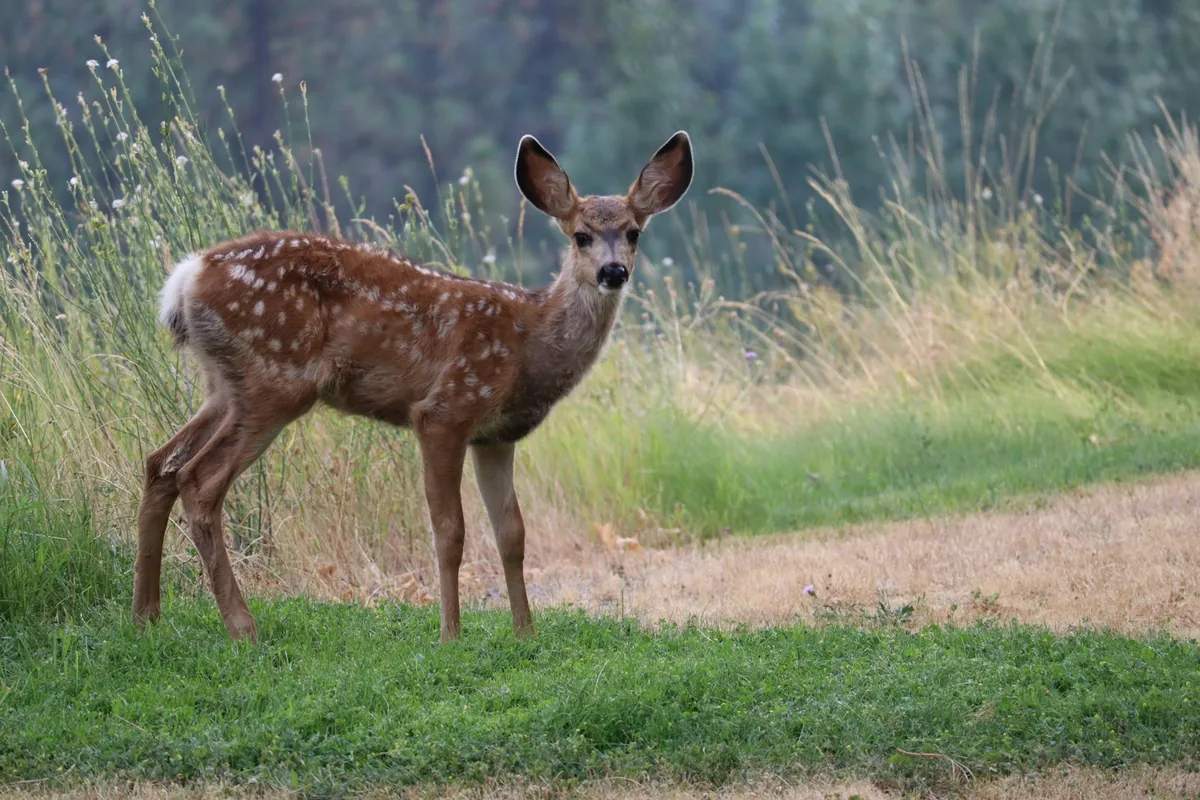
I garden in Melville, Long Island — moderate-to-high deer pressure, roughly suburban-woodland edge. I have had deer browse hostas to the soil, eat the flower buds off bigleaf hydrangeas in March, and snap tulip stems at night in April. I have used repellents for five years. My current rotation is Liquid Fence deer repellent spray alternated with Plantskydd deer repellent, applied on a roughly four-to-six-week cycle depending on season and damage levels. It is not a perfect system. Nothing short of an 8-foot fence is a perfect system. But it has reduced deer damage in my yard to acceptable levels.
This guide covers the three categories of repellent chemistry, the three products I recommend for home garden use, what the extension research actually shows about effectiveness, and why rotation matters more than any single product.
This page contains affiliate links. If you purchase through them, I earn a small commission at no cost to you. See the affiliate disclosure for details.
This article contains affiliate links. As an Amazon Associate, we earn from qualifying purchases - at no extra cost to you. We only recommend products we have personally tested or that are the universal first recommendation from university Extension publications. See our full disclosure.
Understanding deer repellent categories
Commercial deer repellents fall into three main categories based on their active ingredients. The categories work differently, which is why rotating between them is more effective than sticking with one product.
Category 1: Putrescent egg solids (contact/odor repellents)
Products: Liquid Fence deer repellent, Deer Away BGR, Deer Off
See on AmazonPutrescent (rotting) egg solids are the most widely tested category in extension research. Per Penn State Extension, "contact repellents work by taste and must be applied directly on the plant." They repel both by odor and taste. Per University of Maryland Extension research, putrescent egg-based products have "longevity: 1 to 3 months or more" and are applied directly on plants.
In the UMD three-year trial, Deer Away BGR (putrescent egg-based) had the lowest browse loss of any repellent tested in the first year of the study: 10% browse loss versus 68% on untreated controls.
Category 2: Blood-based products (odor repellents)
Products: Plantskydd deer repellent, Repellex
Blood protein-based products (typically dried blood or blood meal) repel deer primarily by triggering an avoidance response — deer associate blood scent with predator activity. Per UMD Extension, Plantskydd deer repellent's active ingredient is "blood protein" with a mode of action described as "odor." Longevity: "1-3 months or more."
Plantskydd deer repellent is approved for use in organic production. The concentrated powder form is mixed with water and sprayed on plants. Per the UMD Extension study, Plantskydd deer repellent had 26% browse loss in the 2000 trial (compared to 68% on untreated controls).
Category 3: Fish/garlic/taste combinations
Products: Bobbex, Hot Pepper Wax (capsaicin-based)
Products like Bobbex combine multiple active ingredients: fish by-products, garlic, egg, and fertilizer components. They work by both odor and taste. Per UMD Extension, Bobbex had 27% browse loss in 2001 and 7% in 2002, with an overall average of 17% — among the best performers across the full three-year trial.
Per Penn State Extension, contact repellents also include "hot pepper sauce (capsaicin)" — products like Hot Pepper Wax. Capsaicin-based repellents work by making plant tissue unpleasant to taste when bitten.
The rotation principle
The most important principle in deer repellent use is rotation. Per UMD Extension: "It is generally recommended that repellents be changed with each application. Deer will become used to repellents over time so changing repellents often will keep the deer herd cautious and confused."
In my Long Island yard, I alternate between Liquid Fence deer repellent (egg/garlic) and Plantskydd deer repellent (blood protein) on a roughly monthly cycle. Using the same repellent every application is less effective because deer learn to ignore the familiar scent. Switching active ingredient categories disrupts that habituation.
See on AmazonEffectiveness data: what the research shows
The University of Maryland Extension study (2000-2002) tested eight commercial repellents in a rigorous three-year trial in Montgomery County, Maryland, with deer pressure exceeding 100 deer per square mile. The results provide the clearest available data on comparative effectiveness.
Per UMD Extension:
| Treatment | Browse loss (avg. across years) |
|---|---|
| Untreated control | 49% |
| Deer Away BGR (putrescent egg) | 12% |
| Bobbex | 17% |
| Tree Guard (bitrex) | 17% |
| Liquid Fence deer repellent | 20% |
| Repellex (blood) | 16% |
| Deer 1 (eggs + garlic) | 21% |
| Plantskydd deer repellent (blood) | 26% |
| All treated average | 18% |
The takeaway: all repellents reduced browse damage significantly versus untreated controls. No single repellent was dramatically superior across all three years. Per UMD Extension: "At sites with the highest deer pressure, repellents held damage in check for six to eight weeks, in many cases. At sites with less deer pressure, 10 to 12 weeks of effectiveness was common."
See on AmazonOver the three-year trial, only 27 of 140 plants (19%) treated with repellents had browse damage above 35%, versus 21 of 28 untreated control plants (75%) above 35%. The repellents work; they do not eliminate damage entirely.
The three products
Liquid Fence deer repellent — the widely available rotation partner
Liquid Fence deer repellent is an egg- and garlic-based repellent that combines contact (taste) and area (odor) deterrence. It is available as a ready-to-spray and as a concentrate.
See on AmazonPros: Very widely available (every garden center, big-box stores), works quickly (apply weekly for the first month, then monthly per the manufacturer protocol), RTU version is convenient. In the UMD study it had 36% browse loss in 2001, 4% in 2002 — the big variability across years may reflect weather or deer population differences.
Cons: The smell after application is genuinely unpleasant (rotting egg and garlic). It dissipates within a day or two but is noticeable for the first 24 to 48 hours. Per the UMD study, cost per gallon as concentrate was $8.75 — reasonable for the coverage provided. Some users report occasional phytotoxicity on sensitive plants (clematis is mentioned anecdotally) — test on a small area first.
How I use it: Spray all new growth and vulnerable plants in spring, then approximately monthly through summer. Reapply after heavy rain per manufacturer instructions.
Plantskydd deer repellent — blood-based, longer interval
Plantskydd uses dried blood as the primary active ingredient and is formulated for both ready-to-use spray and as a water-soluble powder concentrate. It is OMRI-certified for organic use.
Pros: Longer intervals between applications than egg-based products — manufacturer claims 3 to 6 months in winter on dormant plants, 4 to 6 weeks during active growth. Per UMD Extension, blood-based products have "longevity: 1-3 months or more." Effective on Rutgers deer-resistance categories as an early-season deterrent. Works as a repellent from the first application when deer have not yet established a feeding pattern on your plants.
Cons: Per the UMD study, the concentrate form was "difficult and time consuming to mix and keep in suspension and tended to clog the sprayer." The liquid RTU version avoids this. The smell is strong (blood/iron). Cost per gallon is higher than Liquid Fence deer repellent — per the UMD data, $17.12 per gallon from concentrate. Does not break down into fertilizer components in the same way iron phosphate does; do not apply to edible plants at harvest.
How I use it: I use the liquid RTU spray. Apply to vulnerable plants before deer have found them — prevention is more effective than chasing existing feeding patterns. Rotate with Liquid Fence deer repellent every application cycle.
Bobbex — the combination formula
Bobbex is a fish- and egg-based combination product. Per UMD Extension, it contains "fish and/or beef by-products" and repels "by both odor and taste." In the study it performed well — 27% browse loss in 2001, 7% in 2002, with an average of 17%.
Pros: Good effectiveness in the UMD data, especially in the second year of application; the combination of active ingredient categories (fish protein + eggs + garlic) provides multiple deterrent pathways; fertilizer components benefit treated plants. Per application interval per the study: "every 10 to 14 days during the growing season."
Cons: Similar smell issues to Liquid Fence (fish-based products are not subtle). Higher per-gallon cost than Liquid Fence concentrate ($13.25/gallon concentrate per UMD data). Less widely stocked at retail than Liquid Fence; usually available online or at specialty garden centers.
Best for: Gardeners who want a single rotation partner with different active ingredients from Liquid Fence. Using Liquid Fence (egg/garlic) and Bobbex (fish/egg) as alternates provides less ingredient-category rotation than Liquid Fence + Plantskydd, but is still more effective than staying with one product.
Application timing and technique
Per Penn State Extension: repellents "work best if you apply them in the dormant season on dry days when temperatures are above freezing." Per UMD Extension: "apply repellents before the first sign of damage to prevent deer from establishing a feeding pattern at the site." Once deer have established a feeding habit on a plant, repellents are harder to break.
Critical timing rules:
- Apply before damage starts, not after deer find the plant
- Apply when temperatures are above 40°F and rain is not expected for several hours
- Reapply after heavy rain
- In the growing season, treat new growth regularly — new foliage is untreated foliage
- High-pressure sites require reapplication every 6 to 8 weeks; lower-pressure sites, 10 to 12 weeks, per UMD Extension
Application technique: Spray to run-off on all parts of the plant accessible to deer. Focus on terminal buds, flower buds, and new growth — these are the highest-value targets deer seek. Apply in calm conditions to avoid drift.
Deer pressure context: what the ratings mean
The Rutgers NJAES Landscape Plants Rated by Deer Resistance publication rates plants from "Rarely Damaged" to "Frequently Severely Damaged." Repellents work best on plants in the middle categories ("Seldom Severely Damaged" to "Occasionally Severely Damaged"). Plants rated "Frequently Severely Damaged" (tulips, hostas, yews) in high-pressure areas may require repellent plus physical barriers for adequate protection.
In my own yard, plants rated "Rarely Damaged" (lavender, coneflower, sedum, Russian sage) receive no repellent and are left alone. Hostas, hydrangeas, and tulips get regular repellent treatment. This targeted approach reduces the volume of product used and focuses protection where it actually matters.
What does not work (or is marginal at best)
Soap bars: Not tested in controlled studies. Anecdotally inconsistent. Not recommended as a primary control.
Coyote urine: In the Connecticut Agricultural Experiment Station study referenced by Bobbex, coyote urine had a 53% protection index versus Bobbex at 93%. Marginal effectiveness.
Single repellent, same product every application: Per UMD Extension, deer habituate to familiar scents. Using one product repeatedly without rotation becomes progressively less effective.
Repellents alone on highly damaged plants in high-pressure zones: Fencing is the only reliable solution for plants that deer are actively and heavily browsing in a high-pressure yard. Repellents slow the damage; they do not stop a hungry deer that has already learned to eat your hostas.
Common problems
| Symptom | Most likely cause | Fix |
|---|---|---|
| New browse damage shortly after application | Repellent washed off by rain; new untreated growth | Reapply after rain; treat new growth specifically |
| Repellent stopped working after months of use | Deer habituated to scent | Rotate to different active ingredient category |
| Phytotoxicity (burned leaf tips) | Repellent applied in hot sun or too concentrated | Apply in evening or early morning; verify dilution |
| Damage to plants rated "Rarely Damaged" | Unusual pressure (food scarcity, high local deer density) | Add repellent; consider fencing for highest-value plants |
Frequently asked
Which deer repellent is most effective?
Per University of Maryland Extension research, putrescent egg-based products (Deer Away BGR, similar to Liquid Fence) performed best in the first year of their three-year study, with 10 to 12% browse loss versus 68% untreated. Bobbex and blood-based products performed well in subsequent years. No single product was dominant across all three years. The most important factor is rotation: changing active ingredients between applications, per UMD Extension, because "deer will become used to repellents over time."
How often should I apply deer repellent?
Per UMD Extension, fish- and beef-based products like Bobbex should be reapplied "every 10 to 14 days during the growing season." Putrescent egg and blood-based products last "1 to 3 months or more." In high deer pressure conditions, repellents may require reapplication every 6 to 8 weeks; at lower pressure, 10 to 12 weeks. After any heavy rain, check plants and reapply if the product has washed off.
Is Liquid Fence safe for dogs?
Liquid Fence's active ingredients (egg solids, garlic oil) are not acutely toxic to dogs or cats at normal application rates. The manufacturer labels it as safe for pets and children once dry. Do not let pets access freshly sprayed, still-wet plants. Per Penn State Extension, most commercial repellents are not registered for use on edible plants (with a few exceptions like Deer Stopper); do not apply to vegetables you will harvest.
Do deer repellents work in winter?
Yes, and winter is often when deer damage is worst — food sources are scarce, and evergreens, yews, and dormant flower buds are targeted. Per Penn State Extension, "contact repellents work best if you apply them in the dormant season on dry days when temperatures are above freezing." Apply before winter damage begins, not after. Blood-based products like Plantskydd are especially noted for winter effectiveness — the manufacturer claims 3 to 6 months on dormant plants.
Sources
- University of Maryland Extension — Using Commercial Deer Repellents to Manage Deer Browsing.
- Penn State Extension — Orchard Wildlife — Integrated Management of White-Tailed Deer.
- Rutgers NJAES — Landscape Plants Rated by Deer Resistance.