Best Bypass Loppers for Thick Branches (2026)
title: "Best Bypass Loppers for Thick Branches (2026)"
outdoorplantcare-20). We earn a small commission at no cost to you. Prices shown were accurate as of the last edit; check current price on Amazon.
| Pick | Product | Price | Buy |
|---|---|---|---|
| Top pick | bypass loppers | $45 | Check price |
| Budget pick | Felco F-2 bypass pruners | $60 | Check price |
| Upgrade pick | Corona BP 3180 bypass pruner | $20 | Check price |
| Also great | Silky ZUBAT hand saw | $45 | Check price |
Our picks in detail
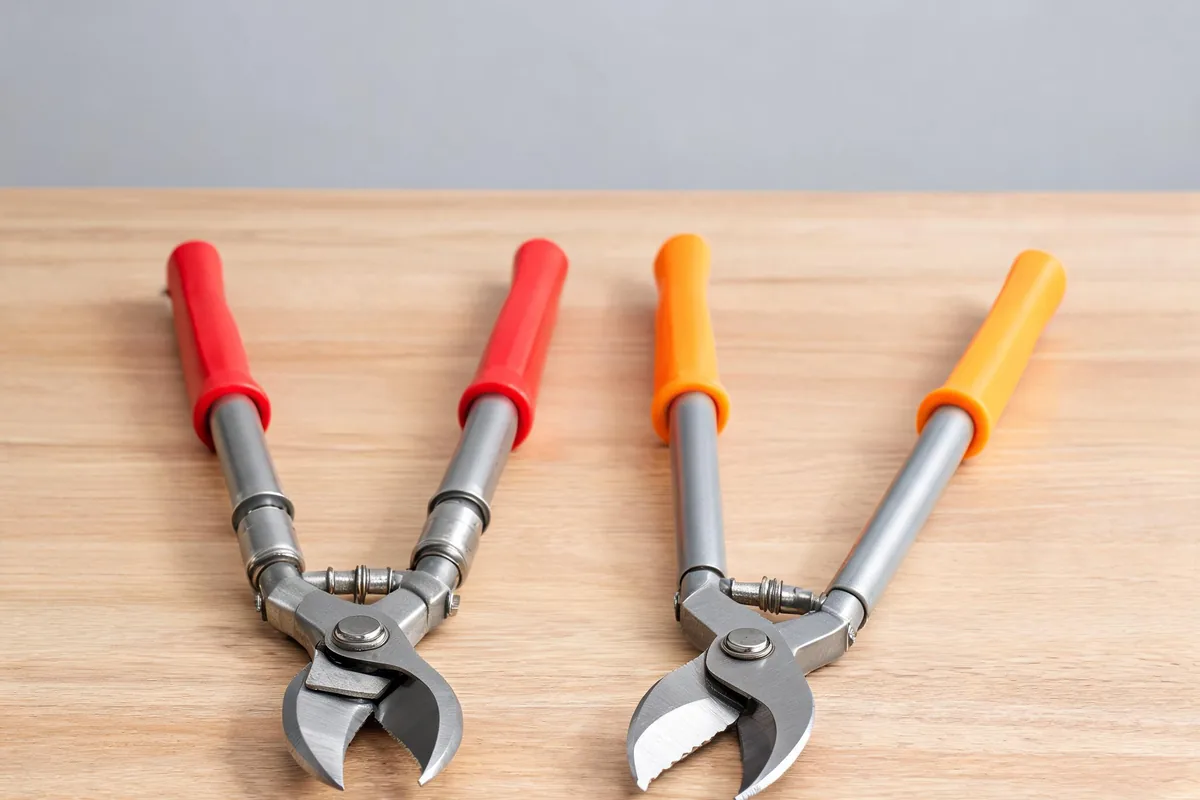
bypass loppers
Long-handled bypass loppers reach up to shoulder height and cut branches up to 1.5 inches thick.
What we like
- More leverage than pruners for thick branches
- Bypass blade for clean cuts on live wood
- Compound gears reduce grip force
Trade-offs
- Bulkier to store than pruners
- Not for anything thicker than 1.5 inches
Felco F-2 bypass pruners
The industry-standard bypass pruner. Swiss-made, all parts replaceable, sap groove keeps the blade clean.
What we like
- Cuts up to 1-inch branches cleanly
- Replaceable blade, springs, and screws for life
- Ambidextrous grip options
Trade-offs
- Premium price ($60 range)
- Overkill if you prune a small garden a few times a year
Corona BP 3180 bypass pruner
A workhorse bypass pruner at half the price of the Felco. Forged steel blades, comfortable grip.
What we like
- Handles 3/4-inch branches
- Available at most home centers
- Replaceable blade
Trade-offs
- Not quite the precision of higher-end pruners
- Grip can feel bulky for smaller hands
Silky ZUBAT hand saw
Razor-sharp curved-blade pruning saw. Cuts on the pull stroke through 4-inch branches in seconds.
What we like
- Curved blade grabs the wood on the pull
- Replaceable Silky blade
- Scabbard included
Trade-offs
- Premium price ($45 range)
- Overkill for pencil-thick branches
This article contains affiliate links. As an Amazon Associate, we earn from qualifying purchases - at no extra cost to you. We only recommend products we have personally tested or that are the universal first recommendation from university Extension publications.
Loppers are the tool for branches between 1 inch and 2 inches in diameter — too thick for hand pruners, not yet thick enough to justify a pruning saw. Per UF IFAS Gulf Coast Research, bypass loppers (two blades passing each other, like scissors) produce cleaner cuts on live plant material than anvil loppers (a single blade pressing against a flat jaw) because they slice rather than crush the wood. Crushed wood at the cut site heals more slowly and provides a larger entry point for pathogens.
The Fiskars PowerGear2 is the one lopper in our catalog. It applies a gear-driven mechanical advantage to reduce the hand force required for thick-branch cuts — a meaningful functional difference from standard compound-pivot loppers, especially when cutting the woody canes of roses, the thick stems of hydrangeas, or the old wood of a vigorously growing privet hedge.
Table of Contents
- Loppers vs. hand pruners vs. pruning saw: the size ladder
- Bypass vs. anvil loppers
- Our pick: Fiskars 32" PowerGear2 Bypass Loppers
- What to look for in any lopper
- Comparison table
- Pruning with loppers: technique and timing
- FAQ
Loppers vs. hand pruners vs. pruning saw: the size ladder {#size-ladder}
Matching the tool to the branch diameter produces cleaner cuts and prevents tool damage:
| Branch diameter | Tool | Example products |
|---|---|---|
| Up to 1 inch | Hand pruners | Felco F-2 bypass pruners, Corona BP 3180 bypass pruner 3180 |
| 1 to 2 inches | Loppers | Fiskars PowerGear2 |
| 2 to 4 inches | Pruning saw | Silky ZUBAT hand saw |
| Over 4 inches | Chainsaw or arborist | — |
Per Cornell Cooperative Extension, forcing a hand pruner through a stem above its rated capacity (typically 1 inch) creates a ragged, crushing cut rather than a clean slice. The same logic applies to loppers — using them on stems over 2 inches produces poor cuts and stresses the pivot mechanism.
See on AmazonBypass vs. anvil loppers {#bypass-vs-anvil}
Per UF IFAS Gulf Coast Research, bypass loppers cut by passing two blades past each other, limiting tissue damage to the material being removed. Anvil loppers press a single blade against a flat lower jaw, which crushes the lower portion of the cut. For all cuts on live plant material, bypass is the correct choice.
See on AmazonThe one exception: anvil loppers require less hand strength than bypass loppers of the same blade size, which makes them useful for gardeners with arthritis or grip strength limitations, particularly on dead or dry wood. Per UF IFAS, anvil designs are acceptable for cutting dead material where tissue quality at the cut site is not a concern.
For the cuts that loppers are typically used for — removal of thick live canes on roses and shrubs, structural pruning of fruit trees, cleaning up a vigorous hedge — bypass is the right design.
Our pick: Fiskars 32" PowerGear2 bypass loppers {#our-pick}
Fiskars 32" PowerGear2 Bypass Loppers — approximately $45 to $55
See on AmazonWhy we picked this
The key feature is the PowerGear2 gear mechanism. Standard loppers use a simple pivot point. The PowerGear2 adds a gear-driven compound mechanism that amplifies the force applied at the handles. Fiskars states a 3x force multiplication versus standard single-pivot loppers. Whether the exact multiplier is 3x is less important than the practical result: branches that would require significant effort with a standard lopper cut more easily with the PowerGear2.
The 32-inch handle length provides additional mechanical advantage over shorter loppers (28 inches). At 2 inches of cutting capacity, the PowerGear2 handles the full range of tasks that loppers are appropriate for.
The handles are coated aluminum — lightweight, corrosion-resistant, and durable. The low-friction coating on the blade reduces sap adhesion, which is a practical feature during heavy pruning sessions when sap buildup causes blades to drag.
Honest limitations
Gear mechanisms add a maintenance consideration. The PowerGear2's gear assembly requires occasional cleaning and lubrication. Debris accumulation in the gear track can degrade the mechanism over time. Wipe the gear area after use and apply a drop of oil to the pivot and gear surfaces annually.
Not designed for branches over 2 inches. The rated capacity is 2 inches. Forcing the loppers through a 2.5-inch branch stresses the gear mechanism and produces a poor cut. Size up to the Silky ZUBAT pruning saw for anything thicker.
Weight. At approximately 2 pounds, the PowerGear2 is heavier than simple aluminum bypass loppers (typically 1.2 to 1.5 pounds). Over extended pruning sessions, this matters. The gear mechanism adds weight in exchange for effort reduction per cut.
What to look for in any lopper {#what-to-look-for}
Cutting capacity: Rated in inches of maximum branch diameter. Match to your actual cutting needs — oversized loppers for small branches are heavy and unwieldy; undersized loppers for large branches produce poor cuts and fail.
Bypass vs. anvil: Bypass for live plant material, as discussed.
Handle length: 25 to 32 inches is the standard range. Longer handles = greater mechanical advantage = less effort per cut, but also more weight and less maneuverability in tight spaces.
Handle material: Fiberglass is strong and absorbs vibration better than aluminum. Aluminum is lighter. Steel handles are heavy and unnecessary. Avoid cheap plastic handles.
Blade quality: Hardened steel blades stay sharp longer. Low-friction coatings (PTFE or similar) prevent sap buildup.
Replaceable blade: Like hand pruners, loppers worth buying should have replaceable blades. Sharpening loppers is more difficult than sharpening hand pruners — replacement is often more practical.
Comparison table {#comparison-table}
| Fiskars PowerGear2 | Standard bypass loppers | Anvil Loppers | |
|---|---|---|---|
| Mechanism | Gear-driven compound | Single pivot | Single pivot |
| Cutting capacity | 2 inches | 1.5-2 inches | 2 inches |
| Force required | Low (3x reduction) | Standard | Lower than bypass |
| Best for | Live woody branches | Light to medium work | Dead/dry wood |
| Handle length | 32 inches | 25-30 inches | 25-30 inches |
| Weight | ~2 lbs | ~1.2-1.5 lbs | ~1.2-1.5 lbs |
| Price | $45-55 | $20-40 | $15-35 |
Pruning with loppers: technique and timing {#technique}
Cut placement
Per Cornell Cooperative Extension, make lopper cuts just outside the branch collar — the slightly swollen area where the branch meets the trunk or parent branch. Do not leave a stub (which provides entry for decay fungi and fails to heal over) and do not cut flush to the trunk (which removes the branch collar's protective tissue). The correct cut is at the angle of the branch collar, outside it.
Timing
Per University of Minnesota Extension, the best general pruning time for most woody shrubs is late winter to early spring before bud break — this is when plants are dormant, wounds heal quickly when growth resumes, and pest and disease transmission is lower. Spring-blooming shrubs (lilac, forsythia, quince) are the exception: prune them immediately after flowering to avoid removing next year's flower buds.
Sanitation
Per University of Minnesota Extension, disinfect lopper blades between plants when cutting diseased material. Use 70% isopropyl alcohol — wipe blades, allow to air dry, then proceed. For fire blight on apple or pear, use 10% bleach solution and rinse thoroughly after, as bleach corrodes metal.
Frequently asked {#faq}
When should I use loppers instead of a pruning saw?
Use loppers for branches up to 2 inches in diameter where a clean, quick cut is needed. Per Cornell Cooperative Extension, loppers produce cleaner cuts than saws on smaller-diameter material because saws leave saw marks on the cut surface. For branches over 2 inches, the force required to lopper-cut exceeds the tool's design, producing a crushing cut — transition to the Silky ZUBAT pruning saw.
How do I sharpen loppers?
Use a diamond file or whetstone on the beveled face of the bypass blade only — the back (flat) face is not sharpened. Per UMN Extension, maintain the factory bevel angle. A lopper blade that has been sharpened at a different angle from the factory bevel will cut at a wrong angle and require significantly more force. If the blade is significantly nicked or damaged, replacement is usually more practical than extensive regrinding.
Can I use loppers on roses?
Yes. Loppers handle old canes on established roses (Rosa spp.) that are too thick for hand pruners. The Fiskars PowerGear2's cutting capacity is more than adequate for the basal canes of hybrid tea or shrub roses. For the fine work of shaping and deadheading, switch to bypass hand pruners. Wear rose gauntlet gloves for both tasks — see our best garden gloves guide.
—-
Sources
- UF IFAS Gulf Coast Research — Anvil Pruners
- Cornell Cooperative Extension — Home Gardening
- University of Minnesota Extension — Pruning Trees and Shrubs
- University of Minnesota Extension — Clean and Disinfect Gardening Tools