Best Indoor Seed Starting Setup (2026)
title: "Best Indoor Seed Starting Setup (2026)"
outdoorplantcare-20). We earn a small commission at no cost to you. Prices shown were accurate as of the last edit; check current price on Amazon.
| Pick | Product | Price | Buy |
|---|---|---|---|
| Top pick | Jiffy seed starter kit | $15 | Check price |
| Budget pick | seedling heat mat | $15 | Check price |
| Upgrade pick | Barrina T5 LED Grow Light (6-pack, 2ft) | $50 | Check price |
Our picks in detail
Jiffy seed starter kit
A tested pick in this category (around $15).
What we like
- Recommended for most gardeners
- Widely available on Amazon Prime
- Multiple size options
Trade-offs
- Prices fluctuate — check current on Amazon
- Read recent reviews before buying
seedling heat mat
Warms seed trays to 68-77°F for faster, more even germination. Non-negotiable for peppers.
What we like
- Cuts pepper/eggplant germ time in half
- Waterproof and safe
- Pairs with a thermostat controller
Trade-offs
- No thermostat included on the base version
- Can overheat if left on 24/7 without a controller
Barrina T5 LED Grow Light (6-pack, 2ft)
Full-spectrum LED strips. Bright enough for seed starting or a small indoor herb bench.
What we like
- Full spectrum (T5) — 6500K blue-heavy
- 6-pack covers a 4x4 bench for under a dollar per hour
- Chain lights end-to-end
Trade-offs
- No dimmer or timer built in
- Not enough intensity for flowering fruit indoors
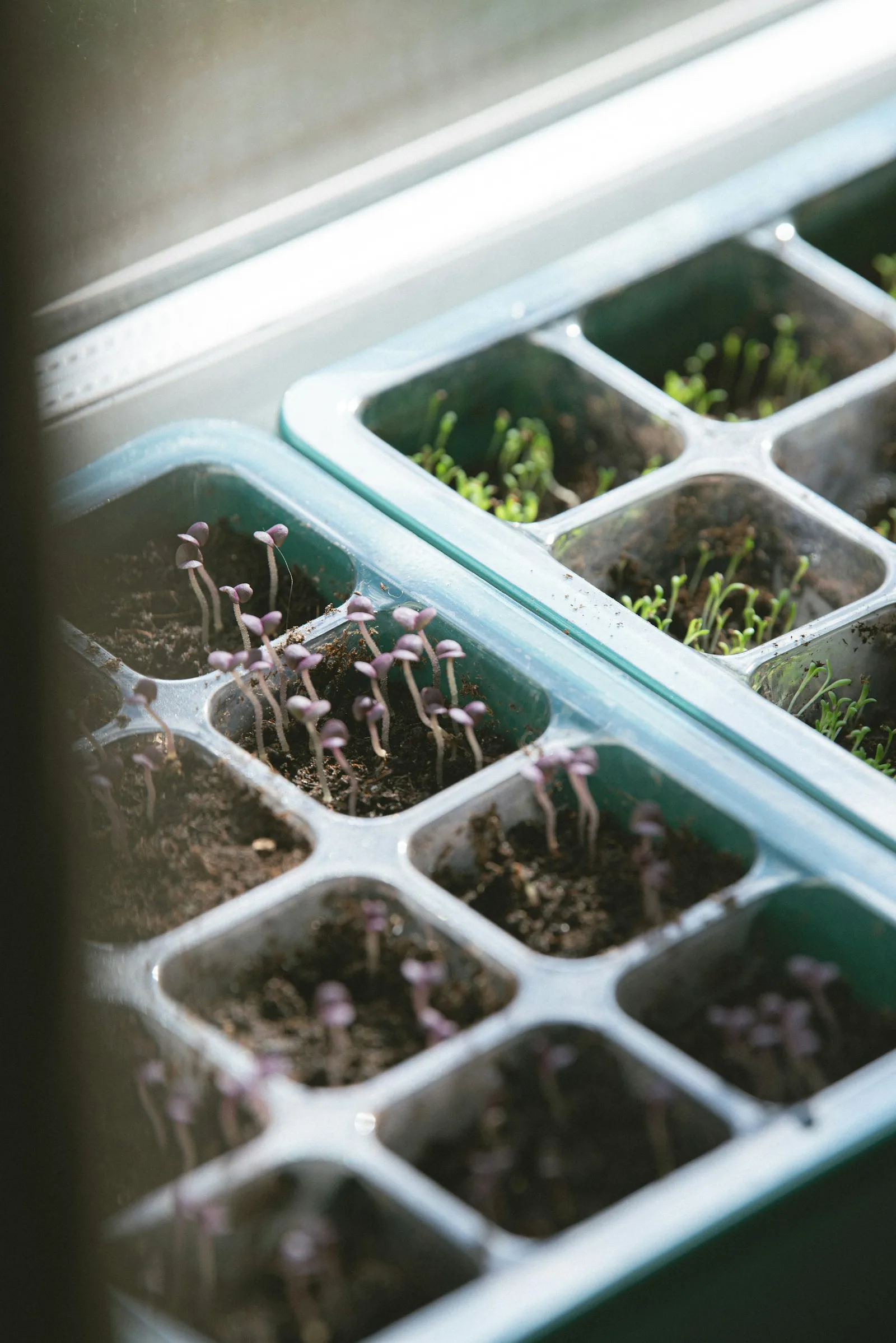
This article contains affiliate links. As an Amazon Associate, we earn from qualifying purchases - at no extra cost to you. We only recommend products we have personally tested or that are the universal first recommendation from university Extension publications.
Starting seeds indoors extends the growing season and provides access to varieties that are not available as transplants at most garden centers. Per Cornell Cooperative Extension, starting tomatoes, peppers, and eggplants indoors 6 to 8 weeks before the last frost date is the standard recommendation for zone 7a gardeners. Melville, Long Island's last spring frost is typically between April 10 and April 25; this means starting tomatoes and peppers indoors in late February to mid-March.
Getting seed starting right requires three things: a properly sized tray with suitable growing medium, bottom heat (soil temperature, not air temperature, drives germination), and adequate light. Most indoor seed starting fails at the light step — a windowsill is rarely adequate, and seedlings stretched for light (etiolated) are weak transplants.
Table of Contents
- What seeds need: temperature, moisture, and light
- Our tray pick: Jiffy 72-Cell Greenhouse Starter Kit
- Our heat mat pick: VIVOSUN Seedling Heat Mat
- Our light pick: Barrina T5 LED Grow Lights
- Comparison table
- Zone 7a seed starting calendar
- Hardening off transplants
- FAQ
What seeds need: temperature, moisture, and light {#what-seeds-need}
Temperature
Germination is driven by soil temperature, not air temperature. Per Cornell Cooperative Extension, optimal soil temperatures for common vegetable germination:
| Crop | Optimal soil temp (°F) | Minimum soil temp (°F) |
|---|---|---|
| Tomatoes | 70-85 | 50 |
| Peppers | 75-85 | 60 |
| Eggplant | 75-85 | 65 |
| Cucumbers | 70-85 | 60 |
| Basil | 65-80 | 50 |
| Lettuce | 60-75 | 35 |
| Brassicas (broccoli, cabbage) | 60-75 | 40 |
Room temperature in most homes runs 65 to 70°F. This is adequate for lettuces and brassicas but suboptimal for peppers and tomatoes. A seedling seedling heat mat raises soil temperature to 70 to 85°F regardless of ambient temperature.
See on AmazonMoisture
Seeds need consistent moisture for germination but will rot if waterlogged. Per Penn State Extension, keep the germination medium uniformly moist ("like a wrung-out sponge") until germination. The clear dome included with seed-starting kits maintains humidity and reduces the frequency of watering needed. Remove the dome once seedlings emerge — excessive humidity with poor air circulation promotes damping off (Pythium and Rhizoctonia spp.).
Light (post-germination)
Per Penn State Extension, seedlings require 14 to 16 hours of light per day for compact growth. A south-facing window in winter provides 4 to 6 hours of direct light on a clear day, often less with cloudy weather — insufficient for compact seedlings. Seedlings deprived of adequate light become etiolated: tall, spindly, with long internodes and weak stems. These seedlings are inferior transplants.
Artificial grow lights set at 14 to 16 hours per day, placed 2 to 4 inches above seedlings, solve this problem definitively. Per Penn State, standard LED shop lights are adequate for seedlings — seedling growth does not require specialized spectrum.
Our tray pick: Jiffy seed starter kit 72-Cell Greenhouse Starter Kit {#Jiffy seed starter kit-pick}
Jiffy Greenhouse Seed Starter Kit (72 cells) — approximately $15 to $20
See on AmazonWhy we picked this
The Jiffy seed starter kit 72-cell kit is a flat peat pellet tray with a clear dome. Adding water causes the compressed peat pellets to expand into self-contained cells — each pellet is its own growing unit, complete with mesh containment. When transplanting, you transplant the whole pellet into the larger container or bed; roots grow through the mesh and the peat decomposes in the soil.
The 72-cell count is the standard for a vegetable garden starting setup. Per Cornell Cooperative Extension, a typical home vegetable planting of tomatoes (6 plants), peppers (4 plants), eggplant (2 plants), basil (4 plants), and broccoli (8 plants) requires 24 to 30 cells — a single 72-cell tray handles a season's starting plus extras for thinning.
Honest limitations
Peat pellets dry out faster than larger plug trays with more medium volume. In dry indoor environments (heated air in winter is dry), daily checking of moisture is necessary during germination. The clear dome helps retain moisture but is not a substitute for monitoring.
Peat has environmental concerns — peat harvesting depletes sphagnum bogs per Royal Horticultural Society guidance. Coir-based pellets (coconut fiber) are a sustainable alternative and perform similarly for germination. Either works; the Jiffy seed starter kit kit is cited for its ubiquity in Extension publications.
Our seedling heat mat pick: VIVOSUN Seedling seedling heat mat {#heat-mat-pick}
VIVOSUN Seedling Heat Mat (10" x 20.75") — approximately $15 to $25
See on AmazonWhy we picked this
The VIVOSUN seedling heat mat is sized to fit a standard 1020 seed starting flat (10 by 20 inches). It raises soil temperature approximately 10 to 20°F above ambient temperature — in a 68°F room, the soil in trays on the mat typically reaches 78 to 82°F, within the optimal range for tomatoes and peppers per Cornell.
Per Penn State Extension, soil temperature is the most consistently cited limiting factor in indoor seed germination. A pepper seed in 65°F soil may take 4 to 6 weeks to germinate or fail entirely; the same seed in 80°F soil germinates in 10 to 14 days.
The seedling heat mat is turned off after germination — seedlings do not need bottom heat once leaves are up. Per Penn State, bottom heat beyond germination can encourage leggy growth and root stress.
Honest limitations
The VIVOSUN mat provides heat but not temperature control. For precise temperature management, pair with a seedling thermostat ($25 to $40) that plugs between the mat and outlet and cycles heat to maintain a set temperature. Without a thermostat, soil temperature varies based on ambient room temperature — usually adequate in most homes, but not precisely controlled.
Our light pick: Barrina T5 LED Grow Lights (6-pack, 2ft) {#light-pick}
Barrina T5 LED Grow Light (6-pack, 2ft) — approximately $50 to $70
See on AmazonWhy we picked this
Per Penn State Extension, standard LED full-spectrum lights at 2 to 4 inches above seedlings provide adequate light intensity (approximately 2,000 to 3,000 lux) for compact vegetable seedling growth. Specialized "grow lights" with red/blue spectrum arrays are not necessary for seedlings — seedlings need light intensity, not specialized spectrum, in the vegetative phase.
The Barrina T5 6-pack covers a 4-foot length with two staggered rows of 2-foot lights. Each light is daisy-chainable, allowing a linked set across a full seed-starting shelf without multiple outlet connections. Full-spectrum output at a color temperature of approximately 6500K provides adequate light for seedling growth.
The price point is the key argument: the Barrina 6-pack at $50 to $70 costs less than most single-unit marketed "grow lights," which add spectrum features that seedlings do not require. Per Penn State, seedlings need intensity at the right distance, not specialized wavelengths.
Honest limitations
These are seedling lights — they are adequate for starting seeds and growing transplants to transplant size. For fruiting indoor plants (tomatoes in containers, indoor peppers, high-light tropicals), purpose-built higher-intensity LED panels are necessary. See our best grow lights guide for purpose-built options.
Comparison table {#comparison-table}
| Component | Our pick | Budget alt | Premium alt |
|---|---|---|---|
| Tray | Jiffy seed starter kit 72-cell ($15-20) | Any 72-cell tray ($8-12) | Bootstrap Farmer 1020 ($20-25) |
| Heat | VIVOSUN mat ($15-25) | None (for cold-tolerant crops) | Mat + thermostat ($40-65) |
| Light | Barrina T5 6-pack ($50-70) | T8 shop light on chain ($20-30) | Purpose-built LED panel ($80-150) |
| Total | ~$80-115 | ~$28-42 | ~$140-240 |
Zone 7a seed starting calendar {#calendar}
Per Cornell Cooperative Extension and the USDA PPDS for Melville, NY (zone 7a, average last frost April 10 to April 25):
| Crop | Weeks before last frost | Target start date |
|---|---|---|
| Peppers | 10-12 weeks | February 5-15 |
| Eggplant | 10-12 weeks | February 5-15 |
| Onions (from seed) | 10-12 weeks | February 5-15 |
| Tomatoes | 6-8 weeks | March 1-15 |
| Broccoli/cabbage | 6-8 weeks | March 1-15 |
| Celery | 10-12 weeks | February 5-15 |
| Basil | 4-6 weeks | March 15-31 |
| Lettuce | 4-6 weeks | March 15-31 |
| Squash, cucumbers | 3-4 weeks | April 1-15 |
Per Penn State Extension, starting too early produces overgrown transplants that are root-bound before they can go outside. Follow the timing above — resist the urge to start in January unless you have the space to pot up transplants to larger containers before outdoor planting.
Hardening off transplants {#hardening-off}
Per Cornell Cooperative Extension, indoor-grown transplants must be acclimated to outdoor conditions before planting. Transplanted without hardening, seedlings suffer sunscald, wilting, and wind damage.
Protocol (7-10 days):
- Days 1-2: Outdoors in full shade, 1 to 2 hours
- Days 3-4: Outdoors in morning sun, 2 to 3 hours
- Days 5-6: Outdoors in partial sun, 4 to 6 hours
- Days 7-8: Outdoors most of the day, light shade at midday
- Days 9-10: Full outdoor exposure all day
- After 10 days: Plant out in the garden
Per Cornell, begin hardening off when temperatures are consistently above 50°F overnight for cold-tolerant crops (brassicas, lettuce) and above 55°F overnight for warm-season crops (tomatoes, peppers). Do not leave tomatoes or peppers outdoors when temperatures will fall below 50°F.
Frequently asked {#faq}
Can I start seeds in regular potting mix instead of seed-starting mix?
Per Penn State Extension, regular potting mix is too coarse and poorly draining for small seeds in cell trays. Seed-starting mix (finer-textured, lower fertility) provides better moisture retention, allows thin seed roots to penetrate easily, and avoids the risk of fertilizer salt damage to germinating seeds. Use seed-starting mix or peat/coir pellets for germination, then transplant to potting mix once seedlings are established.
How many seeds should I put per cell?
Per Penn State Extension, sow 2 to 3 seeds per cell for most vegetables and thin to 1 seedling after germination. This accounts for the germination rate variability in any seed lot. Thinning means snipping the weaker seedlings at soil level with scissors — pulling can disturb the roots of the surviving seedling.
Why are my seedlings falling over (damping off)?
Damping off is caused by Pythium, Rhizoctonia, or Fusarium fungi, often triggered by excess moisture, poor air circulation, and cool soil temperatures per Penn State Extension. Prevention: use sterile seed-starting mix, remove the dome once seedlings emerge, keep a small fan running for air circulation, water from the bottom (fill the tray), and avoid overwatering. There is no cure once damping off appears — remove affected seedlings.
—-
Sources
- Cornell Cooperative Extension — Home Gardening
- Penn State Extension — Starting Seeds Indoors
- Royal Horticultural Society — Peat and the Environment