Care

Full sun perennials that bloom all summer

I grow most of the plants on this list. The coneflower and black-eyed Susan have been in the same sunny border at my Long Island house for six years.

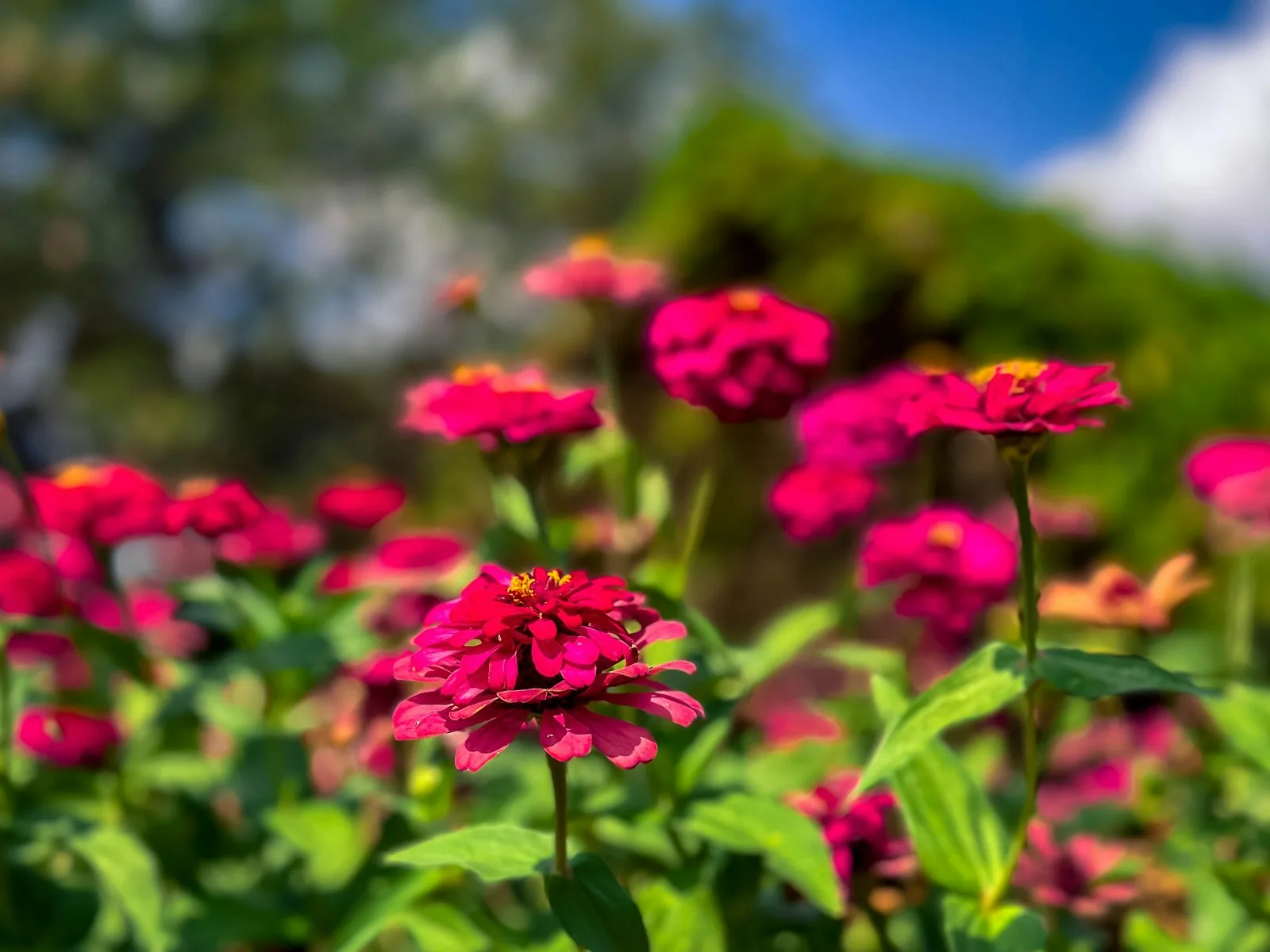
Vibrant pink zinnias bloom in a sunny garden
Photo: Unsplash on Unsplash

—- title: "Full sun perennials" slug: full-sun-perennials hub: care category: "Plant list" description: "I grow most of the plants on this list. The coneflower and black-eyed Susan have been in the same sunny border at my Long Island house for six years. The catmint 'Walker's Low' grows along the front." date: 2026-06-10 updated: 2026-06-10 author: "Thomas A." reading_time: 12 zones_min: 3 zones_max: 9 sun: "full sun" —-

I grow most of the plants on this list. The coneflower and black-eyed Susan have been in the same sunny border at my Long Island house for six years. The catmint 'Walker's Low' grows along the front walk and gets cut back twice a summer. The Russian sage is against the back fence, where it gets full western sun and no supplemental water. The sedum 'Autumn Joy' is in the driest corner of the property, where nothing else tolerates the combination of full sun and pure sand.

What this list is not: a catalog of every sun-tolerant perennial anyone has ever photographed. It is ten plants I can stand behind, with specific bloom times from primary sources, that together give overlapping color from late May through October in zones 4–8.

What "all summer bloom" actually requires

No single perennial blooms continuously from May to October without human intervention. What garden writers mean by "blooms all summer" is usually: 1) the individual bloom period is long (6–10 weeks), or 2) the plant reliably reblooms after deadheading or cutback, or 3) the plant is one of a sequence where different species hand off the bloom to each other.

This guide uses all three strategies. The plants are sequenced so their bloom windows overlap. Deadheading instructions are included where they extend the season. No plant is listed as "blooms all summer" if primary sources put its bloom window at less than 6 weeks.

The ten plants

1. Purple coneflower (Echinacea purpurea) — zones 3–8

Bloom period: June to August, with some sporadic bloom into September. Per NC State Plant Toolbox, bloom is June to August.

Height: 3–4 feet. Per NC State, "may grow 3 to 4 feet tall."

Sun: Full sun to partial shade. Best flowering in full sun.

What I've noticed: The coneflower in my zone 7a border has been reliable for six years. It self-seeds modestly — I let a few seedlings establish and pull the rest. Per Missouri Botanical Garden's plant chart, Echinacea purpurea is hardy to zone 3 and blooms July through September. The NC State entry is more precise: June through August.

The honest note: Individual plants are typically vigorous for 3–5 years, then decline. They self-seed readily, so the colony persists even as individual crowns age out. Per our perennials-vs-annuals guide, this is a feature of short-lived perennials that reproduce by seed — the bed of coneflowers isn't dying; it's reproducing.

Soil: Adaptable. Per NC State, tolerates clay, loam, sand. Soil pH 6.0–8.0. Well-drained, dry to medium moisture. Drought tolerant once established.

—-

2. Black-eyed Susan (Rudbeckia fulgida) — zones 3–9

Bloom period: July through September/October. Per Missouri Botanical Garden's plant chart, Rudbeckia fulgida blooms July through September.

Height: 2–3 feet.

Sun: Full sun, tolerates light shade.

What I've noticed: I grow the species and 'Goldsturm' in my border. They start blooming in late July and are still going strong in early October. 'Goldsturm' is the most compact cultivar — it doesn't need staking. Per Missouri Botanical Garden (Oklahoma guide), the black-eyed Susan "prefers full sun, but will bloom in light shade. They spread, but are easily controlled." That matches my experience — it spreads by short rhizomes and occasional self-seeding, but it's manageable.

The honest note: Like coneflower, individual crowns typically last 3–5 strong years. 'Goldsturm' (R. fulgida var. sullivantii) is the most widely planted cultivar and the one most likely to appear at garden centers.

Soil: Adaptable. Moist to dry, well-drained. Tolerates clay.

—-

3. Salvia (Salvia nemorosa / S. x sylvestris) — zones 4–8

Bloom period: May–June, with reliable rebloom after cutback through September. Per Missouri Botanical Garden's plant chart, salvia blooms June through October when managed.

Height: 1–3 feet depending on cultivar. 'May Night' (S. x sylvestris 'May Night') reaches about 18–24 inches. 'Caradonna' reaches 24–30 inches on dark stems.

Sun: Full sun required. Shade causes floppy stems and reduced bloom.

The honest note: Hardy salvias (S. nemorosa, S. x sylvestris) are not the same as annual salvias (S. splendens, the bright-red bedding plant) or tender salvias like S. guaranitica. The perennial salvias listed here are hardy to zone 4. Per Missouri Botanical Garden's plant chart, they are rated zone 4, bloom June through October, and require full sun.

After first bloom (usually May–June), cut the spent flower spikes down to the basal foliage. The plant will rebloom in 3–5 weeks. In zone 7a, I get three rounds of bloom from 'Caradonna' in a single season.

Soil: Well-drained, average to dry. Not drought-tolerant in the first season; established plants are.

—-

4. Catmint (Nepeta racemosa 'Walker's Low') — zones 3–8

Bloom period: Late April through June, with heavy rebloom after cutback in late July through October. Per Missouri Botanical Garden's plant finder, catmint 'Walker's Low' "blooms in spring with almost continuous rebloom into fall under optimum growing conditions and proper shearing of spent flower spikes."

Height: 24–30 inches per Missouri Botanical Garden.

Sun: Full sun, tolerates drought. Per Missouri Botanical Garden, 'Walker's Low' "tolerates drought and grows 24-30 inches tall."

What I've noticed: The catmint along my front walk is the most reliable plant I grow. It opens in late April, blooms hard through June, I cut it back to 6 inches in early July, and it comes back and blooms again from late July through the first frost. It has never required water after the first season. Deer occasionally browse it early in the season but seem to find the aromatic foliage unpleasant — they rarely do serious damage.

The honest note: 'Walker's Low' despite the name is not a low, ground-hugging plant. It reaches 24–30 inches and flops slightly in less than full sun. Give it room and cut it back hard after first bloom.

Soil: Average to dry, well-drained. Poor, sandy soil is fine. Do not amend with heavy compost — it will flop.

—-

5. Russian sage (Salvia yangii, formerly Perovskia atriplicifolia) — zones 4–9

Bloom period: July through September — one of the latest-starting and longest-blooming of the true sun perennials. Per Missouri Botanical Garden's plant finder, Russian sage offers a "long summer bloom period."

Height: 2–4 feet (less frequently to 5 feet). Per Missouri Botanical Garden, standard plants grow "2-4' tall."

Sun: Full sun only. Per Missouri Botanical Garden, "best flowering occurs in full sun locations. Stems are more likely to flop if plants are grown in part shade."

What I've noticed: The Russian sage along my back fence gets the afternoon sun that catches even the hottest exposure on the property. It blooms from mid-July through September without deadheading. It has not been watered since its establishment year (2020). Deer leave it entirely alone — the aromatic foliage is strongly deterrent.

Note on name: The genus was reclassified from Perovskia to Salvia in 2017. It is the same plant; garden centers still sell it as Perovskia atriplicifolia. The Missouri Botanical Garden Plant Finder lists both names.

Pruning: Per Missouri Botanical Garden, "cut back plants almost to the ground in late winter to early spring as soon as new growth appears." Don't prune in fall.

Soil: Average to dry, well-drained. Sharp drainage is "especially important" per Missouri Botanical Garden. Will not tolerate wet or poorly drained soils.

—-

6. Daylily (Hemerocallis spp.) — zones 3–9

Bloom period: June through August depending on cultivar, with early, mid, and late varieties allowing an extended season. Per Missouri Botanical Garden's plant chart, daylilies bloom June through August.

Height: 1–4 feet depending on cultivar.

Sun: Full sun to light shade. Full sun maximizes bloom.

The honest note: Daylilies are not true lilies — Hemerocallis is a separate genus. Per Missouri Botanical Garden, all Hemerocallis species and cultivars are hardy to zone 3. Each flower lasts one day; with 20–30 buds per scape and multiple scapes per plant, the bloom extends 2–4 weeks per plant. Choose early, mid, and late-season cultivars and the total daylily season stretches to 8–10 weeks.

Caution: Daylilies are acutely toxic to cats — ingestion of any part can cause kidney failure.

Soil: Adaptable. Dry to moist, most soil types. Tolerates clay.

—-

7. Coreopsis (Coreopsis verticillata 'Zagreb', 'Moonbeam') — zones 3–9

Bloom period: Late spring through late summer, often into October with deadheading. Per Missouri Botanical Garden, Coreopsis verticillata 'Zagreb' "features soft, ferny foliage and bright yellow, daisy-like flowers that appear in a lengthy late spring to late summer bloom period which sometimes extends to the first frost."

Height: 1–1.5 feet ('Zagreb'), 18–24 inches ('Moonbeam').

Sun: Full sun. Per Missouri Botanical Garden, 'Zagreb' "thrives in poor, sandy or rocky soils with good drainage and full sun."

The honest note: Coreopsis is a short-lived perennial. Individual crowns typically decline after 2–4 years. They self-seed (the straight species more than named cultivars), so the planting persists. 'Zagreb' is more reliably perennial than 'Moonbeam' in zones 3–5. If your coreopsis disappears after a few years, it is not a failure — it is normal.

Soil: Poor, dry, well-drained. One of the most drought-tolerant perennials on this list.

—-

8. Sedum / Stonecrop (Hylotelephium 'Herbstfreude' / 'Autumn Joy') — zones 3–9

Bloom period: Flowers open pink in August, deepen to copper-red through September and October. Per Missouri Botanical Garden, 'Autumn Joy' is described as "very tolerant of hot, dry locations in full sun."

Height: 18–24 inches.

Sun: Full sun. Shade causes floppy stems.

What I've noticed: 'Autumn Joy' is the most reliable late-season perennial in my zone 7a garden. It starts blooming in mid-August when most of the other summer perennials are running out of steam, and the seed heads are still attractive well into November. It has never been watered and never been fertilized.

Note on taxonomy: The upright sedums formerly listed as Sedum 'Autumn Joy' are now reclassified as Hylotelephium 'Herbstfreude' ('Autumn Joy' is the English trade name). The plant is identical; the genus changed.

Soil: Dry to average, well-drained. Full sun essential. One of the most drought-tolerant perennials available.

—-

9. Yarrow (Achillea millefolium and cultivars) — zones 3–9

Bloom period: June through September with deadheading. Per Missouri Botanical Garden's plant chart, Achillea blooms June through October in full sun.

Height: 1–3 feet. 'Moonshine' is compact at 18–24 inches. 'Coronation Gold' reaches 3 feet.

Sun: Full sun. Drought tolerant once established. Wild A. millefolium spreads aggressively in rich soils — use named cultivars. Yarrow thrives in poor, dry soil; rich, amended soil produces floppy growth and fewer flowers.

Soil: Poor, dry, well-drained. Sandy soils are ideal.

—-

10. Blanket flower (Gaillardia x grandiflora) — zones 3–9

Bloom period: June through frost. Per Missouri Botanical Garden's plant chart, Gaillardia x grandiflora blooms June through October, hardiness zone 3.

Height: 1–2 feet. Compact forms like 'Arizona Sun' stay under 12 inches.

Sun: Full sun required.

The honest note: Gaillardia is reliably perennial in zones 3–7. In zones 8–9 with high humidity, it declines after 2–3 years. Per Missouri Botanical Garden, it requires sharp drainage to avoid root rot in winter.

Soil: Poor, dry, extremely well-drained.

—-

Bloom overlap: a seasonal sequence

PlantZone 7a first bloomPeak bloomTapering
Catmint 'Walker's Low'Late AprilMay–JuneReblooms July–Oct after cutback
Salvia nemorosa/sylvestrisMid-MayMay–JuneReblooms Aug–Sep after cutback
Russian sageMid-JulyJuly–SeptemberSeptember–October
Black-eyed SusanLate JulyAugust–SeptemberOctober
Sedum 'Autumn Joy'Mid-AugustSeptember–OctoberNovember (seed heads)
Purple coneflowerLate JuneJuly–AugustSeptember
Daylily (mid-season cultivar)Late JuneJulyAugust
Coreopsis 'Zagreb'Late MayJune–AugustSeptember with deadheading
GaillardiaEarly JuneJune–SeptemberOctober
YarrowEarly JuneJune–AugustSeptember

The sequence from late April (catmint) through November (sedum seed heads) is genuinely achievable with these ten plants in zones 4–8.

Common problems

SymptomMost likely causeFix
Salvia/catmint floppingToo much shade or too much nitrogenFull sun required; avoid fertilizing
Coneflower declining after 3–4 yearsNormal short-lived perennial behaviorLet self-seed or divide and replant
Russian sage / yarrow floppingToo rich soil or insufficient sunLean soil; full sun; cut back if needed
Gaillardia disappearing over winterCrown rot from poor drainagePlant in well-drained or raised bed
Daylily not bloomingToo much shade or overly mature crowns (10+ years)Move to full sun; divide every 5–7 years
Coreopsis not returningShort-lived perennial (normal) or heavy clayReplant; improve drainage
Recommended gear: Best Raised Garden Bed Kits: Cedar vs. Metal vs. Fabric — our buyer's guide covering picks for every budget, ranked by Extension publication consensus and personal use.

Frequently asked

What does "full sun" actually mean?

Full sun means at least 6 hours of direct sunlight per day. The plants on this list perform best with 8 or more hours. "Part sun" is 4–6 hours; "part shade" is 2–4 hours. A site that gets morning sun but is shaded after noon is part shade even if it logs 5–6 total hours — morning light is lower-intensity than afternoon sun.

Which of these plants are actually deer-resistant?

Russian sage and catmint are genuinely deer-resistant — the aromatic foliage deters deer in most areas. Yarrow and coreopsis are moderately deer-resistant. Coneflower, black-eyed Susan, and daylily are regularly browsed in high-pressure areas. In zone 7a on Long Island, I use Deer Scram granules around the coneflower; the Russian sage and catmint need nothing. Per Rutgers NJAES's deer resistance ratings, no perennial is unconditionally deer-proof.

Should I fertilize these perennials?

Russian sage, catmint, yarrow, coreopsis, gaillardia, and sedum are native or near-native to poor, dry soils and perform worse in heavily fertilized beds — excessive nitrogen produces floppy stems and fewer flowers. For these, a single spring application of 10-10-10 at half the label rate is sufficient if your soil is poor; skip fertilizer entirely in average soil. Coneflower, black-eyed Susan, daylily, and salvia are more accepting of average fertility.

Sources

  1. NC State Extension Plant Toolbox — Echinacea purpurea (Purple Coneflower).
  2. Missouri Botanical Garden Plant Finder — Echinacea 'Cheyenne Spirit'.
  3. Missouri Botanical Garden — Growing Perennials – Plant Chart.
  4. Missouri Botanical Garden Plant Finder — Perovskia atriplicifolia 'Lisslitt' (Russian Sage).
  5. Missouri Botanical Garden — Plants for Shallow, Rocky Soil (catmint 'Walker's Low' data).
  6. Missouri Botanical Garden — Perennials for Season-long Bloom.