Black-eyed Susan (Rudbeckia) care: the short-lived perennial reality
Rudbeckia hirta is a biennial that relies on self-seeding; Rudbeckia fulgida is the true long-lived perennial. Know which one you have before expecting it to return.
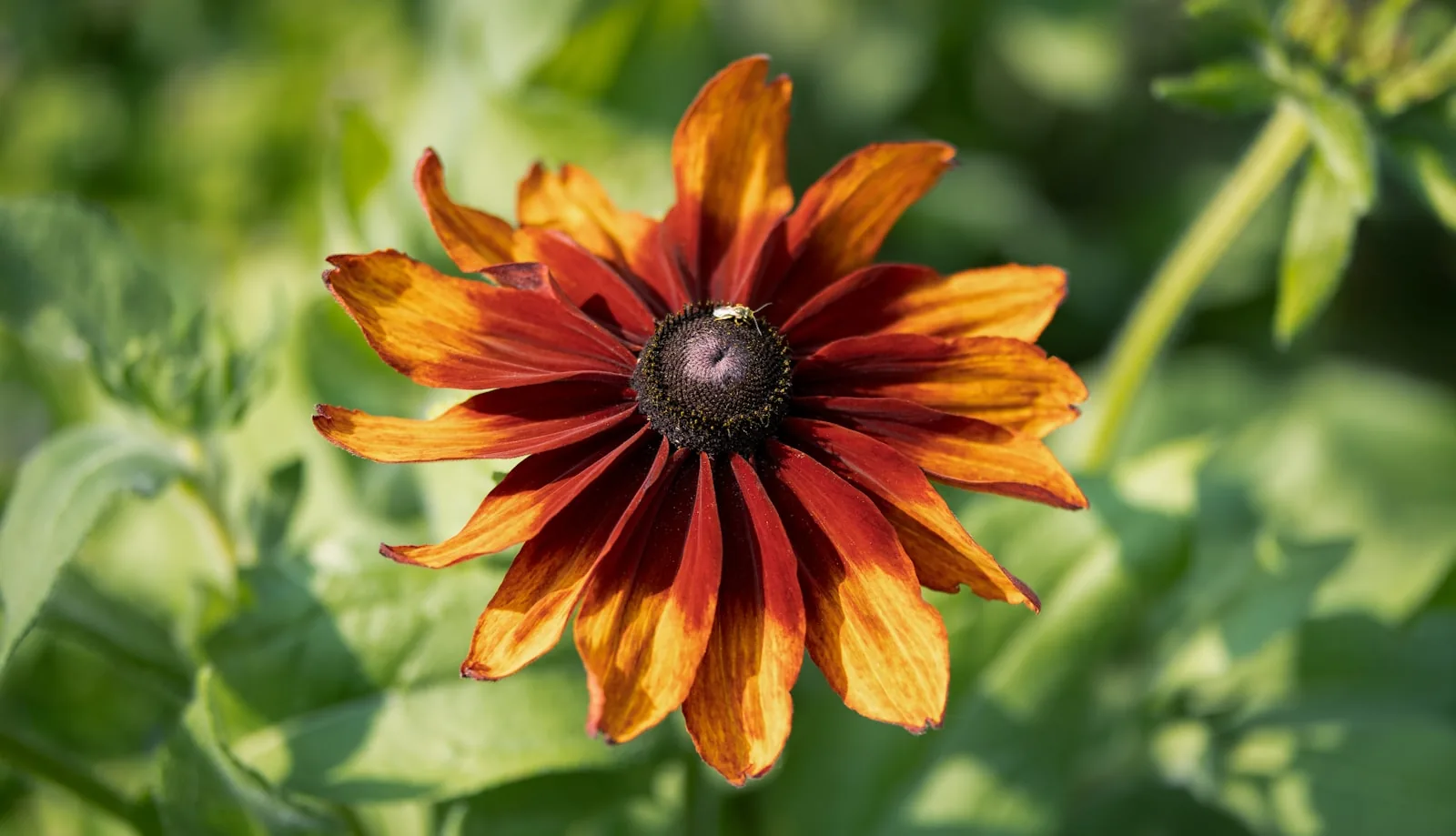
I planted my first Rudbeckia fulgida 'Goldsturm' about seven years ago in a sunny border along the south side of my Long Island yard, and it has rewarded me every summer since with four to six weeks of yellow flowers in late July through September. The plant I put in that year is not, strictly speaking, the same plant anymore — it has spread slowly by rhizome and self-seeded a few offspring nearby, which is how Rudbeckia works. The original crown is still there. But I want to be clear about something before the rest of this guide: that longevity applies to R. fulgida, not to R. hirta. If you buy something labeled "black-eyed Susan" at a nursery and it quietly dies after two or three years, that is not failure. It is the plant doing exactly what it is supposed to do.
This article contains affiliate links. As an Amazon Associate, we earn from qualifying purchases - at no extra cost to you. We only recommend products we have personally tested or that are the universal first recommendation from university Extension publications. See our full disclosure.
Which Rudbeckia do you actually have?
The name "black-eyed Susan" is applied loosely to several Rudbeckia species. Getting them straight matters because their lifespans are completely different.
Rudbeckia hirta — the true biennial / short-lived perennial
This is the roadside wildflower, the classic. Per NC State Extension Plant Toolbox, R. hirta is a biennial or short-lived perennial that blooms in its first year from seed and is "often mistaken for an annual." Hardy in zones 3 through 8. It grows 2 to 4 feet tall and blooms from May through July. The plant will die — that is not your fault. The garden persists because it self-seeds prolifically.
Per Penn State Extension, specific cultivars including 'Autumn Colors' and 'Cherry Brandy' are "technically biennials; they are treated as annuals and replanted yearly, though they may also reseed." If you grow these cultivars, budget for annual replacements or let them seed around freely.
Stop fungal disease early
Neem oil suppresses powdery mildew, black spot, and rust when sprayed at first sign. Cheaper than copper-based fungicides and safe on veg. Read our full pick.
Rudbeckia fulgida — the true long-lived perennial
This is the one I grow. Per the Missouri Botanical Garden Plant Finder, R. fulgida is a herbaceous perennial that "typically grows to 3' tall" with a "long mid-summer to fall bloom period." Hardy in USDA zones 3 through 9, per NC State Extension Plant Toolbox, which gives zones 3a through 9b.
The cultivar 'Goldsturm' — full name Rudbeckia fulgida var. sullivantii 'Goldsturm' — was the Perennial Plant Association's Plant of the Year in 1999 and remains the most widely sold R. fulgida in garden centers. It grows 2 to 3 feet tall per Missouri Botanical Garden, with a bloom period of June through September. One honest caveat: per Penn State Extension, 'Goldsturm' is "particularly prone to angular leaf spot, a bacterial disease that, combined with Septoria leaf spot, may leave foliage looking very unsightly by the end of the growing season." The flowers are fine; the leaves can look ragged by August. The newer cultivar 'American Gold Rush' resists Septoria leaf spot and was named Perennial Plant of the Year 2023. Worth considering if leaf disease bothers you.
The self-seeding reality
Both species self-seed. Per Missouri Botanical Garden, R. fulgida "plants slowly spread in the garden by rhizomes" in addition to setting seed. In my yard the colony has expanded about 18 inches in seven years — slow enough to manage, fast enough to fill in. R. hirta self-seeds more aggressively; in a good site with bare soil, it will naturalize readily.
If you want to allow self-seeding — and for R. hirta, this is really how you maintain a colony — leave some flower heads standing through fall. Per Penn State Extension, the seeds will germinate best after cold stratification, which happens naturally if they fall on bare soil and overwinter.