How to Deadhead Flowers: Which Species Need It and When
How to deadhead flowers — which plants respond to deadheading with more blooms, which to leave for birds and wildlife, and the techniques for different flower types.
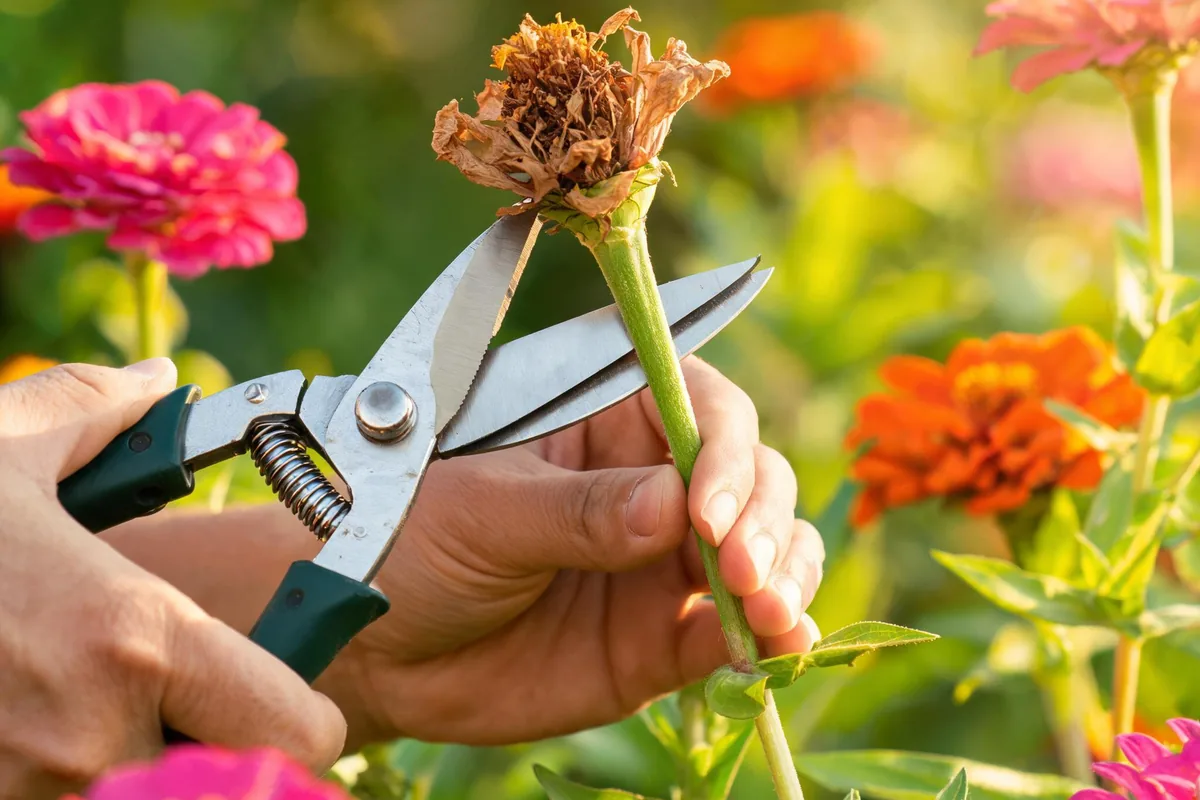
When to do this
Throughout the growing season, starting when the first blooms begin to fade. The timing trigger is when petals begin to drop or wilt and the center of the flower begins to swell toward seed set. For most annuals and repeat-blooming perennials, deadheading every 7–14 days through the peak growing season keeps plants in continuous bloom. Stop deadheading in late August to early September on most perennials — allowing seeds to set at the end of the season feeds wildlife and allows some self-sowing to replenish plantings naturally.
What you need
- Sharp pruners or scissors (clean cuts prevent disease introduction; wipe blades with rubbing alcohol between plants if disease is present in the garden)
- Garden gloves (especially for roses)
- A bucket or trug for collecting debris
Which plants to deadhead
Deadhead for more blooms
Roses: Per Penn State Extension, deadheading repeat-blooming roses "significantly extends the bloom cycle by preventing the plant from setting hips and going into a seed-production phase." Cut back to the first set of 5 leaflets below the spent bloom, to a bud pointing outward from the plant. The cut looks like a diagonal above an outward-facing bud, about 1/4 inch above it. Per Clemson Extension HGIC, "removing the entire stem back to a strong bud produces better-quality next flowers than simply snapping off petals."
Annual flowers: Zinnias, marigolds, snapdragons, calibrachoa, and most bedding annuals respond strongly to deadheading with extended bloom production. For zinnias, cut the spent bloom stem back to just above a set of leaves — a new stem and bud will emerge from the leaf axil within 10–14 days. For petunias: pinch back by one-third periodically rather than individual deadheading — this keeps the plant bushy rather than leggy.
Repeat-blooming perennials: Salvia, catmint, coreopsis, gaillardia, Shasta daisy, and penstemon all rebloom if deadheaded promptly. For catmint: shear the entire plant by two-thirds after the main June flush — this looks severe but produces a full second bloom in August. For Shasta daisy: cut spent stalks back to the basal rosette of leaves. Per Penn State Extension, "catmint and salvia respond to heavy shearing after first bloom with one of the most reliable second flushes of any garden perennial."
Dahlias: The most responsive cutting garden plant to deadheading — remove spent blooms and spent stem back to the next side shoot and the plant responds with another bloom in 7–10 days. I track dahlia deadheading most closely of anything in my cutting garden. Without consistent deadheading, plants slow bloom production and put energy into seed development.
Do NOT deadhead — leave for birds and wildlife
Coneflowers (Echinacea): The seed-filled centers attract goldfinches through fall and winter. Per Xerces Society, "coneflower seed heads are among the most important winter bird foods in the perennial garden." Leave all coneflower heads standing until spring cleanup.
Black-eyed Susans (Rudbeckia): Same principle — persistent seed heads feed goldfinches and chickadees. Allow seed set, leave through winter.
Ornamental grasses: Never deadhead. Seed heads and structure provide winter food and shelter. Per Xerces Society, grass stems are "critical overwintering habitat for stem-nesting native bees."
Native asters and goldenrod: The seeds feed migratory birds in fall. Allow seed set for wildlife value.
Once-blooming plants: Peonies, lilacs, and once-blooming roses bloom once on a single annual flush. Deadheading does not produce a second bloom on these plants — it only prevents hip formation. Whether to remove spent flowers is aesthetic, not functional.
Technique by flower type
Large single-stemmed flowers (roses, large dahlias, peonies)
Use pruners. Cut at a 45-degree angle, 1/4 inch above an outward-facing bud or leaf node. The diagonal cut prevents water from sitting on the cut surface. The outward-facing bud produces a branch growing away from the center, which improves air circulation and bloom display.
Small-flowered perennials (salvia, catmint, coreopsis)
For individual deadheading: use pruners or scissors to cut spent stalks back to a set of leaves or lateral bud. For mass deadheading: shear the entire planting with hedge shears or handheld pruners — this is faster and produces the same reblooming result.
Annuals with multiple small flowers (zinnias, marigolds)
Individual bloom removal with pruners or by pinching. Pinching — squeezing the spent head between thumb and forefinger and snapping the stem — works for soft-stemmed annuals but can introduce disease on woody-stemmed plants.
What I'd do differently
In my early years of growing zinnias for cutting, I deadheaded every single spent bloom but didn't cut the stem all the way back to a healthy leaf node — I was cutting just below the spent flower. This produced short, crowded stems on the regrowth rather than the long cutting stems I wanted. The correct cut for cutting garden zinnias is back to the first healthy leaf node with a developed lateral bud — often 6–8 inches down the stem. The extra time it takes is worth it for stem length.
