Growing Peppers Outdoors: Soil Temperature, Fruit Set, and Pests
Peppers are among the most heat-demanding vegetables in the American home garden. They originate in tropical and subtropical regions of Central and South America, and their cultural requirements reflect that origin: they
—- title: "Growing Peppers Outdoors" slug: growing-peppers-outdoors hub: vegetables category: Vegetable guide description: "Peppers are among the most heat-demanding vegetables in the American home garden. They originate in tropical and subtropical regions of Central and South America, and their cultural requirements." date: 2026-06-10 updated: 2026-06-10 author: "Thomas A." reading_time: 8 —-
Peppers are among the most heat-demanding vegetables in the American home garden. They originate in tropical and subtropical regions of Central and South America, and their cultural requirements reflect that origin: they want warm soil, warm nights, and consistent moisture. In zone 7a, this means they are among the last crops transplanted in spring and among the first to be killed by fall frost.
I don't grow peppers at the Long Island plot — my raised beds are allocated to tomatoes, and I prefer to source fresh peppers locally. The guidance here draws from Cornell Cooperative Extension, Penn State Extension, and NC State Extension research rather than personal observation.
Species and Types
All common garden peppers are Capsicum annuum or closely related species. The type distinctions are by fruit character rather than species:
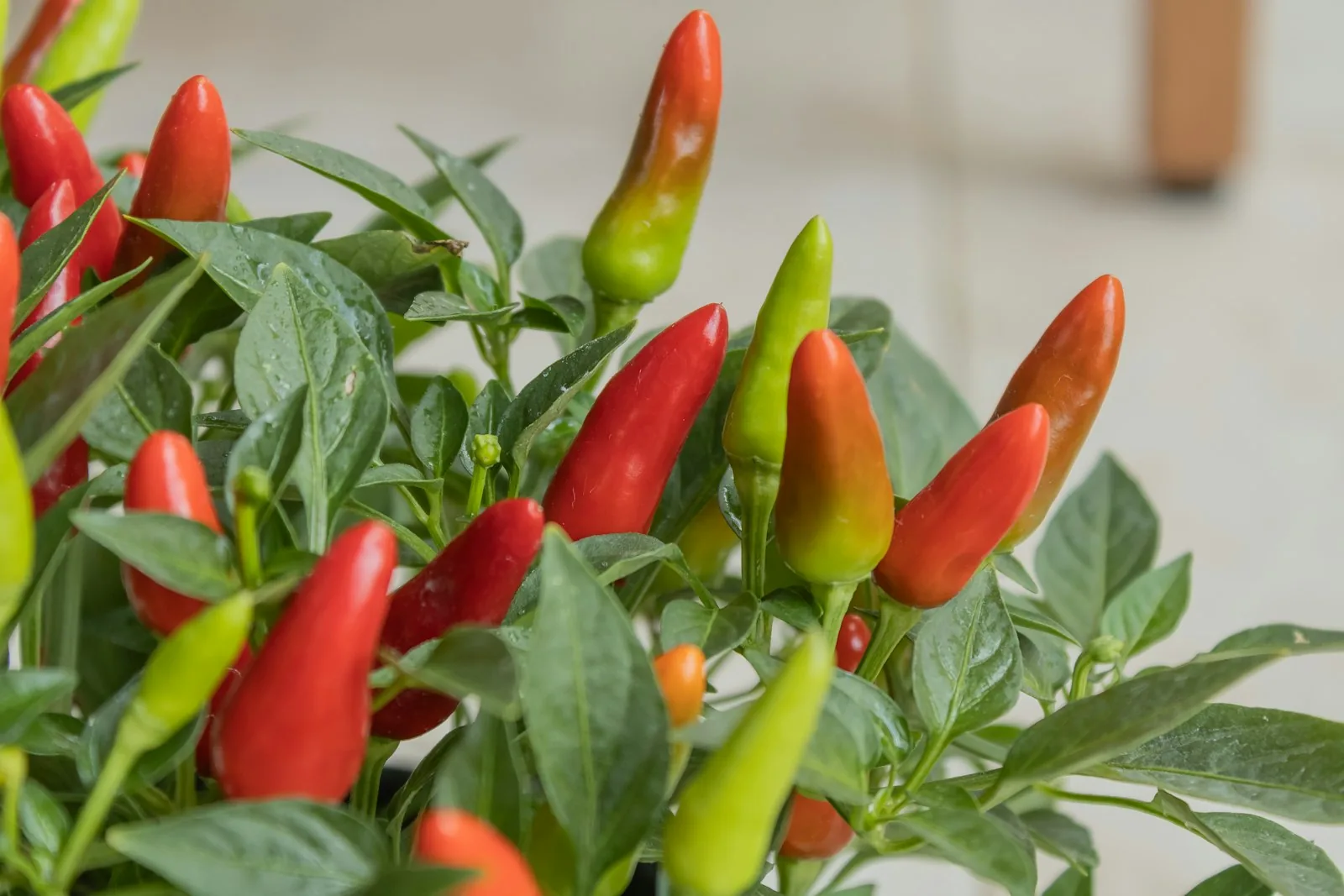
Sweet peppers (bell and non-bell): Bell peppers (C. annuum) are the most widely grown type in American gardens. Per Cornell Cooperative Extension, "green bell peppers turn red, yellow, or orange if left on the plant" — green peppers are simply immature red or yellow peppers. Fully ripe peppers are sweeter and more nutritious but require 70-80 days from transplant.
Non-bell sweet peppers include banana peppers, cubanelle, and Italian frying types. These are generally earlier and more productive than bells in cooler-climate gardens.
Hot peppers: Jalapeño, cayenne, and serrano are C. annuum. Habanero, scotch bonnet, and ghost pepper are C. chinense, which need a longer, hotter season. Per Penn State Extension, "hot pepper varieties generally require longer growing seasons than sweet peppers" — habaneros need 90-100 days from transplant.
Zone 7a cultivar selection: Per NC State Extension, zone 7a can grow most pepper types reliably, but hot-climate species like habanero may not fully ripen in a cool Long Island summer if transplants go in late. Starting habanero seeds indoors by late March (10-12 weeks before late-May transplant) gives enough time for full maturity.
USDA Hardiness and Temperature Requirements
Peppers are killed by frost. Per Cornell Cooperative Extension, "peppers cannot tolerate frost and are damaged by temperatures below 32°F." Even a light frost kills the entire plant — there is no recovery.
Beyond frost tolerance, peppers have specific temperature windows for fruit set. Per Cornell:
- Fruit set fails when daytime temperatures exceed 90°F or when nighttime temperatures fall below 55°F
- Blossom drop occurs at both temperature extremes
- Optimal range: 70-85°F daytime, 60-70°F nighttime
In zone 7a, high daytime temperatures in July and August can cause temporary blossom drop. This is not a permanent problem — per Cornell, "peppers will resume setting fruit when temperatures moderate." Do not assume the plant is failing if no fruit is setting during a mid-July heat wave.
Starting Transplants
Peppers are slow growers that need 10-12 weeks indoors before transplant. Per Penn State Extension, "peppers should be started 10 to 12 weeks before the last frost date." In zone 7a, this means starting seeds in early-to-mid February for late-May transplanting.
Germination requirements: Per Cornell Cooperative Extension, "soil temperature of 80 to 85°F" produces the fastest germination. A seedling heat mat is essentially required for reliable pepper germination in a typical home. At 70°F soil temperature, germination is slow and uneven; at 85°F, most seeds germinate within 7-10 days.
Once germinated, grow seedlings at 70°F with 14-16 hours of supplemental LED light per day. Per Cornell, "leggy seedlings are a result of insufficient light" and will not transplant well.
Transplanting
Per Penn State Extension, transplant peppers "after the last frost when soil temperatures have reached at least 65°F." On Long Island, this is mid-to-late May. The last frost date is not the trigger — soil temperature is.
Planting into cold soil (below 60°F) causes pepper transplants to stall. The plant sits, barely grows, and may develop purple leaf discoloration (a cold-stress response). Per Cornell, this is not a nutrient deficiency — it is a temperature response. Once soil warms, it resolves without intervention.
Transplant depth: Unlike tomatoes, peppers should not be planted deeply. Per Cornell, "plant at the same depth as in the pot" — there is no benefit to burying the stem of a pepper plant, and deep planting can cause stem rot.
Spacing: Per NC State Extension, space peppers "18 to 24 inches apart in rows 24 to 36 inches apart." Crowded plants have poor air circulation, which increases disease pressure.
Watering
Per Cornell Cooperative Extension, peppers "require 1 inch of water per week." Consistent soil moisture is more important than total volume. Per Penn State Extension, "inconsistent watering causes blossom end rot" in peppers, the same calcium-uptake disorder that affects tomatoes under erratic watering.
Mulch is important. Per NC State Extension, "a 2 to 3-inch layer of mulch maintains soil moisture and reduces weed competition." Black plastic mulch is commonly used commercially because it also warms the soil — a meaningful advantage in zone 7a for early-season pepper production. Organic mulch (straw, shredded leaves) works in summer once soil temperatures are already warm.
Soil and Fertilizing
Per Cornell Cooperative Extension, peppers "prefer a slightly acidic soil with a pH of 6.0 to 6.8" and "well-drained, fertile loam." Heavy clay should be amended with compost before planting.
Per Penn State Extension, at planting "incorporate 2 to 3 pounds of 5-10-5 fertilizer per 100 square feet of bed." Side-dress with a light nitrogen fertilizer when the first fruit is marble-sized. Avoid excess nitrogen: per Cornell, "over-fertilization with nitrogen causes excessive vegetative growth and poor fruit set."
Calcium deficiency causes blossom end rot. Peppers use calcium from the soil, but calcium uptake depends on consistent water supply — when watering is erratic, even calcium-rich soil produces blossom end rot. Per NC State, "maintaining consistent soil moisture is more effective than calcium supplements" for preventing this disorder.
Common Pests and Diseases
Aphids: Per Penn State Extension, aphids are "the most common pepper pest" and are managed with strong water jets, insecticidal soap, or by encouraging natural predators (ladybugs, parasitic wasps). Per Xerces Society, maintaining flowering plants near the vegetable garden supports aphid predators.
**Pepper maggot (Zonosemata electa):** Per Cornell Cooperative Extension, the pepper maggot lays eggs in the fruit wall; larvae feed inside the pepper, causing premature ripening and rotting. Row covers during bloom prevent egg laying.
**Bacterial spot (Xanthomonas campestris pv. vesicatoria):** Per NC State Extension, bacterial spot causes "water-soaked spots on leaves and fruit" that turn tan with yellow halos. Spreads in wet weather. Manage by avoiding overhead irrigation and using resistant varieties.
**Phytophthora blight (Phytophthora capsici):** Per Penn State Extension, "the most destructive disease of peppers in Pennsylvania" and in humid northeastern gardens. Causes rapid wilting and death of entire plants. No chemical cure; management is through well-drained planting sites, crop rotation (3-year minimum away from cucurbits and peppers), and resistant varieties.
Harvest Timing
Per Cornell Cooperative Extension, "sweet peppers can be harvested at any stage from green to fully ripe." Green bell peppers are picked before full color development. Allowing fruit to mature to red, yellow, or orange "takes an additional 2 to 3 weeks" but produces sweeter fruit with higher vitamin C content.
Hot peppers are typically harvested at their mature color for maximum heat and flavor. Per NC State, jalapeños are "harvested green (immature) for mild heat" or left to turn red for sharper flavor.
Regular harvest encourages continued production. Per Penn State, "leaving overripe peppers on the plant slows subsequent fruit set."
Common Problems
| Symptom | Cause | Fix |
|---|---|---|
| Purple leaf discoloration, stunted growth | Cold soil (below 60°F) | Wait for warm soil to transplant; condition resolves with warmth |
| Blossom drop with no fruit | Temperatures above 90°F or below 55°F at night | Wait for moderate temperatures; resume will occur naturally |
| Blossom end rot (sunken, dark spot) | Inconsistent watering reducing calcium uptake | Consistent irrigation; mulch to buffer moisture |
| Whole plant wilts, doesn't recover | Phytophthora blight or verticillium wilt | Remove plant; improve drainage; 3-year rotation |
| Water-soaked spots on leaves and fruit | Bacterial spot | Avoid overhead watering; resistant varieties |
| No fruit set on hot peppers in late season | Insufficient days for variety to mature | Choose earlier-maturing varieties; start seeds earlier |
Frequently Asked
When should I transplant peppers in zone 7a?
Per Penn State Extension, transplant after the last frost date when soil temperatures reach at least 65°F. In zone 7a Long Island, this is typically mid-to-late May. The last frost date (around April 15-20) does not indicate adequate soil temperature for peppers — wait 4-6 more weeks. A a soil thermometer confirms readiness more reliably than calendar date.
Why are my pepper plants not producing fruit?
The most common causes are temperature extremes and over-fertilization with nitrogen. Per Cornell Cooperative Extension, peppers "drop blossoms" when daytime temperatures exceed 90°F or nighttime temperatures fall below 55°F. Both conditions are temporary — production resumes when temperatures moderate. Excess nitrogen from fertilizer or lawn runoff produces vegetative growth at the expense of fruit. Check fertilization rates and look at the forecast before assuming a disease or pest problem.
What is the difference between green and red bell peppers?
They are the same fruit at different stages of maturity. Per Cornell Cooperative Extension, "green bell peppers turn red, yellow, or orange if left on the plant" — the mature color depends on the variety. Fully ripe peppers take 2-3 additional weeks over green-stage harvest but have higher sugar content, higher vitamin C levels, and a less bitter flavor.
Can I grow peppers in containers?
Per Penn State Extension, "peppers grow well in containers that are at least 12 to 16 inches in diameter." Container culture requires more frequent watering (daily in summer) and fertilizing. The benefit in zone 7a is the ability to move containers indoors at the end of season — pepper plants can overwinter in a warm indoor location and be brought back outside the following spring, effectively making the annual pepper perennial in a container.
—-
Recommended gear: Best Insecticidal Soap: How Potassium Salts Kill Soft-Bodied Pests — our buyer's guide covering picks for every budget, ranked by Extension publication consensus and personal use.
Sources
- Cornell Cooperative Extension — <a href="https://gardening.cals.cornell.edu/lessons/vegetables/peppers/">Peppers</a>.
- Penn State Extension — <a href="https://extension.psu.edu/peppers">Peppers</a>.
- NC State Extension Plant Toolbox — <a href="https://plants.ces.ncsu.edu/plants/capsicum-annuum/">Capsicum annuum (Pepper)</a>.
- Penn State Extension — <a href="https://extension.psu.edu/starting-seeds-indoors">Starting Seeds Indoors</a>.
- Penn State Extension — <a href="https://extension.psu.edu/phytophthora-blight-of-pepper">Phytophthora Blight of Pepper</a>.
- Xerces Society — <a href="https://xerces.org/pollinator-conservation/habitat-planning">Pollinator Habitat Planning</a>.
Sources
- Cornell Cooperative Extension — Peppers.
- Penn State Extension — Peppers.
- NC State Extension Plant Toolbox — Capsicum annuum (Pepper).
- Penn State Extension — Starting Seeds Indoors.
- Penn State Extension — Phytophthora Blight of Pepper.
- Xerces Society — Pollinator Habitat Planning.