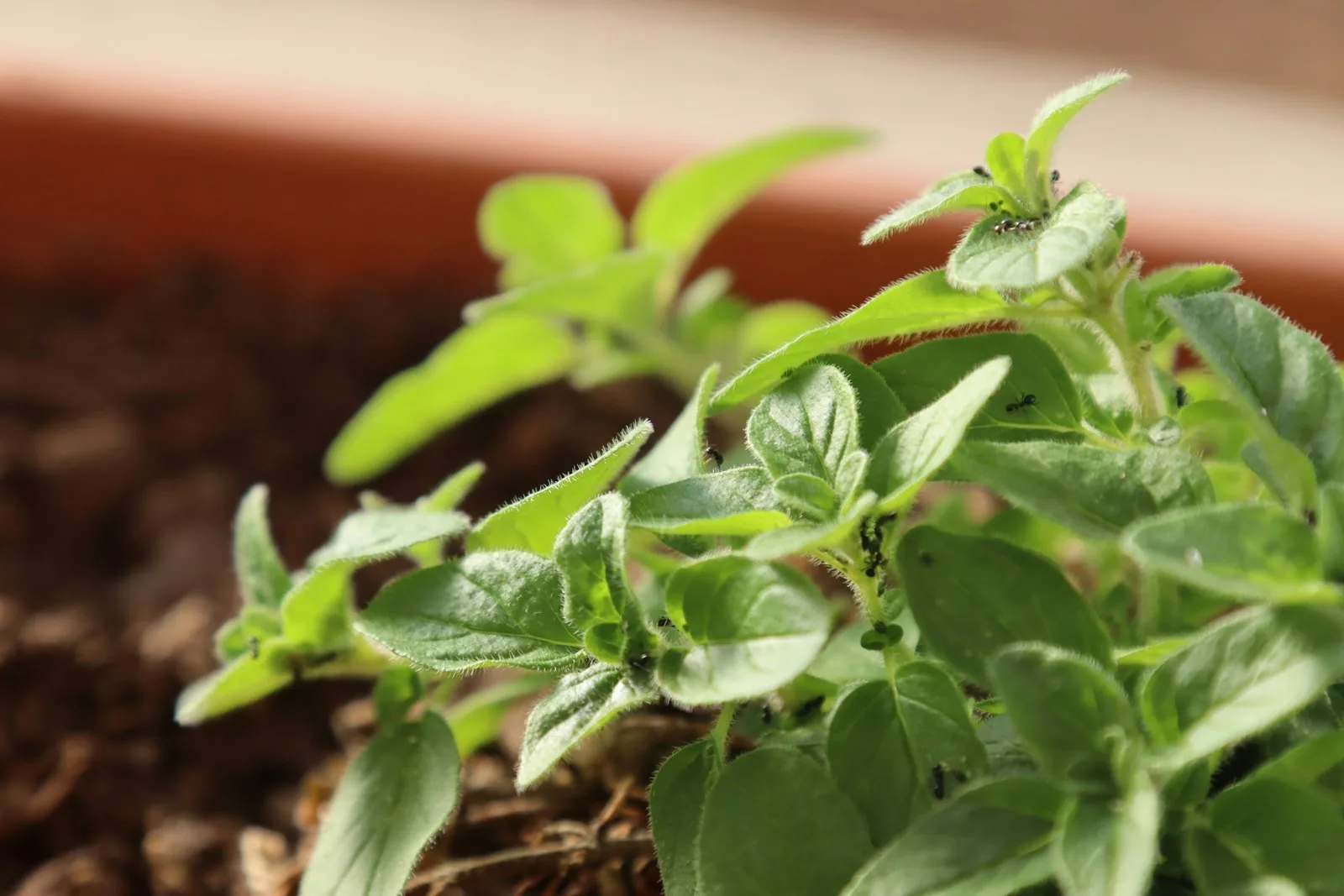
Growing Oregano Outdoors: Zones, Care, and Harvesting
title: "Growing Oregano Outdoors: Zones, Care, and Harvesting"
—- title: "Growing Oregano Outdoors: Zones, Care, and Harvesting" slug: growing-oregano hub: vegetables category: Herb description: "Complete guide to growing oregano outdoors — hardiness zones 4–10, soil, pruning, harvesting for peak flavor, and container vs. in-ground guidance." date: 2026-06-10 updated: 2026-06-10 author: "Thomas A." reading_time: 7 —-
Origanum vulgare is one of the easiest perennial herbs to establish in a home garden, but there is a significant gap between growing oregano that survives and growing oregano that has culinary value. The common strain sold at most garden centers — often labeled as "wild oregano" or generic O. vulgare — has low essential oil content and near-absent flavor in cooking. The varieties worth growing for culinary use are specifically the Greek and Italian types.
I don't grow oregano at the Long Island plot — the guidance below is drawn from university Extension sources and cultivar trial data.
Quick Facts
| Attribute | Detail |
|---|---|
| Scientific name | Origanum vulgare |
| Plant type | Herbaceous perennial; evergreen in mild climates |
| USDA zones | 4–10 |
| Cold tolerance | Hardy to -30°F in zone 4; dies back and regrows in zones 4–6 |
| Light | Full sun, 6–8 hours minimum |
| Soil pH | 6.0–8.0 |
| Water | Drought-tolerant once established |
| Mature size | 12–24 inches tall, 18–24 inches wide |
USDA Hardiness Zone
Per Missouri Botanical Garden, oregano is hardy in USDA zones 4 to 10. In zones 4–6, plants die back to the ground in winter and re-emerge from the root crown in spring. In zones 7–10, plants may remain semi-evergreen through mild winters.
Per NC State Extension Plant Toolbox, oregano is "widely adapted to temperate climates" and reliably perennial across most of the continental United States. It handles the full Long Island winter without protection.
Culinary Varieties: This Choice Matters
The most important decision in growing oregano is cultivar selection. Per Oregon State University Extension, the common wild oregano (O. vulgare) sold at most general garden centers "has little or no flavor for culinary use." The culinary types worth growing are:
- Greek oregano (O. vulgare subsp. hirtum): white flowers, hairy leaves, strong pungent flavor; the standard for Italian and Greek cooking. Per Johnny's Selected Seeds, this is "the culinary standard" for cooking.
- Italian oregano (O. x majoricum, also called "hardy sweet marjoram"): milder flavor than Greek, more cold-hardy than sweet marjoram; zones 5–9; excellent for general cooking.
- Hot and Spicy oregano (O. vulgare 'Hot and Spicy'): high essential oil content, strong flavor; a good choice where Greek oregano is hard to source.
Per Clemson HGIC, "Greek oregano has one of the highest essential oil contents of any culinary herb" and is the type used in commercial dried oregano.
Light Requirements
Per Clemson HGIC, oregano requires "full sun — 6 to 8 hours of direct sunlight daily." Partial shade produces acceptable but less flavorful plants. In hot climates (zones 8–10), light afternoon shade can reduce summer stress without significant flavor loss.
Soil
Per NC State Extension Plant Toolbox, oregano "prefers well-drained soil with a pH of 6.0 to 8.0." Like thyme and rosemary, it tolerates lean, poor soil better than rich, moisture-retentive mixes. Per Clemson HGIC, "overly fertile soil produces lush growth with less flavor" — the essential oil concentration that gives oregano its culinary value is highest when plants are grown in moderately lean, well-drained conditions.
Drainage is important, particularly in winter. Oregano planted in compacted, poorly-draining soil is more likely to rot in cold wet winters than in fast-draining sandy or amended beds.
Watering
Per NC State Extension Plant Toolbox, established oregano is "drought-tolerant" and rarely needs supplemental irrigation outside of establishment. Young transplants need approximately 1 inch per week until established. Once the root system is developed (typically 4–6 weeks after transplanting), oregano can manage extended dry periods without significant stress.
Per Clemson HGIC, water at the base of the plant. Overhead irrigation on mature plants in warm weather can promote fungal problems, though oregano is generally more disease-resistant than basil.
Fertilizing
Per Penn State Extension, oregano needs "minimal fertility." A light spring application of a balanced organic fertilizer — Espoma Plant-tone at half the label rate — is sufficient for established plants in most soils. In very poor or sandy soils, a side-dressing at midsummer may help. Per Clemson HGIC, avoid high-nitrogen fertilizers, which reduce flavor compound concentration.
Pruning and Management
Without management, oregano spreads by underground stolons and becomes a broad, sprawling clump over several seasons. Per Clemson HGIC, prune oregano "back by one-half in early summer after the plant flowers" to promote fresh vegetative growth. Cutting after flowering allows the plant to complete its seasonal cycle while preventing it from becoming woody.
In spring, cut any dead stems from winter dieback to the crown. New growth emerges from the base. Divide large clumps every 3–4 years in spring to maintain vigor — old central growth often becomes less productive while the outer sections remain vigorous.
Per Penn State Extension, cutting oregano back in early spring before new growth is visible helps it "stay compact and productive" through the season.
Harvesting and Storage
Per Clemson HGIC, the best time to harvest oregano is "just before or as flowering begins" — this is when essential oil concentration peaks. Morning harvesting after dew has dried is optimal.
Cut stems back to 2–3 inches above the soil, removing no more than one-third of the plant per harvest. Oregano regrows quickly after cutting and can typically be harvested two to three times per season.
Drying: Oregano is one of the best herbs for drying — essential oils concentrate during the drying process. Per Clemson HGIC, bundle stems loosely and hang in a warm, dark, ventilated area for 1–2 weeks. Dried leaves stripped from stems and stored in airtight containers retain good flavor for 1–2 years.
Fresh storage: Fresh oregano keeps 1–2 weeks refrigerated, wrapped loosely in a damp paper towel. Fresh flavor is more nuanced than dried but more volatile — use quickly.
Freezing: Strip leaves from stems, freeze on a baking sheet, then transfer to a freezer bag. Frozen oregano works in cooked applications but loses the texture that makes fresh oregano interesting in salads or as a finish.
Container vs. In-Ground
Per Penn State Extension, oregano "grows well in containers" with adequate drainage. A 10–12 inch container holds one plant comfortably; use a well-draining potting mix with added perlite. Containers dry out faster than in-ground plantings — water when the top inch of mix is dry.
In zone 7a, in-ground oregano is a reliable low-maintenance perennial that requires only spring cleanup and one or two prunings per season. Container oregano in zones 4–6 can be brought into an unheated garage or cold frame for winter — the plant needs cold dormancy and should not be kept warm indoors.
For container growing, a Smart Pot fabric container in 5–7 gallon size provides good root aeration and drainage for oregano.
Common Problems
| Symptom | Cause | Fix |
|---|---|---|
| No flavor in harvest | Wrong cultivar (wild O. vulgare) | Replace with Greek (O. vulgare subsp. hirtum) or Italian oregano |
| Leggy, sprawling growth | Inadequate sun; over-fertilizing | Move to 6+ hours sun; reduce nitrogen |
| Root rot | Poor drainage in winter | Improve drainage; plant in raised bed |
| Plant does not regrow in spring | Winter-killed (zone 4–5) or extremely wet winter | Cut back to crown; wait 3–4 weeks; if no new growth, replant |
| Spreading invasively | Normal rhizomatous spread | Divide clumps every 3–4 years; use edging to contain |
| Aphids on new growth | Aphid infestation | Dislodge with water spray; apply insecticidal soap if severe |
Frequently Asked
Does oregano come back every year?
Yes, in zones 4–10. Per Missouri Botanical Garden, oregano is hardy in zones 4–10. In zones 4–6, plants die back to the ground and re-emerge in spring; in zones 7–10, they may retain some foliage over winter. Well-established plants in good drainage typically return reliably for many years without replanting.
Why does my oregano have no flavor?
The most common cause is cultivar — common wild oregano (O. vulgare) sold at many garden centers has minimal essential oil content. Per Oregon State University Extension, it "has little or no flavor for culinary use." Replace with Greek oregano (O. vulgare subsp. hirtum), which has high essential oil content. Harvesting at the right time also matters — per Clemson HGIC, essential oils peak just before or at flowering.
When is oregano ready to harvest?
Per Clemson HGIC, harvest when plants are 4–5 inches tall and just before they begin to flower. This timing coincides with peak essential oil concentration. Light harvesting (cutting stem tips by 2–3 inches) can begin earlier in the season once plants are established.
How do I prevent oregano from taking over the garden?
Per Penn State Extension, divide oregano clumps every 3–4 years to control spread. For more aggressive containment, plant in a container sunk to its rim in the garden bed, or use a physical root barrier. Oregano spreads via underground stolons, not seed, so deadheading alone will not limit its spread.
—-
Recommended gear: Best Raised Garden Bed Kits: Cedar vs. Metal vs. Fabric — our buyer's guide covering picks for every budget, ranked by Extension publication consensus and personal use.
Sources
- NC State Extension Plant Toolbox — <a href="https://plants.ces.ncsu.edu/plants/origanum-vulgare/">Origanum vulgare (Oregano)</a>.
- Missouri Botanical Garden — <a href="https://www.missouribotanicalgarden.org/PlantFinder/PlantFinderDetails.aspx?kempercode=a461">Origanum vulgare</a>.
- Clemson HGIC — <a href="https://hgic.clemson.edu/factsheet/oregano/">Oregano</a>.
- Penn State Extension — <a href="https://extension.psu.edu/herb-gardening">Herb Gardening</a>.
- Oregon State University Extension — <a href="https://extension.oregonstate.edu/herbs">Herbs in the Garden</a>.
- Johnny's Selected Seeds — <a href="https://www.johnnyseeds.com/growers-library/herbs/oregano/oregano-growing-information.html">Oregano Growing Information</a>.