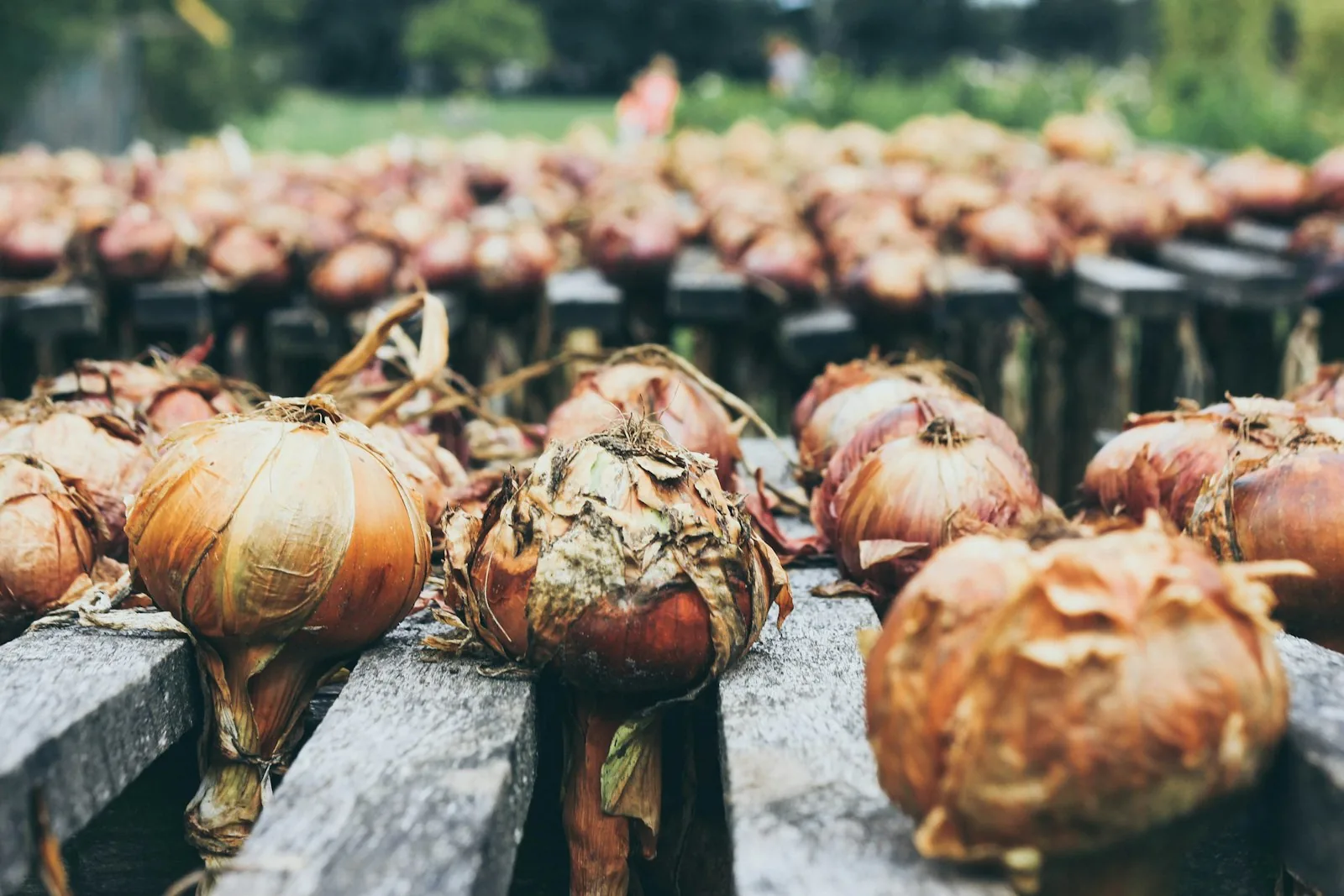
I don't grow onions at my Long Island plot — my vegetable beds are committed to tomatoes, peppers, cucumbers, and a few greens. This guide draws from Cornell Cooperative Extension, Penn State Extension, and NC State Extension, along with Johnny's Selected Seeds growing guides, which together represent the most detailed published guidance on home onion production in the mid-Atlantic and Northeast.
Onions trip up gardeners not through complicated care but through one poorly understood concept: day-length. An onion variety that bulbs beautifully in Georgia will produce only scallion-sized results in New York, and vice versa. Getting the day-length match right is the foundational decision.
This article contains affiliate links. As an Amazon Associate, we earn from qualifying purchases - at no extra cost to you. We only recommend products we have personally tested or that are the universal first recommendation from university Extension publications. See our full disclosure.
Day-length: the critical selection factor
Allium cepa cultivars are classified by the day-length required to trigger bulb initiation:
Long-day onions (13—16 hours of daylight to initiate bulbing): Required for USDA zones 6 and north, including all of the Northeast and upper Midwest. Bulbing is triggered by the long days of late spring and early summer at northern latitudes. Varieties: 'Walla Walla Sweet', 'Yellow Sweet Spanish', 'Copra' (excellent storage), 'Cortland', 'Patterson' (long storage).
Short-day onions (10—12 hours): For zones 7 and south, grown as a winter/spring crop where winters are mild. Varieties: 'Granex' (Vidalia parent variety), 'Texas SuperSweet', '1015Y Texas SuperSweet'. Per NC State Extension, these bulb during the short days of late winter and spring in the South; in zone 7a (Long Island), short-day types will bulb prematurely before reaching full size.
Intermediate/day-neutral onions (12—14 hours): Per Cornell Cooperative Extension, intermediate types are suitable for zones 5—7 and provide more flexibility than strict long-day or short-day types. 'Candy' is the best-known intermediate.
For zone 7a Long Island: long-day or intermediate types. 'Copra', 'Patterson', 'Walla Walla Sweet', and 'Candy' are reliable choices per Cornell and Johnny's.
Days to maturity (from transplant): 'Copra' (104 days), 'Patterson' (98 days), 'Walla Walla Sweet' (115 days), 'Candy' (85 days). Per Johnny's Selected Seeds, days-to-maturity figures are from transplant, not from seed.
More like this, monthly
Get the seasonal care notes — no upsell, unsubscribe any time.
One email per month from Thomas: what to plant, what to prune, what's about to break. Cited the same way as the guides.
Free. No spam. Same author as the guide you just read.