Home/Vegetables/Starting Vegetables from Seed Indoors: Timing and Technique
Vegetable
Starting Vegetables from Seed Indoors: Timing and Technique
Starting vegetables from seed indoors saves money, expands your cultivar options beyond what any garden center stocks, and puts you in control of transplant timing.
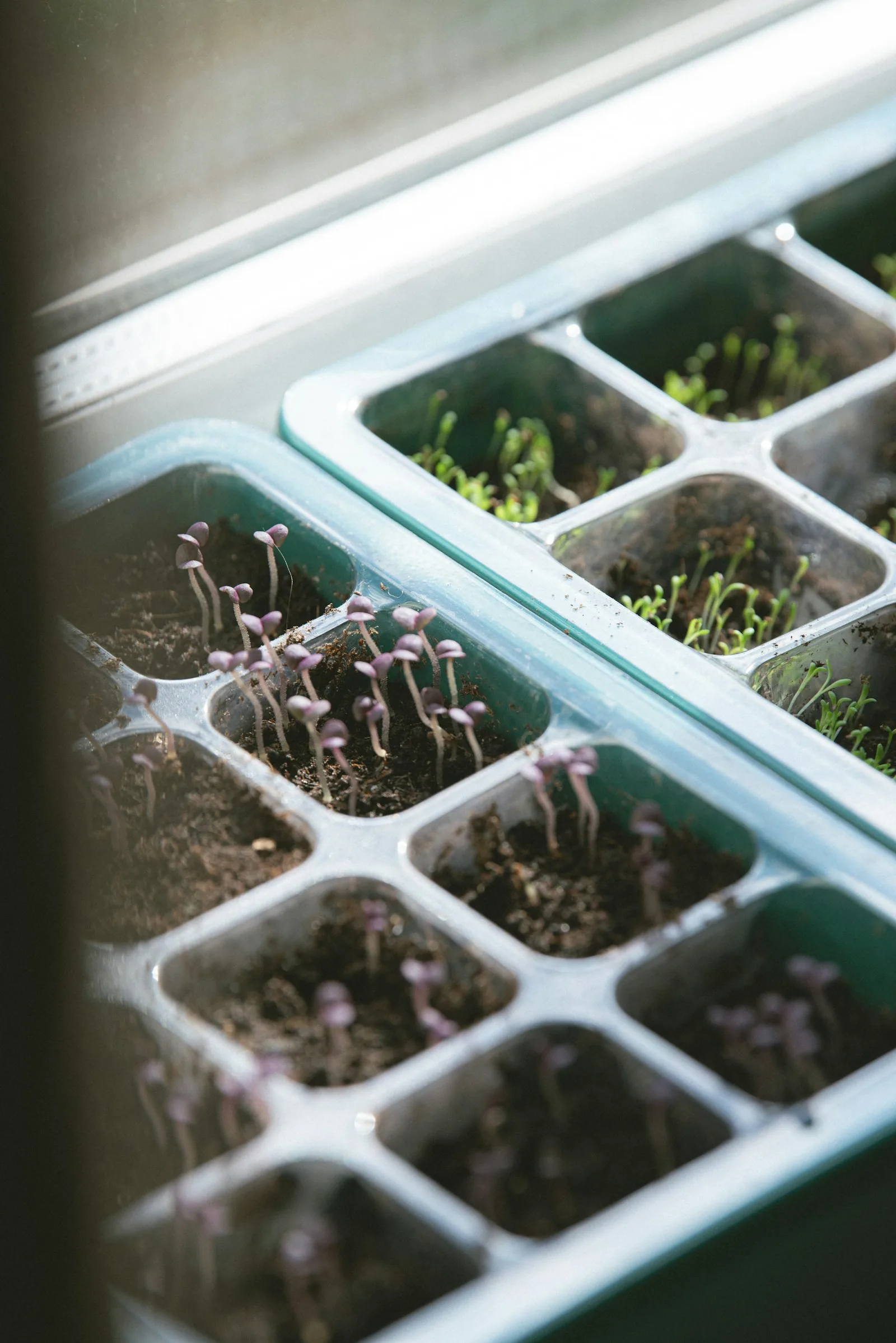
Starting vegetables from seed indoors saves money, expands your cultivar options beyond what any garden center stocks, and puts you in control of transplant timing. On Long Island, where I garden in zone 7a, I direct-sow some things — beans, squash, cucumbers — and start others under lights six to eight weeks before the last frost: tomatoes, peppers, celery, and all the brassicas. The difference in cost between a six-pack of hybrid pepper seedlings at $8 and a $4 packet of 25 seeds is obvious. The difference in available cultivars is even larger.
That said, indoor seed starting has a failure rate most beginners underestimate. The two most common problems are leggy, weak seedlings from insufficient light and damping-off from overwatering in poorly drained media. This guide covers both, with timing, technique, and troubleshooting sourced from Cornell Cooperative Extension and Penn State Extension.
This article contains affiliate links. As an Amazon Associate, we earn from qualifying purchases - at no extra cost to you. We only recommend products we have personally tested or that are the universal first recommendation from university Extension publications. See our full disclosure.
When to Start: Count Back from Transplant Date
The timing for indoor seed starting is calculated backward from your target transplant date, not forward from an arbitrary start date.
Per Cornell Cooperative Extension, the formula is: last frost date minus weeks-to-transplant-size. For zone 7a Long Island, the average last frost is approximately April 15-25, but tomato transplant timing is not determined by frost alone — soil temperature of 65°F is the more reliable indicator, which pushes practical tomato planting to mid-to-late May.
Crop
Weeks Before Last Frost
Direct Sow Instead?
Celery
10-12 weeks
No
Peppers
10-12 weeks
No
Tomatoes
6-8 weeks
No
Eggplant
8-10 weeks
No
Broccoli, cabbage
6-8 weeks
Yes (fall crop)
Lettuce, kale
4-6 weeks
Yes
Cucumber, squash
2-4 weeks
Yes (preferred)
Beans, peas, corn
—
Direct sow only
Per Penn State Extension, "most vegetable transplants should be started 6 to 8 weeks before planting outdoors." Peppers and celery are the exception — they need 10-12 weeks because of their slow germination and growth rate.
Starting too early is as problematic as starting too late. A tomato that has been in a small cell for 10 weeks will be root-bound, stunted, and often flowering before transplant — none of which is desirable. Per Cornell, seedlings that are overgrown at transplant "do not recover as well and often are outperformed by younger, smaller transplants."
More like this, monthly
Get the seasonal care notes — no upsell, unsubscribe any time.
One email per month from Thomas: what to plant, what to prune, what's about to break. Cited the same way as the guides.
Free. No spam. Same author as the guide you just read.
Got it — check your inbox to confirm. Welcome.
Seed-starting setup
A Barrina T5 LED strip plus a seedling heat mat handles a 4x4 bench for pennies per hour. Cuts pepper germination time in half. Read our full pick.