Home/Plants/Peony Care: From Bareroot to Thirty-Year Bloom
Species guide
Peony Care: From Bareroot to Thirty-Year Bloom
The most common reason peonies fail to bloom is planting too deep. Get the eyes 1 inch below the surface, give them sun and drainage, and the plant will outlive you.
A peony planted correctly will outlive you. There are documented herbaceous peonies in old Pennsylvania farmhouse yards that have been blooming continuously for over a hundred years. The first peony I planted at my parents' Long Island house in 2014 still throws fifteen blooms every Memorial Day weekend. The investment in getting the planting right is small. The return is generational.
Three kinds of peony — and they are not interchangeable
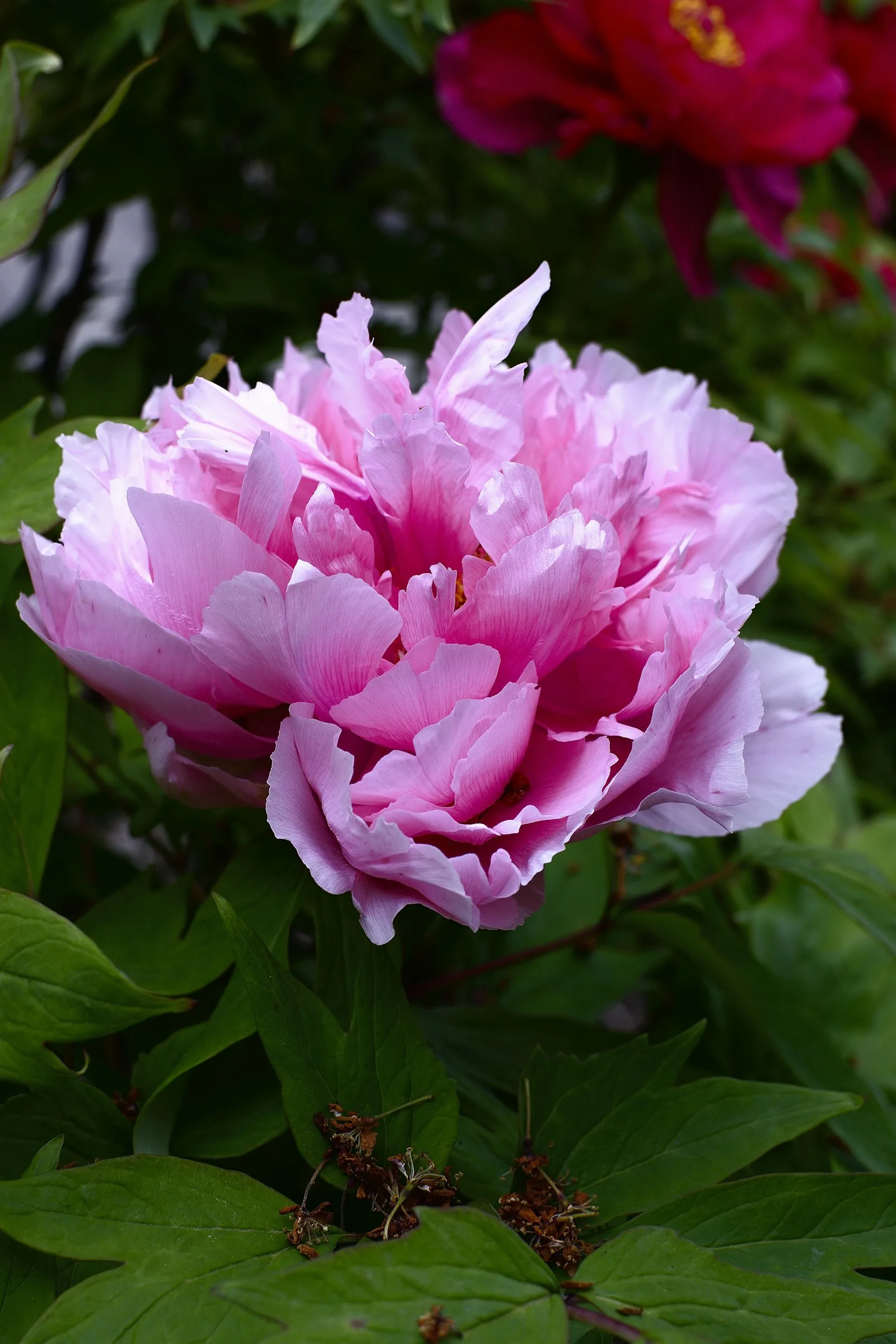
When people say "peony" they usually mean herbaceous peony — the kind that dies to the ground every winter and re-emerges from the crown in spring. There are actually three types in cultivation, with meaningfully different care.
Herbaceous peonies (Paeonia lactiflora and hybrids)
The classic peony. Per Penn State Extension, herbaceous varieties grow 2–4 feet tall, die back completely in winter, and bloom in late spring (May–early June in zones 5–7). The big-flowered cultivars — Sarah Bernhardt, Festiva Maxima, Karl Rosenfield — are all P. lactiflora selections.
USDA hardiness: Zones 3–8. Per Missouri Botanical Garden, "best performance typically occurs in USDA Zones 5–7, but plants often perform well in the northern parts of Zone 8." In zones 8 and warmer, the chilling requirement becomes harder to meet and many cultivars fail to bloom reliably.
Keep deer and rabbits out
Liquid Fence uses egg-and-garlic scent. One application lasts 30 days and works on both deer and rabbits. Read our full pick.
Tree peonies (Paeonia suffruticosa and related species)
A woody shrub, not a herbaceous perennial. Per Penn State Extension, tree peonies "can grow 3 to 7 feet tall" and the woody stems persist year-round. Flowers are typically larger than herbaceous types (some over 9 inches across) and bloom slightly earlier in the season.
USDA hardiness: Zones 3–8 per NC State Extension Plant Toolbox.
Planting depth differs: Per Penn State Extension, "if the root is grafted, the graft union should be 4 to 6 inches below the soil surface." This is the opposite advice from herbaceous peonies — tree peonies must be planted deep, herbaceous peonies must be planted shallow. Note: Clemson HGIC recommends only "an inch below ground level" for the graft union in South Carolina; the deeper Penn State depth reflects best practice for cold-winter zones where the graft union needs freeze protection.
Intersectional (Itoh) peonies
A cross between tree and herbaceous peonies, named for the Japanese breeder Toichi Itoh. Per Penn State Extension, intersectionals grow 2–2.5 feet tall, have the strong stems of tree peonies (so they don't flop), the cold-hardiness of herbaceous peonies, and very large flowers. They are expensive ($60–$150 per plant is common) and worth it if you want a structural peony that holds its blooms.
Planting depth: Per Penn State Extension, intersectional roots have a herbaceous crown — treat like herbaceous, with eyes 1–2 inches below the surface.
Peony starter kit
Everything to plant, support, and feed a herbaceous peony bed
FertilizerEspoma Plant-tone 5-3-3Low-N organic. Excess nitrogen = no flowers.See on Amazon →
SupportPanacea peony ringSet at 6" growth. Full peonies flop without it.See on Amazon →
PruningFelco F-2 bypass prunersFor deadheading and fall stem removal.See on Amazon →
MulchCompost-based mulch2" layer in spring keeps moisture and feeds the bed.See on Amazon →
More like this, monthly
Get the seasonal care notes — no upsell, unsubscribe any time.
One email per month from Thomas: what to plant, what to prune, what's about to break. Cited the same way as the guides.
Free. No spam. Same author as the guide you just read.