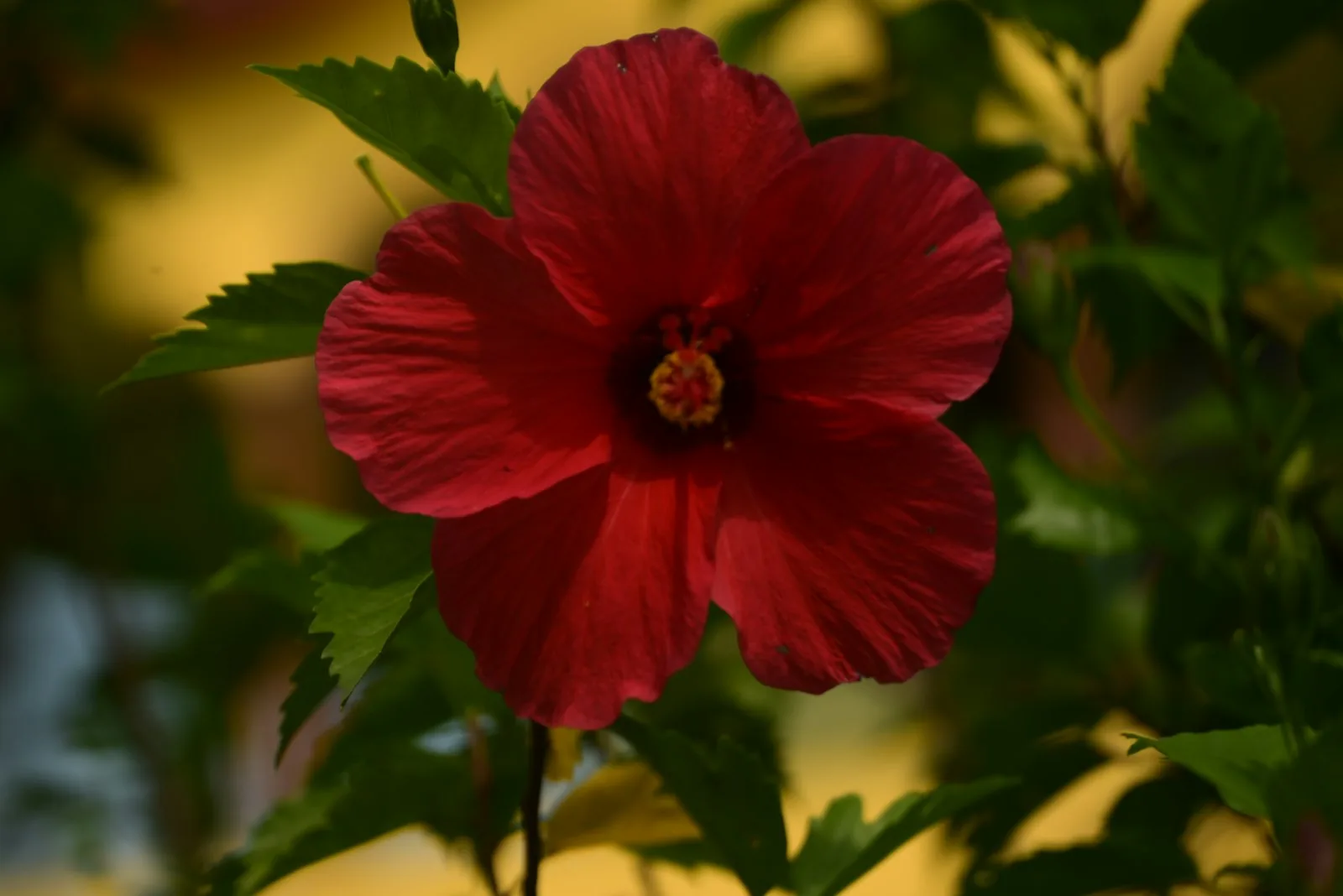
Hibiscus moscheutos — rose mallow, swamp rose mallow, hardy hibiscus — produces flowers that are genuinely enormous. Per Missouri Botanical Garden, flower diameter ranges from 6–12 inches on some cultivars, among the largest of any hardy perennial. The plant emerges very late in spring — so late that inexperienced gardeners routinely dig it up assuming it has died — blooms continuously from mid-summer into fall, then dies back to the ground each winter. It is a herbaceous perennial despite its tropical appearance.
I don't grow hardy hibiscus in my Long Island yard. This guide is sourced from university Extension publications.
This article contains affiliate links. As an Amazon Associate, we earn from qualifying purchases - at no extra cost to you. We only recommend products we have personally tested or that are the universal first recommendation from university Extension publications. See our full disclosure.
Hardy hibiscus vs. tropical hibiscus — an important distinction
Hibiscus moscheutos — hardy hibiscus, swamp rose mallow. A true herbaceous perennial, cold-hardy in zones 4–9. Dies to the ground each winter. Native to wet meadows and swampy areas of eastern North America.
Hibiscus rosa-sinensis — tropical hibiscus. A woody shrub or small tree, cold-hardy only in zones 10–11. What most people buy as a summer patio plant in the northern United States. Not a perennial in most of the country.
This distinction matters because care advice for tropical hibiscus (bring indoors in fall, overwinter as a houseplant) does not apply to hardy hibiscus. Per NC State Extension Plant Toolbox, H. moscheutos is "an herbaceous perennial in zones 4–9" that "dies to the ground and regenerates from the root crown each spring."