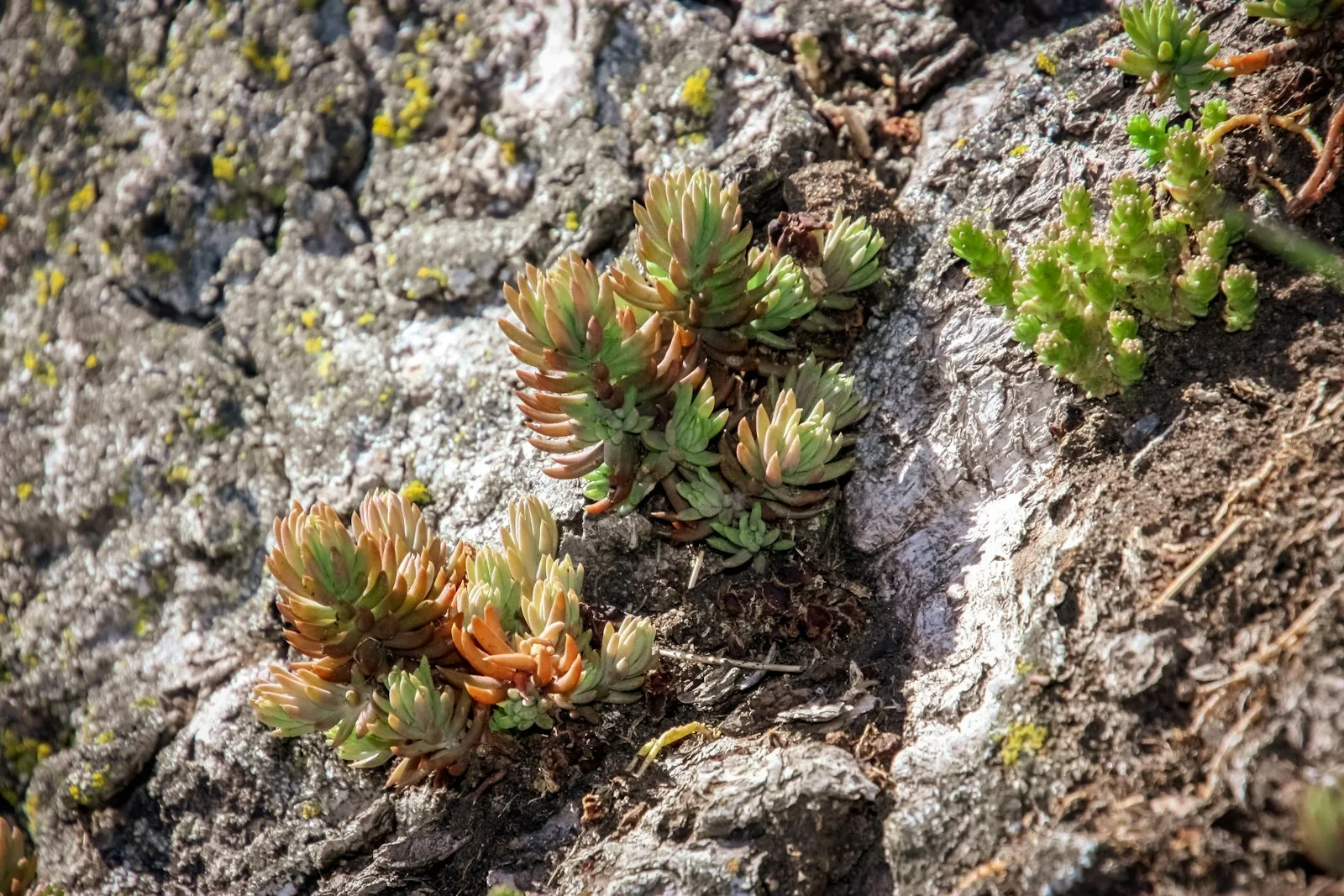
Sedum and stonecrop care: zone hardiness and the Autumn Joy crown rot trap
Autumn Joy sedum thrives in lean, dry, well-drained soil in full sun. Crown rot and flopping are both cultural problems -- wet soil and too much shade or fertility.
—- title: "Sedum care" slug: sedum-care hub: plants category: Species guide description: "I have grown 'Autumn Joy' sedum — now correctly named Hylotelephium 'Herbstfreude' — in a full-sun corner of my Long Island yard for nine years. It has required exactly three things from me: a." date: 2026-06-10 updated: 2026-06-10 author: "Thomas A." reading_time: 10 scientific: "Hylotelephium spectabile" zones_min: 3 zones_max: 10 sun: "full sun" deer_resistant: true native: false pollinator: true bloom: "fall" height_min: 1 height_max: 2 —-
I have grown 'Autumn Joy' sedum — now correctly named Hylotelephium 'Herbstfreude' — in a full-sun corner of my Long Island yard for nine years. It has required exactly three things from me: a site that drains well, full sun, and very little else. The plant comes back every spring from the same crown, spreads slowly, blooms reliably in September, and holds its seed heads through winter for birds and structure. It is one of the most trouble-free plants in my garden with one meaningful caveat: if you grow it in rich, moist soil or shade, it flops. And in genuinely wet or fertile soil, the crown can rot.
Upright sedums vs. creeping sedums
The plant sold as "sedum" covers a wide range of habits, from flat ground-hugging creepers to upright 2-foot perennials. The care requirements are broadly similar but the garden uses are different.
Upright sedums (Hylotelephium / tall sedum group)
These are the familiar autumn-blooming garden perennials: 'Autumn Joy' (correctly Hylotelephium 'Herbstfreude'), 'Matrona', 'Autumn Fire', and the Sedum spectabile cultivars like 'Brilliant'. They grow 1.5 to 2 feet tall per Missouri Botanical Garden, with broad, flat-topped flower clusters that age from pink to deep rusty red through September and October. The genus name changed from Sedum to Hylotelephium in many classifications, but both names are used in trade.
Per NC State Extension Plant Toolbox, Hylotelephium spectabile is hardy in zones 4a through 9b. Per Missouri Botanical Garden, 'Autumn Joy' specifically is hardy in zones 3 to 9.
Creeping sedums
Low ground-covering sedums (Sedum acre, S. rupestre 'Angelina', S. spurium, S. sexangulare) grow 2 to 6 inches tall and spread to cover the ground. They are excellent for rock gardens, dry walls, and areas too dry and harsh for most plants. The care principles are the same — excellent drainage, full sun, lean soil — but they are essentially maintenance-free once established.
USDA hardiness zones
Per Missouri Botanical Garden, Hylotelephium 'Autumn Joy' is hardy in zones 3 through 9. Per NC State Extension Plant Toolbox, H. spectabile is hardy in zones 4a through 9b.
In zone 7a Long Island, 'Autumn Joy' is completely reliable. The plant's primary winter threat is not cold — it is wet soil during the dormant season.
Light
Per Missouri Botanical Garden: "Easily grown in average, dry to medium, well-drained soils in full sun." Per NC State Extension, full sun (6 or more hours) is the primary requirement, with partial shade tolerated.
The important nuance: per Missouri Botanical Garden, upright sedums "tolerates some light part shade in hot summer climates, but will produce weak floppy growth when grown in too much shade or in overly rich soils." In zones 8 to 9, some afternoon shade is beneficial. In zones 3 through 7, full sun is non-negotiable if you want upright stems that do not require staking.
The flopping problem — which is the most common complaint about 'Autumn Joy' — is almost always a light or soil problem, not a structural weakness of the variety. My 'Autumn Joy' in full sun on lean sandy loam stands straight. The same variety in a neighbor's shaded, amended bed sprawls onto the path by late summer every year.
Watering
Sedum is genuinely drought-tolerant. Per Missouri Botanical Garden: "Drought tolerant." Per NC State Extension, Hylotelephium grows in "occasionally dry" conditions.
In the first growing season, water new transplants weekly during establishment. After year one, my 'Autumn Joy' plants get no supplemental irrigation. They thrive on Long Island with normal rainfall, including through dry summers. In a genuine extended drought, they show some stress (slight wilting late afternoon) but recover without watering.
What sedum cannot tolerate is waterlogged soil, especially over winter. This is the single cultural requirement that, when violated, causes crown rot.
Soil
Per Missouri Botanical Garden: "Thrives in sandy to gravelly soils of moderate to low fertility. Needs good soil drainage to perform well."
Per NC State Extension, the plant tolerates clay, loam, sand, and shallow rocky soils. The pH range is broad — acid to alkaline.
The operative words in the MBG description are "moderate to low fertility." This is not hedging. Rich, heavily amended soil does two things to sedum: it produces lush, top-heavy growth that falls over, and it creates the moist, fertile conditions in which crown rot thrives. If you are amending your garden beds with compost every year, sedum does not belong in those beds. Plant it in a spot that has been left alone.
The crown rot trap
Crown rot is the most common way 'Autumn Joy' and other upright sedums die prematurely. It occurs when the crown (the growing point at the base of the stems) sits in wet, fertile soil during the cooler, wetter parts of the season — particularly late fall through early spring.
Per Missouri Botanical Garden: "Rotting out is possible in wet and/or poorly drained conditions."
The conditions that drive crown rot in upright sedums:
- Heavy, amended, or clay soil that holds moisture around the crown
- Organic mulch piled against the crown — traps moisture and heat
- Overly rich soil — soft, lush growth is more susceptible to fungal rot
- Low-lying or compacted sites where water stands after rain
The fix is site selection. Plant 'Autumn Joy' in a raised or well-drained spot. If your soil tends toward clay, either improve drainage significantly before planting or choose a different plant. Keep mulch well away from the crown — a 2-inch ring of bare soil around each stem is better than wood chip mulch touching the plant base.
Fertilizing
Do not fertilize sedum. Per Missouri Botanical Garden, these plants "thrive in sandy to gravelly soils of moderate to low fertility." Adding fertilizer produces the exact growth problems sedum is known for: floppy stems, crowded weak growth, increased susceptibility to rot.
The one exception: if plants are in genuinely impoverished, nearly sterile soil (compacted subsoil, for example) and showing very slow growth and yellowing, a very light application of a balanced slow-release fertilizer in spring is acceptable. In normal garden soil, none.
The Chelsea chop — controlling height
Upright sedums bloom in September and October, with stems reaching full height by midsummer. If you find your 'Autumn Joy' getting too tall or inclined to flop, the "Chelsea chop" — cutting back the stems by one-third in late May or early June — produces shorter, bushier growth without delaying bloom significantly.
Per Missouri Botanical Garden: "Plants may be cut back in late spring to control height." And: "Pinching in spring can also force stems to grow thicker and bushier."
I use a variation of this on my 'Autumn Joy': in early June I cut the taller outer stems back by about one-quarter while leaving the inner stems alone. The result is a more mounded, self-supporting plant by September.
Flopping and how to prevent it
Flopping is the most common cultural problem in upright sedums and it has two primary causes per Missouri Botanical Garden: "too much shade or in overly rich soils."
The fix is cultural, not chemical:
- Move plants to full sun if they are in partial shade
- Stop amending soil with compost in sedum beds
- Cut back in spring (Chelsea chop) to promote compact growth
- Divide crowded clumps that have lost vigor
If you have tried all of these and the plant still flops, there is a genetic component — some cultivars are more prone to flopping than others. Newer compact selections like Hylotelephium 'Mr. Goodbud', 'Thundercloud', and 'Autumn Charm' have stiffer stems bred specifically to address this.
Propagation and division
Per Missouri Botanical Garden: "Propagate by divisions in spring or stem cuttings in summer. Detached leaves can be rooted in soil to form new plants."
Dividing 'Autumn Joy' every 3 to 4 years rejuvenates the clump and is the easiest way to increase plants. Do it in early spring when growth is just emerging. Use a sharp spade to cut through the crown and replant divisions immediately at the same depth. Divisions establish quickly and bloom the same fall.
Pests
Per Missouri Botanical Garden: "Slugs, scale, mealybugs, nematodes, aphids and weevils may appear." Per NC State Extension, similar pests plus root nematodes are occasional.
In practice, established sedum has few serious pest problems. Slugs are the most common issue in wet springs, particularly affecting the young emerging growth. Address them with iron phosphate bait (see the slug bait guide). The other pests listed are rarely a problem in average conditions.
Deer resistance
Per NC State Extension, Hylotelephium has strong "resistance to challenges: deer." In my zone 7a Long Island yard with moderate-to-high deer pressure, deer have never touched my 'Autumn Joy' in nine years. This makes sedum a good choice for gardens where deer pressure eliminates many other perennials.
Common problems
| Symptom | Most likely cause | Fix |
|---|---|---|
| Stems flop or spread outward by late summer | Too much shade; soil too rich | Full sun; no fertilizer; Chelsea chop in late May |
| Plant collapses or rots at crown | Crown rot from wet/clay soil or mulch against crown | Improve drainage; remove mulch from crown; replant in lean site |
| Floppy, tall stems; lots of foliage but smaller flowers | Over-fertilized or over-amended soil | No fertilizer; stop adding compost to these beds |
| Crown dies but outer segments survive | Normal center-out aging in dense crown | Divide every 3-4 years; replant vigorous outer sections |
| Slugs on emerging spring growth | Slugs, especially in wet spring | iron phosphate slug bait in early spring |
| Aphid colonies on stem tips | Aphids | Knock off with water spray; insecticidal soap for heavy infestations |
Recommended gear: Best Raised Garden Bed Kits: Cedar vs. Metal vs. Fabric — our buyer's guide covering picks for every budget, ranked by Extension publication consensus and personal use.
Frequently asked
Why does my 'Autumn Joy' sedum flop over?
Per Missouri Botanical Garden, "taller sedum hybrids with large flower heads are susceptible to flopping. This can be avoided by providing full sun conditions and planting in soils that are not too moist or rich." The two causes are inadequate light and soil that is too fertile or moist. Move the plant to full sun if it is in shade. Stop adding compost or fertilizer to the bed. Cut back stems by one-third in late May (the Chelsea chop) to encourage compact growth. Staking is a workaround, not a solution — fix the cultural conditions.
How do I prevent crown rot in sedum?
Site selection is the main control. Per Missouri Botanical Garden, "rotting out is possible in wet and/or poorly drained conditions." Plant in a site where water drains away within a few hours of heavy rain. Avoid heavy clay without drainage improvement. Keep organic mulch away from the crown of the plant — leave bare soil immediately around each stem. Do not amend the planting site with compost. If the site has a drainage problem, build a raised bed or choose a different plant.
When does 'Autumn Joy' sedum bloom?
Per Missouri Botanical Garden, the bloom time is September to October. In zone 7a Long Island, flowers typically open in late August to early September, with the color deepening to rust-red through October. The flower heads are attractive after frost, turning to warm tan-brown through winter, and provide structure and bird interest until the spring cutback.
Do you cut sedum back in fall or spring?
Either works. I do a spring cutback, leaving the attractive dried seed heads standing through winter for structure and birds. Per Missouri Botanical Garden, division is done in spring, which aligns naturally with cutting the old stems back at the same time. If you prefer a tidier bed over winter, a fall cutback after frost is also fine. Cut stems to about 4 to 6 inches above the crown, or all the way to ground level in spring.
Sources
- Missouri Botanical Garden Plant Finder — Hylotelephium ‘Herbstfreude’ AUTUMN JOY.
- NC State Extension Plant Toolbox — Hylotelephium spectabile.
- NC State Extension Plant Toolbox — Hylotelephium (genus).