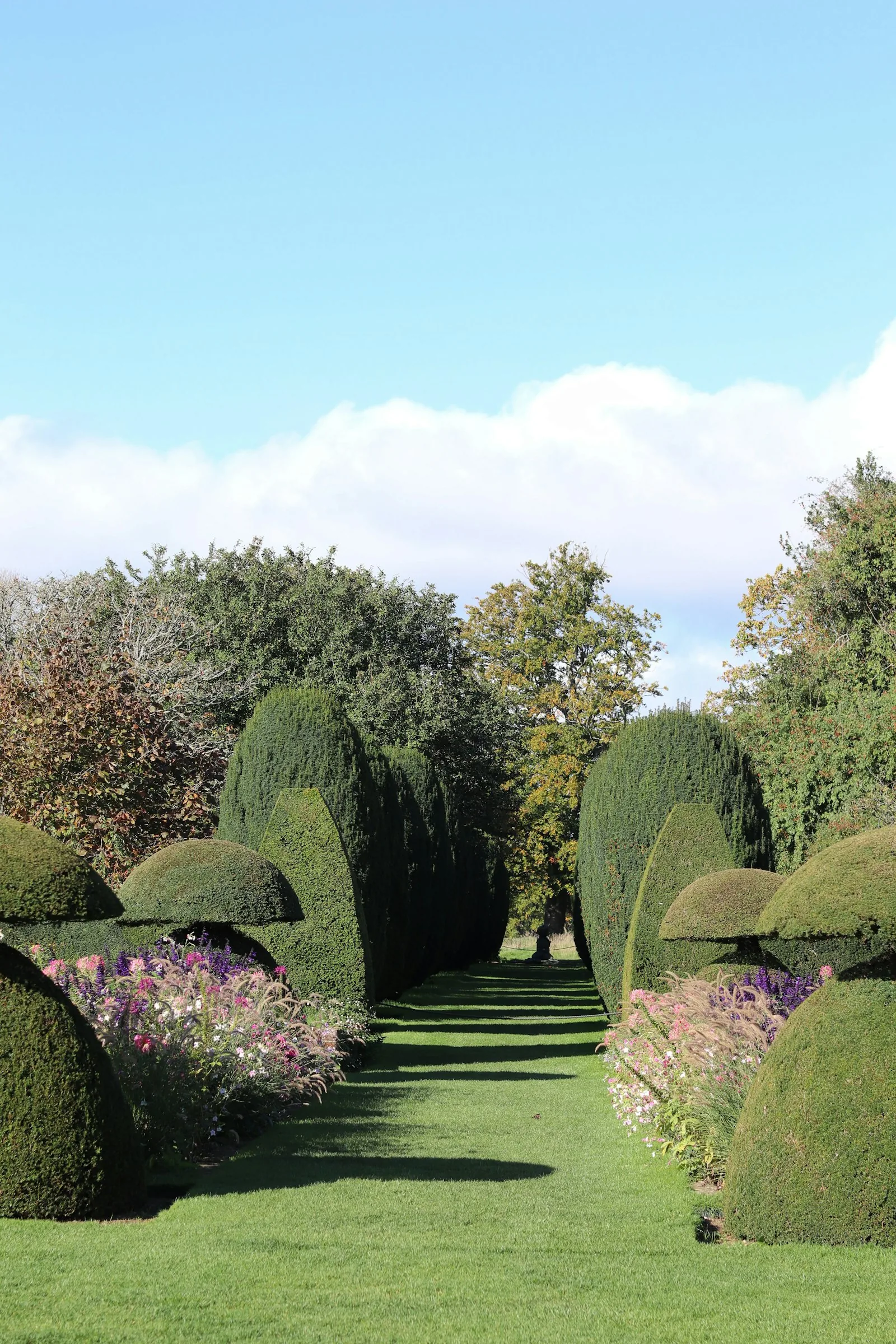
Buxus sempervirens — common boxwood — has been a foundation of formal American and European landscapes for centuries. Per Missouri Botanical Garden, it is "one of the oldest documented ornamental garden plants." Dense, fine-textured evergreen foliage holds its form under shearing, making it the standard choice for formal hedges, parterres, and topiary. The serious problem: boxwood blight, a devastating fungal disease that has spread across the United States and now threatens boxwood plantings everywhere east of the Rockies.
I don't grow boxwood in my Long Island yard. This guide is sourced from Extension publications.
This article contains affiliate links. As an Amazon Associate, we earn from qualifying purchases - at no extra cost to you. We only recommend products we have personally tested or that are the universal first recommendation from university Extension publications. See our full disclosure.
Species and cultivar selection
Buxus sempervirens — common boxwood. Per Missouri Botanical Garden, grows 15–20 feet tall at maturity without pruning; 'Suffruticosa' (English boxwood) stays more compact at 3–5 feet. Zones 5–9. Most susceptible to boxwood blight.
Buxus microphylla and varieties — littleleaf boxwood and Japanese boxwood. Per NC State Extension Plant Toolbox, more heat-tolerant than B. sempervirens and somewhat more resistant to boxwood blight. 'Winter Gem' and 'Green Mountain' are common cultivars.
Buxus sinica var. insularis (Korean boxwood) — per Penn State Extension, very cold-hardy (zones 4–9), better blight resistance than common boxwood, and lower susceptibility to boxwood leafminer.
Deer resistance note: Per Rutgers NJAES, boxwood is rated as "rarely damaged" by deer — an important characteristic for Long Island and other high-pressure gardens.
More like this, monthly
Get the seasonal care notes — no upsell, unsubscribe any time.
One email per month from Thomas: what to plant, what to prune, what's about to break. Cited the same way as the guides.
Free. No spam. Same author as the guide you just read.
Got it — check your inbox to confirm. Welcome.
Keep deer and rabbits out
Liquid Fence uses egg-and-garlic scent. One application lasts 30 days and works on both deer and rabbits. Read our full pick.