Species guide

Gardenia care: pH, iron chlorosis, and the zone 7 winter problem

Gardenias need acidic soil (pH 5.0-6.0), and most failures trace to pH drift above 7.0 causing iron chlorosis. In zone 7, cultivar selection is the difference between a plant that survives and one that dies back every winter.

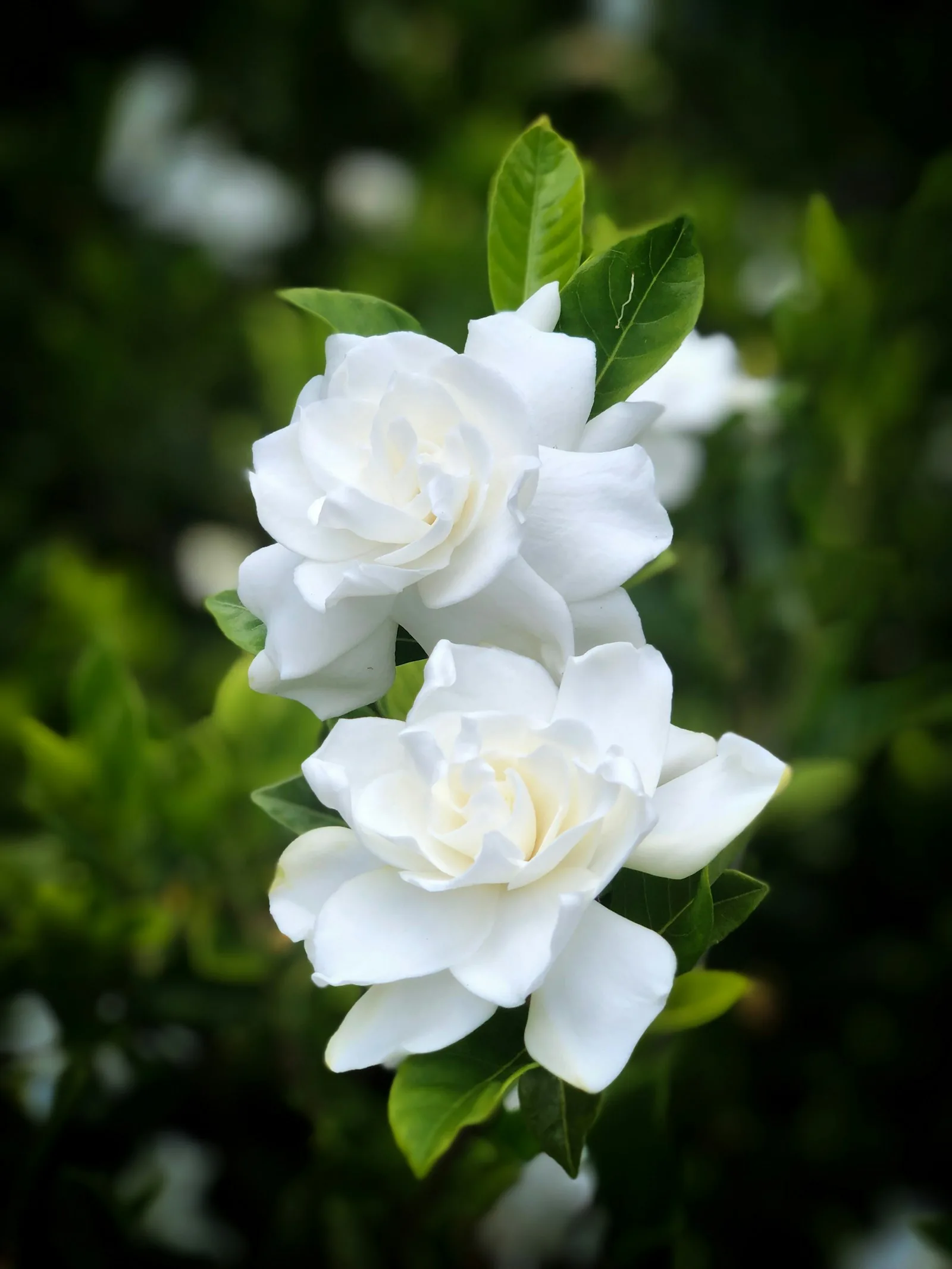
Two beautiful white gardenia blossoms bloom
Photo: Unsplash on Unsplash

—- title: "Gardenia care" slug: gardenia-care hub: plants category: Species guide description: "Gardenias are among the most fragrant flowering shrubs in cultivation, and among the most exacting. The combination of acidic soil requirements, sensitivity to alkalinity-related iron deficiency, and." date: 2026-06-10 updated: 2026-06-10 author: "Thomas A." reading_time: 13 scientific: "Gardenia jasminoides" zones_min: 8 zones_max: 11 sun: "part sun" deer_resistant: true native: false pollinator: true bloom: "summer" height_min: 3 height_max: 6 —-

Gardenias are among the most fragrant flowering shrubs in cultivation, and among the most exacting. The combination of acidic soil requirements, sensitivity to alkalinity-related iron deficiency, and marginal cold hardiness in the mid-Atlantic region makes them a demanding subject for the zone 7a gardener. I don't grow gardenias at my Long Island yard. The newer cold-hardy cultivars have expanded the range into zone 7a, but the soil pH work required to maintain them, combined with my yard's tendency to drift alkaline from surrounding concrete and masonry, has kept me from trying. This guide is built from Clemson HGIC, UF IFAS Gardening Solutions, NC State Extension Plant Toolbox, and Missouri Botanical Garden.

Species and cultivar identification

The gardenia sold in North American nurseries is overwhelmingly Gardenia jasminoides (also listed as G. augusta), native to subtropical Asia. Per Clemson HGIC, it "typically grows to a height of 3-8 feet, depending upon the cultivar" with a spread usually equal to the height.

The cultivar decision matters enormously for zone 7 gardeners:

CultivarCold hardiness notes
Standard older cultivarsPer Clemson HGIC, cold-hardy to USDA zone 8
'Kleim's Hardy'Per Clemson HGIC, "hardy to 10°F" — this is approximately zone 6b
'Chuck Hayes'Per Clemson HGIC, "extra cold hardy" — double flowers
'Frost Proof'Per Clemson HGIC, "more tolerant of early spring frosts"
Summer Snow®Per Clemson HGIC, "a very cold hardy cultivar"
'Daisy'Per Clemson HGIC, "recommended for the Upstate of South Carolina" (zone 7a-b)
Dwarf 'Radicans'Per Clemson HGIC, "not very cold hardy" — avoid in zone 8 and below

Per NC State Extension Plant Toolbox: "If planted near a concrete walk or foundation, soil may be too alkaline for good growth." This is a critical site-selection note — concrete leaches calcium carbonate that raises soil pH, exactly the opposite of what gardenias need.

USDA hardiness zones

Per Clemson HGIC: most older cultivars are cold-hardy to USDA zone 8. Many newer and smaller cultivars are hardy to at least USDA zone 7a. In zone 7, success depends on choosing the right cultivar and selecting a protected microclimate — south or east-facing wall, sheltered from wind, with well-drained soil.

Per Clemson HGIC: "Gardenias are cold-sensitive and during severe winters can be killed to the ground in the Upstate [of South Carolina — zones 7a-7b]. Often they regenerate in spring." This pattern — top growth dies, root system survives — is the zone 7 reality for cold-tender cultivars. Hardy cultivars like 'Kleim's Hardy' should hold their top growth through normal zone 7 winters.

Site selection

Light: Per Clemson HGIC, gardenias are "best planted in light to partial shade, preferably with morning sun and afternoon shade." Full sun in the hottest climates causes foliage to bleach and burn; shade reduces flowering. The morning sun/afternoon shade formula is the standard for zone 7-8.

Soil pH — the critical factor: Per Clemson HGIC: "Gardenias prefer acid soils with a pH of less than 6.0." Per UF IFAS Gardening Solutions: "Soil pH is important for gardenias, and should be between 5.0 and 6.5. Where soil pH is above 7.0 (usually due to naturally occurring limestone or sea shells), consider an alternative plant or try growing your gardenia in a container."

The UF IFAS guidance is direct and worth reading carefully: if your natural soil pH is above 7.0, you are fighting the soil chemistry rather than working with it. Every rain event, every alkaline amendment nearby, will push pH back up. In this situation, container culture with an acidic potting mix is often more successful than in-ground planting.

Distance from concrete: Per NC State Extension, "If planted near a concrete walk or foundation, soil may be too alkaline for good growth." Maintain at least 3-4 feet from concrete, and be aware that foundations can leach lime for years.

Air circulation: Per UF IFAS, plant "with enough space for good air circulation — this helps with pest prevention and allows for the flowers' scent to spread." Gardenias in tight corners with poor air movement develop whitefly and sooty mold problems faster than those with good airflow.

Soil preparation

Per UF IFAS: "Gardenias will do best in well-drained, rich soil, so consider amending your chosen planting site with compost or peat moss." Per Clemson HGIC: "Add organic matter, such as compost or ground composted pine bark, to the planting bed and till into the soil before planting."

Mulch: Per Clemson HGIC, "mulch plants with a 2- to 3-inch deep layer of pine straw bale (Home Depot), compost or ground bark." pine straw bale (Home Depot) is specifically mentioned because it maintains an acidic pH as it breaks down — this is a meaningful advantage over hardwood bark mulch in a gardenia bed.

Never lime near gardenias. Per Clemson HGIC: "When applying lime to nearby lawns or landscape plants, keep it away from gardenias. Keep in mind that lime can leach from cement and brick mortar and affect the pH of the surrounding soil." Many gardeners applying lime to a struggling lawn inadvertently damage adjacent gardenias.

Iron chlorosis — the yellow leaf problem

Iron chlorosis is the most commonly misdiagnosed gardenia problem, and it is almost always caused by pH being too high rather than iron being genuinely absent from the soil.

Per Clemson HGIC's gardenia diseases page: "Iron is an essential nutrient that plants use to produce the green pigment chlorophyll. While iron is rarely deficient in the soil, if the soil pH is above 7.0, the iron may be in a form that is not available to the plant."

Symptoms: Per Clemson HGIC: "When a gardenia does not get the iron it needs, its leaves generally turn pale green to yellow. Young leaves may turn completely yellow except for the veins and nearby tissue, which remains green. This symptom is known as interveinal chlorosis. Older leaves may only be yellow along the edges."

What not to do: Applying iron supplements without first testing and correcting soil pH is a temporary fix. Per Clemson HGIC: "Ideally, soil pH problems need to be corrected prior to planting." And per UF IFAS on soil pH: acidifying effects of elemental sulfur are temporary and require repeated applications.

The correction protocol per Clemson HGIC:

  1. Get a soil test to confirm pH.
  2. If pH is identified as too high, lower it using water-soluble sulfur or aluminum sulfate applied to the soil beneath the shrub.
  3. "In cases where the soil pH was raised above 7.0 due to the application of lime," these amendments can restore it.
  4. "In soils with a naturally high pH, applications of these materials will not result in a permanent lowering of the soil pH" — in this case, consider containers.
  5. As a temporary measure, "annual applications of chelated iron can be applied to the soil or directly to gardenia leaves" to provide iron while the pH issue is addressed.
  6. Foliar sprays of ferrous sulfate (FeSO₄) with a few drops of dish soap per gallon also provide quick temporary results.

Per Clemson HGIC, per UF IFAS: acid-loving plants including azalea, blueberry, and gardenia "will not do well in soils with a pH greater than 5.5."

Watering

Per Clemson HGIC: "Gardenias should be watered weekly during periods of drought in summer." Per UF IFAS, "water your gardenia regularly" for ideal flower production. Per Clemson HGIC, "drip-irrigating the shrubs will keep water off the foliage and blossoms and prevents leaf spots."

Gardenias are "moderately drought-tolerant" per NC State Extension Plant Toolbox, but consistent moisture during bud set and flowering prevents bud drop — one of the most frustrating gardenia problems where buds form and then fall off before opening.

Fertilizing

Per Clemson HGIC: "Fertilize gardenias lightly in the spring once frost has passed with a well-balanced, extended-release, acid-forming, azalea fertilizer." The ratio to look for is approximately 2-1-1 (per Clemson HGIC, "by well-balanced, this means to look for nutrients in the ratio of 2-1-1"). Fertilize again 6 weeks after the first application.

Critical rule: Per Clemson HGIC: "Do not fertilize gardenias in the fall. Doing so will stimulate tender growth, which may be killed if the temperature in winter drops below 15 degrees." In zone 7, fall fertilizing can cost the plant significantly more than just cosmetic damage.

Suitable fertilizers named by Clemson HGIC include Vigoro Premium Azalea, Camellia & Rhododendron Food (10-8-8) and Espoma Holly-tone (4-3-4). These acid-forming fertilizers work on two levels: providing nutrients and slightly acidifying the soil over time.

Pruning

Per UF IFAS: "Pruning should only be done after the shrub has stopped flowering, and before October. Pruning after then will hurt the next season's flower production."

Per Clemson HGIC: "Prune shrubs after they have finished flowering in summer to remove straggly branches and faded flowers."

Per NC State Extension Plant Toolbox: "Prune gardenias in the spring to maintain the shape of the plant, keeping in mind that blossoms will appear on new growth. Remove the spent flowers to encourage blooming."

The slight discrepancy in timing (UF IFAS says after flowering in summer; NC State says spring) reflects the different regional bloom seasons — Florida gardenias bloom earlier. The common ground: prune after the current flush of flowers finishes, and stop any pruning by early fall to protect the following year's flower buds.

Pests and diseases

Whiteflies: Per NC State Extension Plant Toolbox: "Whiteflies can be a problem on stressed plants." These tiny white insects cluster on the undersides of leaves, flying in a cloud when disturbed. Their honeydew excretion promotes sooty mold — a black fungal coating on leaves. Control with insecticidal soap or horticultural oil, thoroughly covering leaf undersides.

Sooty mold: Black coating on upper leaf surfaces, caused by the honeydew secreted by aphids, whiteflies, and scale insects. It blocks light from the leaf surface and reduces photosynthesis. The mold itself doesn't infect the plant — controlling the insect pest eliminates it over time. Per Clemson HGIC's general guidance, improved air circulation reduces sooty mold severity.

Nematodes: Per Clemson HGIC's diseases page, root-knot nematodes can damage gardenias, particularly in sandy soils in warm climates. Symptoms include poor vigor, reduced flowering, and roots with small galls (knots). "There are no effective nematicides available to homeowners for treating the soil to control nematodes. If nematodes are a problem in a particular area, plant in a different location."

Powdery mildew: Per Clemson HGIC's diseases page, powdery mildew can appear on gardenias, particularly in humid conditions with poor air circulation. Apply fungicides as a preventive at first signs.

Canker/dieback: Per Clemson HGIC: "Infected stems should be pruned out, taking care to disinfect pruners in a 10% bleach solution." Remove and dispose of affected plants that are growing poorly.

Bud drop: Not a disease but a common frustration — buds form and then fall off before opening. Causes include sudden temperature fluctuations, overwatering, underwatering, dry soil during bud development, low humidity, and root disturbance. Per UF IFAS, consistent moisture and fertilization support "ideal flower production." Stabilizing environmental conditions is the fix.

Zone 7 winter protection

For gardeners in zone 7a pushing the hardiness envelope with standard cultivars, or maintaining 'Kleim's Hardy' through a hard winter:

The safest approach for zone 7a: buy 'Kleim's Hardy' or 'Chuck Hayes', site it on the warmest microclimate on your property, mulch it, and accept that an occasional harsh winter may kill it back.

Common problems

SymptomMost likely causeFix
Young leaves yellow with green veins (interveinal chlorosis)Iron chlorosis from high soil pHTest pH; lower with sulfur; apply chelated iron as bridge treatment
All leaves yellow, generally poor vigorMultiple possible causes — pH, nematodes, root rotSoil test first; check roots for galls (nematodes) or rot
Buds drop before openingTemperature fluctuation, inconsistent watering, root disturbanceStabilize moisture; avoid disturbing roots; protect from cold drafts
White cloud of tiny insects from leavesWhitefly infestationApply insecticidal soap to leaf undersides; improve air circulation
Black sooty coating on leaf surfacesSooty mold from whitefly or aphid honeydewControl insect pest; mold clears on its own
Top growth dies in winterFreeze damage (normal in zone 7a)Leave roots in place; usually resproutes in spring
Plant does well for years then declinesSoil pH drift from nearby lime or concreteTest and correct pH; move plant away from concrete if needed
Recommended gear: Best Insecticidal Soap: How Potassium Salts Kill Soft-Bodied Pests — our buyer's guide covering picks for every budget, ranked by Extension publication consensus and personal use.

Frequently asked

What soil pH do gardenias need?

Per Clemson HGIC, gardenias "prefer acid soils with a pH of less than 6.0." Per UF IFAS Gardening Solutions, the ideal range is pH 5.0 to 6.5. Above pH 7.0, iron becomes unavailable to the plant and iron chlorosis — interveinal yellowing of young leaves — results. This is the core soil requirement that makes gardenias challenging in many regions: the soil must be continuously maintained in the acidic range, away from lime applications, concrete runoff, and alkaline amendments.

Are gardenias hardy in zone 7?

Marginally, with the right cultivar. Per Clemson HGIC, most older cultivars are cold-hardy only to USDA zone 8. However, several newer cultivars have expanded cold hardiness into zone 7: 'Kleim's Hardy' is "hardy to 10°F" (approximately zone 6b); 'Chuck Hayes' is "extra cold hardy"; Summer Snow® is "very cold hardy." Dwarf types like 'Radicans' are less cold-hardy and should be avoided in zone 7. In zone 7a, site gardenias in a protected microclimate, mulch well, and choose only cold-hardy named cultivars.

Why is my gardenia not blooming?

Several possible causes. Per UF IFAS: "For ideal flower production, water your gardenia regularly and fertilize two or three times a year." Irregular watering during bud set leads to bud drop. Wrong-time pruning also removes flower buds — per UF IFAS, "pruning after [October] will hurt the next season's flower production." Other causes include insufficient light (gardenias need at least morning sun), pH too high (iron deficiency weakens the plant systemically), and fall fertilization that stimulates tender vegetative growth instead of hardening the plant for winter.

Can I grow gardenias in a container if my soil pH is wrong?

Yes, and this is often the most practical approach where soil is naturally alkaline. Per UF IFAS: "if you are determined to grow plants that aren't suited for your soil, consider growing them in containers, where the soil will be easier to amend." Use an acidic potting mix formulated for camellias, azaleas, or rhododendrons. In a container you control the pH with every watering and fertilization, rather than fighting the surrounding soil chemistry. In zone 7 and colder, the container must be moved to a frost-free but cool location (40-50°F) for winter.

Sources

  1. Clemson HGIC — Gardenia.
  2. Clemson HGIC — Gardenia Diseases & Other Problems.
  3. UF IFAS Gardening Solutions — Gardenias.
  4. UF IFAS Gardening Solutions — Soil pH.
  5. NC State Extension Plant Toolbox — Gardenia jasminoides.