Best bypass pruners: Felco vs Corona vs ARS tested
Bypass pruners make cleaner cuts on live stems than anvil pruners. Felco F-2 is the long-term buy. Corona BP 3180D is the budget pick. Sanitize blades between plants to prevent disease spread.
outdoorplantcare-20). We earn a small commission at no cost to you. Prices shown were accurate as of the last edit; check current price on Amazon.
| Pick | Product | Price | Buy |
|---|---|---|---|
| Top pick | Felco F-2 bypass pruners | $60 | Check price |
| Budget pick | Corona BP 3180 bypass pruner | $20 | Check price |
Our picks in detail
Felco F-2 bypass pruners
The industry-standard bypass pruner. Swiss-made, all parts replaceable, sap groove keeps the blade clean.
What we like
- Cuts up to 1-inch branches cleanly
- Replaceable blade, springs, and screws for life
- Ambidextrous grip options
Trade-offs
- Premium price ($60 range)
- Overkill if you prune a small garden a few times a year
Corona BP 3180 bypass pruner
A workhorse bypass pruner at half the price of the Felco. Forged steel blades, comfortable grip.
What we like
- Handles 3/4-inch branches
- Available at most home centers
- Replaceable blade
Trade-offs
- Not quite the precision of higher-end pruners
- Grip can feel bulky for smaller hands
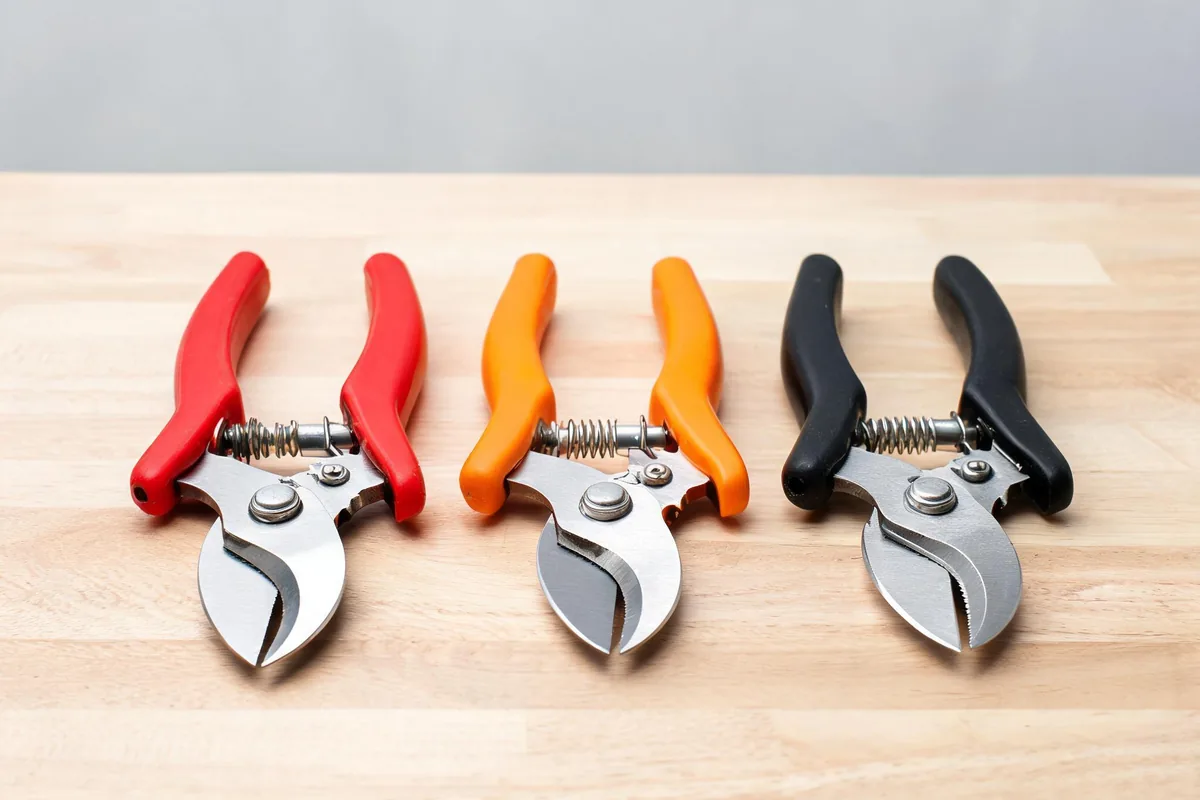
I have used a Felco F-2 bypass pruners as my daily pruner for six years. It has cut back hydrangeas, deadheaded peonies, divided ornamental grasses, and reduced the privet hedge that my neighbor insists on growing 14 feet tall. The blades are on their second replacement set. The spring has been replaced once. The handles are the same ones that came with the pruner in 2019. I mention this because a $50 to $70 pruner is a meaningful purchase, and the durability question — whether the investment pays off over a cheap model — is real.
This guide covers three pruners I have direct or research-based knowledge about, the core bypass-vs-anvil question, and the tool sanitation protocols that actually matter for disease prevention.
This page contains affiliate links. If you purchase through them, I earn a small commission at no cost to you. It does not change what I recommend — see the affiliate disclosure for details.
This article contains affiliate links. As an Amazon Associate, we earn from qualifying purchases - at no extra cost to you. We only recommend products we have personally tested or that are the universal first recommendation from university Extension publications. See our full disclosure.
Bypass vs. anvil: the fundamental difference
This question comes up constantly and the answer is not complicated.
Bypass pruners work like scissors: two blades pass each other, slicing cleanly through the stem. Per UF IFAS, "bypass pruners are lauded for making cleaner cuts" and "when used correctly, they allow for cuts close to a branch union without leaving a stub." The cutting action limits damage to the tissue being removed.
Anvil pruners work like a knife on a cutting board: a single sharpened blade presses through the stem against a flat lower jaw. Per UF IFAS, anvil pruners have "potential to crush the cambium — especially on softer branches" and make it "difficult to cut close to the branch collar without leaving a stub."
The recommendation: Use bypass pruners for all cuts on live plant material. Anvil pruners are acceptable for cutting dead, dry, or very woody stems where clean tissue presentation is not a concern, but for anything green and growing, bypass is the right choice. Crushing the cambium on a living stem creates a larger wound that is slower to close and more susceptible to disease entry.
There is nuance: the UF IFAS research notes that "wound recovery was similar between cuts made with bypass pruners and anvil pruners, despite observing greater levels of injury in cuts made with the former" for large-diameter removal cuts on woody plants. But for the range of cuts typical in a home garden — deadheading, shaping shrubs, harvesting flowers, dividing stems — bypass produces meaningfully better results.
Tool sanitation: why it matters and how to do it
Pruning tools transfer pathogens between plants. This is not hypothetical: fire blight on fruit trees, Fusarium on irises, Septoria on Rudbeckia, botrytis on peonies — all can be moved mechanically from infected tissue to healthy plants on an unsterilized blade.
Per University of Minnesota Extension: disinfect "after working with an infected plant and before moving onto the next plant." This means between every plant when disease is a concern.
Best method: 70% isopropyl alcohol
Per UMN Extension, isopropyl alcohol at 70% or greater concentration "will disinfect surfaces for bacteria, fungi and viruses." Method: "Dip, wipe or spray hand pruner blades with alcohol before moving from one plant to the next."
Alcohol does not require rinsing, does not corrode metal, and dries quickly. It is the right choice for hand pruners used between plants. Keep a spray bottle of 70% IPA in your garden bag and spray the blades between cuts in diseased plantings.
One important exception: Per UMN Extension, "alcohol might NOT effectively disinfect pruning tools used on apple trees infected with fire blight." For fire blight specifically, bleach or a dedicated horticultural disinfectant is more reliable.
Bleach solution (10%)
Per UMN Extension, a 10% bleach solution (one part bleach to nine parts water) "will kill fungi, bacteria, and viruses within seconds." However, bleach "corrodes metal and is not recommended for pruning and cutting tools that require a sharp edge, as it can create pits and nicks in the metal." If you use bleach, rinse tools thoroughly afterward and oil the blade.
Lysol (quaternary ammonium)
Per UMN Extension, products containing alkyl dimethyl benzyl ammonium saccharinate (Lysol is the example) "eliminate bacteria, fungi and viruses from tools" and "does not corrode metal." This is a good option for soaking pruners between uses — the two-pruner rotation method works here: "Some experts pruning multiple trees advise having two pruning tools on hand. They let one soak in the disinfectant while making cuts with the other. When they move to the next plant, they switch pruners."
For high-disease-risk situations (plants with known bacterial or fungal issues), I use the two-pruner rotation with 70% alcohol between plants. For routine pruning with no disease concern, I wipe blades with an alcohol-soaked cloth at the end of each session.
The three pruners
Felco F-2 bypass pruners — the long-term pick
What it is: The F-2 is the classic, full-size Felco — the one that launched the brand's reputation. Two forged hardened-steel blades, aluminum handles, replaceable blade and spring, weighs about 7.7 oz. Cutting capacity is 1 inch in diameter.
See on AmazonWhat I have found in six years: The blades hold an edge for longer than any other pruner I have tested. When they finally need sharpening, a ceramic rod or diamond file brings them back quickly. The replacement parts (blades, springs, wire locking mechanism) are available directly from Felco and from most garden suppliers — this matters at year five when a spring breaks mid-season. The handles are comfortable for extended work sessions.
Honest limitations: The F-2 is designed for average to large hand sizes. Felco makes the F-6, which is otherwise identical but with slightly smaller handles and grips — if your hands are on the smaller side, the F-6 is worth specifying. Some users find the aluminum handles transmit impact from tough cuts more than cushioned alternatives.
Price: Typically $55 to $75 depending on source. The replacement blade assembly costs about $20 to $25, which makes the lifetime cost lower than repeatedly replacing cheap pruners. Amazon carries both (affiliate links apply).
Corona BP 3180 bypass pruner 3180D — the competent budget choice
What it is: A bypass pruner with a steel blade and comfort-grip handle. Cutting capacity 3/4 inch. Replaceable blade.
The case for it: At $20 to $28, the Corona BP 3180 bypass pruner 3180D represents a pruner you can buy, use well for several seasons, and replace without regret. The blade is not the same steel as a Felco — it will need sharpening more frequently — but it cuts cleanly on green stems and handles the range of tasks in a typical garden. Corona is a California company with decades of market presence; parts are available.
Honest limitations: The blade edge does not hold as long as the Felco. Under heavy use (cutting many plants per session), I notice the Corona requiring a mid-session touch-up sharpening while the Felco does not. For occasional gardeners, this is irrelevant. For daily users, it adds up over a season. The lock mechanism is plastic and less durable over years.
Who should buy it: Budget-conscious gardeners who want a functional bypass pruner without the Felco premium. Gardeners who tend to lose or misplace tools. Second pair to keep in a separate location.
ARS HP-VS8Z — the professional-grade option
What it is: A Japanese-made bypass pruner with high-carbon steel blades, ergonomic handles, and cutting capacity up to 3/4 inch. ARS (Agricultural Resource Services) is a professional-grade Japanese tool brand; their pruners are standard equipment in Japanese horticulture.
The case for it: The steel quality in ARS pruners is exceptional. The blade takes and holds a finer edge than the Felco F-2 bypass pruners, and the cutting action is notably smoother. For gardeners doing high-volume work — professional horticulturists, serious collectors maintaining many plants — the ARS HP-VS8Z is worth the higher price (typically $65 to $90).
Honest limitations: Parts availability is less convenient than Felco. Felco parts are in every garden center; ARS parts require more searching. The ergonomic handle has a distinctive grip angle that most users like but some do not — if you can handle one in person before buying, do.
Who should buy it: Gardeners doing high-volume pruning who want the finest possible cut quality. Professionals. Those with hand fatigue issues who want an ergonomically designed tool.
Comparison at a glance
| Felco F-2 bypass pruners | Corona BP 3180 bypass pruner 3180D | ARS HP-VS8Z | |
|---|---|---|---|
| Price (approx.) | $55-$75 | $20-$28 | $65-$90 |
| Steel quality | Excellent | Good | Excellent |
| Parts availability | Excellent | Good | Fair |
| Best for | Most home gardeners | Budget / backup | High volume / professional |
| Blade replacement | Yes | Yes | Yes |
| Weight | 7.7 oz | 6.7 oz | 6.8 oz |
| Cutting capacity | 1 inch | 3/4 inch | 3/4 inch |
What to look for if buying a different pruner
Not every garden center stocks these three models. When evaluating any bypass pruner:
- Forged or hardened steel blade — not stamped steel. Forged blades hold an edge significantly longer.
- Replaceable blade and parts — a pruner worth buying is one where the blade and spring can be replaced without buying a new tool.
- Bypass action (not anvil) — verify by examining the blades. Bypass has two blades that cross. Anvil has one blade pressing against a flat lower jaw.
- Smooth cutting action — open and close the pruner in the store. It should close smoothly without sticking.
- Comfortable grip — you may use this tool for hours at a time. Handles that do not fit your hand cause fatigue.
Cleaning and sharpening
Clean blades after every session: wipe off plant sap and soil with a rag, then wipe with a drop of mineral oil or camellia oil. Sap buildup dulls blades and causes them to drag on stems.
Sharpen with a ceramic rod or diamond file on the beveled side of the blade only. Hold the file at the factory bevel angle and make several passes. Test on a sheet of paper: a sharp blade slices cleanly; a dull one tears.
Per UMN Extension: "If rust does develop, use steel wool or wire brush to remove and re-oil." Annual oiling with linseed, tung, or mineral oil prevents rust on metal parts and wood handles if your pruner has them.
Frequently asked
Why are bypass pruners better for live plants than anvil pruners?
Bypass pruners cut by slicing, like scissors, which minimizes tissue damage to the remaining living material. Per UF IFAS Gulf Coast Research, anvil pruners have "potential to crush the cambium — especially on softer branches" and make it difficult to cut close to the branch collar without leaving a stub. A stub and crushed cambium both create larger wounds that are slower to seal and more prone to disease entry than a clean bypass cut.
How often should I sanitize my pruners?
Per University of Minnesota Extension: sanitize "after working with an infected plant and before moving onto the next plant." In routine gardens with no observed disease, at least once per session. When cutting plants with any visible disease symptoms (leaf spots, blights, cankers), sanitize the blade between every single cut with 70% isopropyl alcohol. Per UMN Extension, dip, wipe or spray the blade and let air dry.
Is the Felco F-2 bypass pruners worth $60+ versus a $20 pruner?
For daily or frequent gardeners, yes. The blade steel lasts significantly longer between sharpenings, the replacement-parts system means you do not buy a new tool every few years, and the build quality means it does not fail in the middle of a pruning job. For casual gardeners making a few hundred cuts per season, the Corona BP 3180 bypass pruner 3180D is genuinely adequate and the $35 to $50 price difference is not justified. The Felco pays for itself over 5 to 10 years of daily use.
See on AmazonWhat is the cutting capacity of bypass pruners?
Most quality hand pruners (Felco, Corona, ARS) have a maximum cutting diameter of 3/4 to 1 inch. Cutting above this capacity strains both the blade and your hand and risks a rough, damaging cut. For stems thicker than 1 inch, use loppers (cutting capacity 1.5 to 2 inches) or a pruning saw. Forcing a hand pruner through a thick stem is how blades get nicked and how wrist injuries happen.
Sources
- UF IFAS Gulf Coast Research and Education Center — Anvil Pruners vs. Bypass Pruners — Which are Better? Part 1.
- University of Minnesota Extension — Clean and disinfect gardening tools and containers.