How to Test Soil pH at Home: DIY vs Lab Tests
How to test soil pH at home — when a cheap meter is enough, when to spend the money on a lab test, what the numbers mean, and how to use results to fix real garden problems.
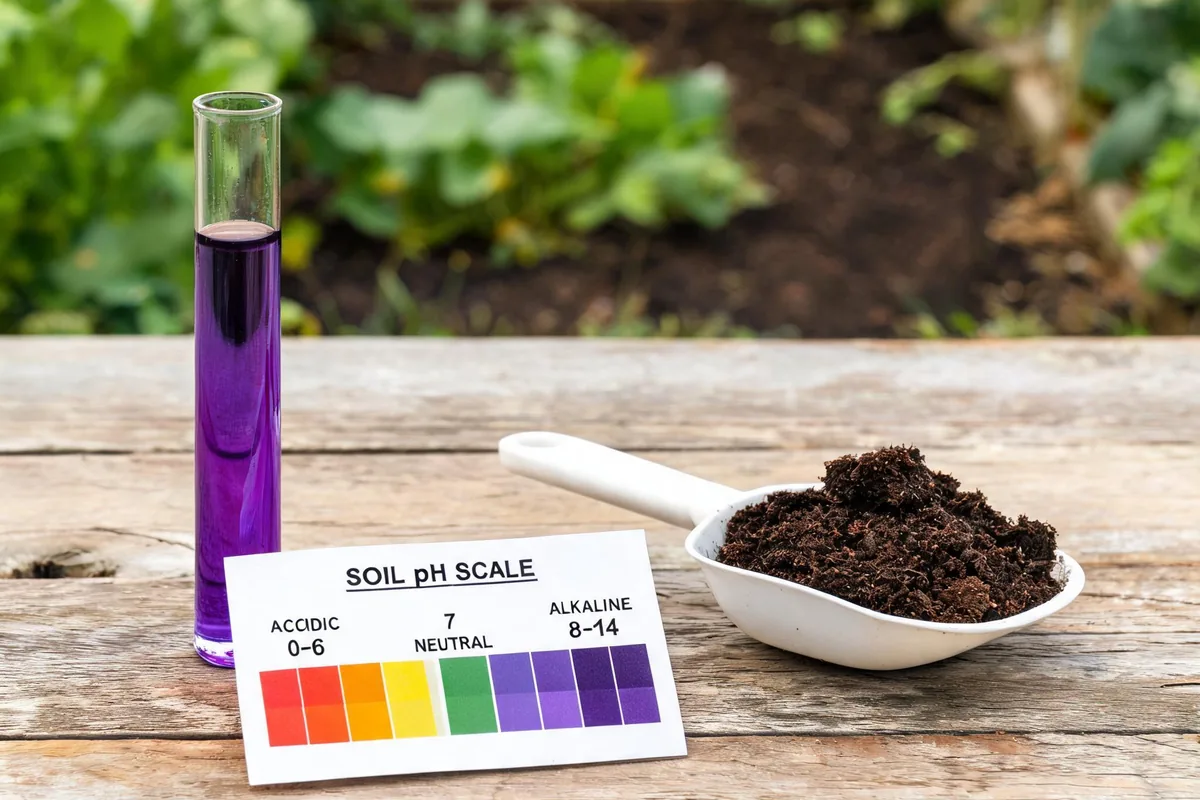
When to do this
Test soil pH before establishing a new planting bed or before planting a crop with specific pH requirements (blueberries at 4.5–5.5, azaleas at 4.5–6.0, potatoes at 4.8–5.5, versus asparagus preferring 6.5–7.5). Re-test after applying any pH amendment — lime or sulfur — at 3-month intervals to track progress. Per Penn State Extension, "re-testing after amendment application is essential because pH change is slow and gradual." Per Cornell Cooperative Extension, established garden beds benefit from testing every 3–5 years even without visible problems.
What you need
For quick home testing
- Digital pH meter (search "digital soil pH meter" — Apera and Bluelab make reliable models in the $15–30 range that include calibration solution)
- Distilled water (for moistening dry samples — tap water has its own pH and can skew readings)
- Small trowel and containers for collecting samples
For lab testing (recommended for new beds)
- Your state Extension service's soil testing lab: submit a composite sample from 5–10 locations in the bed at 4–6 inch depth. Cost is typically $15–25 and includes macronutrient levels, organic matter percentage, and specific lime or sulfur recommendations. Search "[your state] Extension soil test" for your state's submission process.
Step-by-step: DIY soil pH test
Step 1: Collect a representative sample
Don't test just one spot — soils vary even within a small bed. Collect small amounts of soil from 5–10 locations in the area you're testing, at a depth of 4–6 inches (below the surface mulch and organic debris). Mix these together in a bucket. This composite sample gives a more accurate picture than any single point test. Per Penn State Extension, "a composite sample from multiple locations is the foundation of a reliable soil test."
Step 2: Prepare the sample
Remove stones, debris, and large pieces of organic matter. If the sample is dry, add a small amount of distilled water — just enough to make the soil moist but not muddy. If it's already moist from recent rain, you can test directly. Using tap water changes the result because tap water typically has a different pH than distilled water.
Step 3: Calibrate your meter
Most digital pH meters come with buffer solution at pH 7.0 (and ideally pH 4.0 for two-point calibration). Calibrate before each use — meters drift. Per the Apera meter instructions and confirmed by Penn State Extension, "meter calibration before soil testing prevents systematic errors that make readings consistently high or low." A meter that reads 7.5 on your soil when it's really 6.5 sends you chasing a problem that doesn't exist.
Step 4: Test the sample
Insert the probe 2–3 inches into the moist sample. Wait 30–60 seconds for the reading to stabilize. Take 3 readings from different parts of the sample and average them. Record the result.
Step 5: Interpreting the result
pH scale context:
- Below 5.0: highly acidic, aluminum and manganese can reach toxic levels; most vegetables and ornamentals will struggle
- 5.5–6.5: ideal for most vegetables, perennials, and grasses
- 6.5–7.0: ideal for most trees and shrubs, asparagus, brassicas
- 4.5–5.5: ideal for blueberries, azaleas, rhododendrons, pieris
- Above 7.5: alkaline; iron, manganese, zinc deficiency common regardless of fertility level
Per Penn State Extension, "the single most valuable thing most Mid-Atlantic gardeners can learn about their soil is whether pH is in the optimal range."
How to fix what you find
Soil too acidic (below 5.5 for most vegetables)
Apply ground limestone. Calcitic limestone (calcium carbonate) is appropriate for most soils. Dolomitic limestone adds both calcium and magnesium — use dolomitic if your soil test shows low magnesium, calcitic if magnesium is adequate (over-applying magnesium causes nutrient imbalances). Per Penn State Extension, a typical rate to raise pH one full unit in a medium-texture soil is 5–10 lbs per 100 square feet. Apply in fall for spring effect — lime takes 3–6 months to fully react. Mix into the top 6 inches of soil for fastest action.
Soil too alkaline (above 7.5 for most ornamentals and vegetables)
Apply elemental sulfur. Sulfur bacteria in the soil convert elemental sulfur to sulfuric acid over weeks to months. Per Penn State Extension, "elemental sulfur is the most permanent way to lower soil pH" but "rates needed to drop pH significantly can be large in highly alkaline or high-carbonate soils." A soil test from the Extension lab gives specific rate recommendations. Aluminum sulfate is faster-acting but can cause aluminum accumulation — elemental sulfur is preferred for repeated applications. For immediate relief of iron chlorosis while long-term pH correction proceeds, apply chelated iron as a soil drench.
How this fits Long Island gardening
Zone 7a Long Island soils are variable: the sandy loam of the south shore coastal plain runs slightly acidic, which is ideal for blueberries, azaleas, and most perennials. But builders' soil in suburban lots often has construction lime leached from concrete foundations, raising pH to 7.5 or above — invisible until plants start showing chlorosis. Testing pH was the first thing I did before establishing my front bed of hydrangeas and hostas. The pH was 7.3 — high enough to explain the pale, sickly hydrangeas the previous homeowner had given up on. Three years of elemental sulfur and pine bark mulch brought it to 6.2, where it sits today and the hydrangeas are reliably healthy.
Common mistakes
Testing only in one spot: soil pH can vary significantly across even a 10-foot bed. Always composite sample from multiple locations. Testing immediately after rain: recent rainfall can temporarily alter surface pH readings. Wait 2–3 days after heavy rain for a more representative reading. Applying too much lime at once: per Penn State Extension, "splitting lime applications in fall and following spring prevents over-correction" and allows slower-acting forms to work before a second decision is made.
