Columbine Care: Growing Aquilegia Successfully
title: "Columbine Care: Growing Aquilegia in Your Garden"
—- title: "Columbine Care: Growing Aquilegia in Your Garden" slug: columbine-care hub: plants category: Species guide description: "How to grow columbine (Aquilegia) in zones 3–9. Shade tolerance, leaf miner control, encouraging self-seeding, and choosing the right species. Sourced from Extension." date: 2026-06-10 updated: 2026-06-10 author: "Thomas A." reading_time: 9 scientific: "Aquilegia canadensis" zones_min: 3 zones_max: 8 sun: "part shade" deer_resistant: true native: true pollinator: true bloom: "spring" height_min: 1 height_max: 3 —-
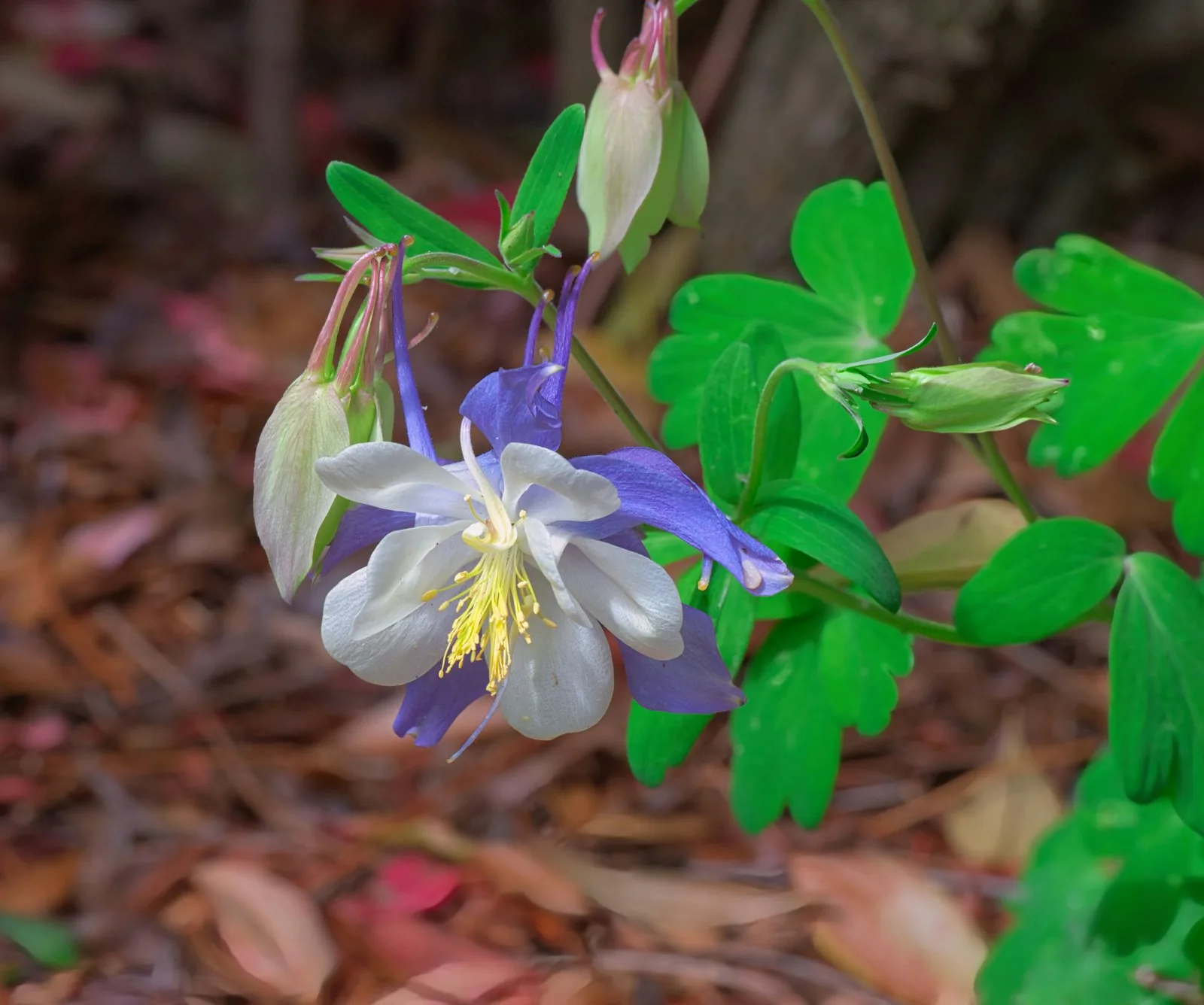
Aquilegia is a genus of roughly 60–70 species of short-lived perennials native to meadows, woodlands, and mountain slopes across the Northern Hemisphere. In North American gardens, columbines are valued for their distinctive nodding, spurred flowers in spring and early summer and their tolerance for partial shade — a genuinely useful trait that few flowering perennials share. The trade-off: most columbines live only 3–5 years before declining, and leafminers leave their foliage looking ragged by midsummer.
I don't grow columbine in my current Long Island yard. This guide is sourced from university Extension publications and botanical garden resources.
Species and cultivars
Aquilegia canadensis — wild columbine, native to eastern North America. Red and yellow flowers, 12–24 inches tall. Per Missouri Botanical Garden, this species is more tolerant of dry conditions and summer heat than European and Rocky Mountain species, making it the best choice for hot, humid eastern gardens. Hardy in zones 3–8.
Aquilegia vulgaris — European columbine, Granny's bonnet. More double-flowered cultivars, nodding flowers. Per Missouri Botanical Garden, this species tolerates more shade than A. canadensis. Hardy in zones 3–8.
McKana Hybrids and other large-flowered types — the most widely sold garden columbines are hybrids between western North American species (A. caerulea, A. chrysantha, A. formosa). Per NC State Extension Plant Toolbox, these offer the largest flowers and widest color range but tend to be shorter-lived than the straight species in humid climates.
USDA hardiness zones
Per Missouri Botanical Garden, Aquilegia canadensis is hardy in zones 3–8. Most hybrid columbines are also rated zones 3–8 or 3–9. The limiting factor in warm climates is not cold hardiness but summer heat and humidity, which shortens plant lifespan and promotes crown rot. In zones 8–9, columbines are typically grown as cool-season annuals or biennials.
Light
Partial shade to full sun. Per Missouri Botanical Garden, A. canadensis tolerates "full sun to partial shade" but performs best with some afternoon shade in zones 6 and warmer. This shade tolerance is one of columbine's most practical characteristics — it is one of the few flowering perennials that blooms well under high tree canopy or on the east side of a building.
Per Penn State Extension, columbine is well-suited for woodland gardens, shaded borders, and areas under deciduous trees where it can take advantage of high light in early spring before the tree canopy leafs out. In deep shade (less than 3 hours of sun), bloom quantity decreases significantly.
In zones 5–6 with milder summers, columbines perform well in full sun. In zone 7+, afternoon shade extends the bloom period and keeps plants looking fresher longer.
Soil and planting
Per Missouri Botanical Garden, columbines prefer "rich, moist, well-drained soils" with a slightly acidic to neutral pH (6.0–7.0). Good drainage is essential — columbines do not tolerate standing water or consistently wet soil.
Amend heavy clay soils with compost before planting. In sandy soils, a topdressing of compost each year helps maintain adequate moisture retention.
Direct seeding: Per Missouri Botanical Garden, columbine seeds germinate readily and the plant performs best when grown from seed sown directly in the garden in late summer or early fall — seed requires cold stratification to break dormancy. Seeds sown in fall germinate in early spring and bloom in their second year. For immediate bloom, start seeds indoors 8–10 weeks before last frost after cold stratifying at 40°F for 3–4 weeks.
Watering
Per NC State Extension, columbines prefer consistently moist soil during spring growth and bloom. Water requirements drop after flowering is complete. Approximately 1 inch of water per week during the active growing season. Aquilegia canadensis is the most drought-tolerant species; hybrid types require more consistent moisture.
Do not allow the soil to dry completely — per Missouri Botanical Garden, drought stress shortens the bloom period and accelerates plant decline. A 2-inch layer of mulch over the root zone helps maintain moisture.
Fertilizing
Per Clemson Extension HGIC, a single early-spring application of a balanced slow-release fertilizer at half the label rate is sufficient for columbines. In organically rich woodland soils, no additional fertilizer is needed. Excessive nitrogen produces lush foliage but may reduce bloom and increase susceptibility to crown rot and leafminers.
Deadheading and self-seeding
This is where gardeners make an important choice. Deadheading spent flowers prevents self-seeding, keeps the plant looking tidier, and may promote limited rebloom. But columbines' short individual lifespan means that allowing some seed to ripen and fall is often the practical way to maintain a population in the garden.
Per Missouri Botanical Garden, columbines are "prolific self-seeders" and will naturalize in appropriate conditions. The seedlings come up around parent plants the following spring. Note that hybrid columbines self-seed inconsistently for color — seedlings from multi-colored hybrids often revert toward purple-blue. If color consistency matters, plant a single-color cultivar and let it self-sow.
Midsummer foliage cutback: After bloom is complete and foliage becomes unsightly from leafminer damage, cut the entire plant to the ground. Per NC State Extension, new, clean foliage will emerge from the crown in late summer and provide attractive ground coverage through fall.
Leafminers
Columbine leafminers (Phytomyza aquilegiae) are the most consistent pest problem with columbines, and the damage is almost universal by late spring in the eastern United States. Per Penn State Extension, adult flies lay eggs in leaf tissue; larvae create winding tunnels through the leaf interior, producing the characteristic whitish "mines" visible on the upper leaf surface.
The key fact: leafminer damage is cosmetic. Per Penn State Extension, the damage is "unsightly but does not usually harm the health of the plant." The plant's energy reserves and root system are not significantly depleted by leafminer activity. Do not apply systemic insecticides to control leafminers on ornamental plants — the benefit does not justify the risk to pollinators that visit columbine flowers.
The practical response: remove and discard heavily mined leaves, or cut the entire plant to the ground after bloom and allow clean new growth to emerge in late summer.
Companion plants
- Helleborus (Helleborus orientalis) — similar shade tolerance, complementary early-season bloom.
- Heuchera (coral bells) — evergreen foliage provides winter and early-spring interest; similar partial-shade preference.
- Dicentra (bleeding heart) — classic woodland companion with similar bloom timing and shade preference.
- Foxglove (Digitalis purpurea) — taller biennial/short-lived perennial for the back of shaded borders.
- Lupine (Lupinus) — similar cool-season bloomer; contrasting bold spikes against columbine's airy form.
Common problems
| Symptom | Most likely cause | Fix |
|---|---|---|
| White winding lines on leaves | Columbine leafminer | Remove mined leaves; cut to ground after bloom; cosmetic only |
| Plant dies after 3–5 years | Normal short lifespan | Allow self-seeding; replant as needed |
| No seedlings despite self-sowing | Soil too dry or compacted for germination | Lightly rake soil under parents in fall |
| Crown rot, sudden collapse | Poor drainage or waterlogged soil | Improve drainage; replant |
| Powdery mildew | High humidity, low air circulation | Cut to ground; improve air flow |
| Deer damage | Deer browsing tender new growth | Deer repellent in spring; physical fencing |
Frequently asked
Are columbines short-lived? What can I do about it?
Yes. Per Missouri Botanical Garden, columbines typically live 3–5 years before declining. This is a characteristic of the genus, not a cultural failure. The best management approach is to allow the plants to self-sow — columbines are prolific seeders, and a population of self-sown plants will persist indefinitely even as individual crowns die. Avoid deadheading all flowers; leave at least some seed heads to ripen and fall. Aquilegia canadensis self-sows and naturalizes more reliably in eastern U.S. gardens than most hybrid types.
When do columbines bloom?
Per Missouri Botanical Garden, A. canadensis blooms from April through June in zones 5–7 — the late-spring window when few other shade-tolerant perennials are in flower. Bloom period is typically 4–6 weeks. In zones 7 and warmer, the bloom period shifts earlier (late March through May) and ends sooner as summer heat sets in.
Should I be concerned about the leafminer damage?
Per Penn State Extension, leafminer damage is "unsightly but does not usually harm the health of the plant." The practical response is to cut the foliage to the ground after bloom and allow clean new growth to emerge from the crown in late summer. This produces fresh, undamaged foliage for fall display. Attempting to eliminate leafminers chemically is not recommended for ornamental plants because the insecticides required (systemics) pose risks to the pollinators that visit the flowers.
Recommended gear: Best deer repellent: Liquid Fence vs Bobbex vs Plantskydd — our buyer's guide covering picks for every budget, ranked by Extension publication consensus and personal use.
Sources
- Missouri Botanical Garden — <a href="https://www.missouribotanicalgarden.org/PlantFinder/PlantFinderDetails.aspx?kempercode=c107">Aquilegia canadensis</a>.
- Missouri Botanical Garden — <a href="https://www.missouribotanicalgarden.org/PlantFinder/PlantFinderDetails.aspx?kempercode=c108">Aquilegia vulgaris</a>.
- NC State Extension Plant Toolbox — <a href="https://plants.ces.ncsu.edu/plants/aquilegia/">Aquilegia</a>.
- Penn State Extension — <a href="https://extension.psu.edu/perennials-in-the-landscape">Perennials in the Landscape</a>.
- Penn State Extension — <a href="https://extension.psu.edu/columbine-leafminer">Columbine Leafminer</a>.
- Clemson Extension HGIC — <a href="https://hgic.clemson.edu/factsheet/perennial-garden-flowers/">Perennial Garden Flowers</a>.