Vegetable

Blueberry bush care: acidic soil, two cultivars for cross-pollination, bird netting

Blueberries are not difficult, but they are unforgiving on soil pH. You need pH 4.5 to 5.5, two cultivars, and bird netting before the first berry colors. Everything else follows from those three requirements.
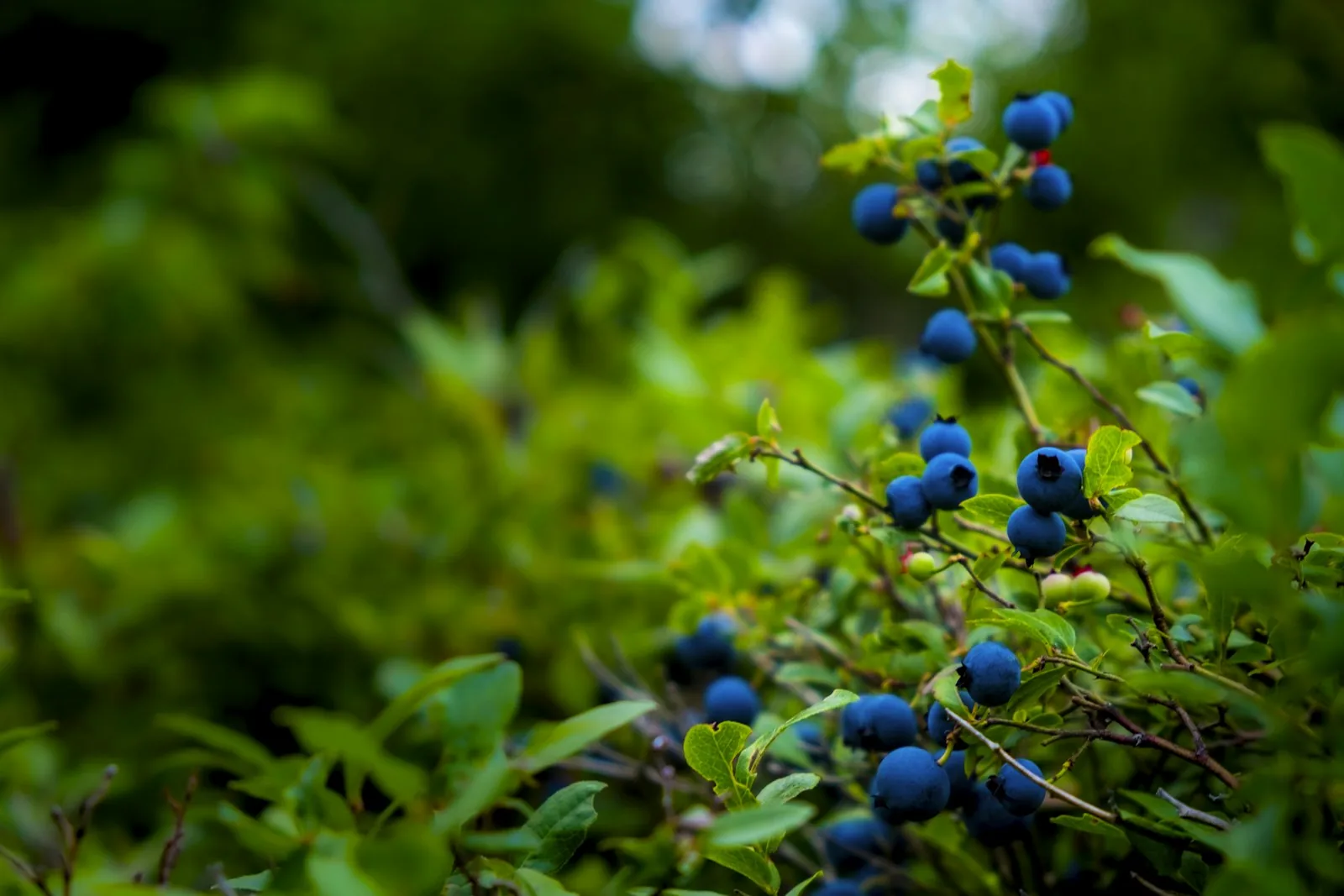
ripe blueberries growing on a bush in summer
Photo: Unsplash on Unsplash

—- title: "Blueberry bush care" slug: blueberry-bush-care hub: care category: How-to guide description: "I don't grow blueberries at home. My Long Island soil is sandy loam with a pH of around 6.5 — too alkaline for blueberries without significant soil amendment, and I've never invested in the." date: 2026-06-10 updated: 2026-06-10 author: "Thomas A." reading_time: 9 scientific: "Vaccinium corymbosum" zones_min: 3 zones_max: 8 sun: "full sun" deer_resistant: false native: true pollinator: true height_min: 4 height_max: 8 —-

I don't grow blueberries at home. My Long Island soil is sandy loam with a pH of around 6.5 — too alkaline for blueberries without significant soil amendment, and I've never invested in the multi-year preparation the plants require before their first useful harvest. So this guide is sourced from University of Minnesota Extension, Clemson HGIC, and UMass Extension — the programs that have the most detailed published research on home blueberry production.

The honest context for why I don't grow them: blueberries are not difficult, but they are demanding in a specific and unforgiving way. The soil pH requirement is the single most common reason home blueberry plantings fail, and it is not something you can fix after planting without substantial disruption to the plants.

Which type of blueberry?

Three types are commercially available for home gardens, and the right choice depends on your USDA zone:

**Highbush blueberries (Vaccinium corymbosum)** are the standard supermarket blueberry — large berries, 4–6 feet tall, zones 4–7. Most named cultivars ('Bluecrop', 'Jersey', 'Patriot', 'Bluejay') are highbush. They need 150–200 hours of winter chilling below 45°F to set fruit properly.

**Lowbush blueberries (Vaccinium angustifolium)** grow 1–2 feet tall and are native to the northeastern United States and Canada. Very cold-hardy (zones 3–6), but produce smaller berries in smaller quantities. They spread by underground rhizomes and are better suited to naturalizing than to a formal berry patch.

**Rabbiteye blueberries (Vaccinium virgatum, formerly V. ashei)** are the southern highbush alternative — taller (up to 15 feet), heat-tolerant, and productive in zones 7–9. They have a longer chill requirement than southern highbush cultivars but lower than northern highbush. Per Clemson HGIC, rabbiteye cultivars are spaced "6 feet in the row and 10 to 12 feet between rows."

Southern highbush blueberries are hybrids developed for zones 7–10 with lower chill requirements. Useful in the South where northern highbush types struggle. Per Clemson HGIC, 'Onslow' "may tolerate soils of a higher pH than other cultivars" — a practical note for gardeners on the margin of the pH requirement.

The soil pH requirement

This is the non-negotiable center of blueberry growing. Per University of Minnesota Extension, "blueberry plants require acidic soil (pH 4.0 to 5.0) that is well-drained, loose and high in organic matter. If the pH of the soil is over 5.5, then the soil is not acidic enough for blueberries."

Most temperate garden soils in the eastern United States and Midwest have pH values of 6.0–7.0 — significantly too high. This matters because blueberries are adapted to acidic, high-organic boreal soils where mineral nutrients (especially iron and manganese) are available at lower pH values. In alkaline soil, blueberries cannot absorb iron, producing a characteristic iron chlorosis: yellowing leaves with green veins. Severely deficient plants decline and die.

Amending before planting: Per University of Minnesota Extension, "amend the pH with sulfur the fall before planting, because it takes several months for sulfur to change the soil pH." Add elemental sulfur (sold as soil acidifier) per the label rates based on your soil test results. Per Clemson HGIC, "any sulfur applications should be made at least three months prior to planting."

Do not rely on coffee grounds as a pH amendment. Per University of Minnesota Extension, "coffee grounds are not always acidic and should not be relied upon as a pH amendment for blueberries. Even if the coffee grounds you use happen to be acidic, a massive amount would be needed to change the soil pH, and the results would not be reliable."

Organic matter: Per Clemson HGIC, "blueberries are naturally adapted to high organic matter soils where organic matter is 3 percent or more as opposed to most mineral soils with organic contents usually less than 1 percent." Before planting, incorporate "4 to 6 inches of organic matter over the row in a band 18 to 24 inches wide" per Clemson HGIC. Composted pine bark, rotted softwood sawdust, and peat moss are all effective. Hardwood sawdust is "not as effective as softwood sawdust or peat moss for lowering soil pH" per Clemson HGIC.

Ongoing pH maintenance: Per University of Minnesota Extension, "as the soil settles and decomposes over the years, you will need to continue adding sulfur to the planting bed. Continue to have your soil pH tested every year or two, and amend as needed." Blueberry pH management is not a one-time event — it is an ongoing annual or biannual task.

Cross-pollination: two cultivars minimum

Per University of Minnesota Extension, "plant two or more varieties for successful pollination. Planting at least two varieties is best, as more berries of larger size will be produced if flowers are fertilized with pollen from another variety."

Blueberries are self-fertile to some degree, but cross-pollination between cultivars consistently produces larger berries and higher yields than a single-cultivar planting. Bumblebees are the primary pollinators; they have the vibration frequency needed to "buzz pollinate" blueberry flowers effectively.

For highbush types, choose cultivars with overlapping bloom times. Plant at minimum two cultivars, ideally three for maximum yield. Widely available recommended pairs for zone 5–7: 'Bluecrop' + 'Jersey'; 'Patriot' + 'Bluecrop'; 'Northblue' + 'Polaris' (for zones 4–5 in the Upper Midwest).

Spacing and planting

Per Clemson HGIC, southern highbush cultivars are spaced 4–5 feet apart in the row; rabbiteye cultivars 6 feet apart. Per University of Minnesota Extension, highbush blueberries "grow slowly and reach full size in 8 to 10 years. Plants won't have much fruit the first 2 to 3 years. Harvest is bigger after 5 years."

This timeline is the practical reason home blueberry plantings require patience and upfront investment. You are planting for a 5- to 10-year relationship, not a quick return.

Planting depth: Per Clemson HGIC, plant at the same depth the plants were growing in the nursery container. Blueberry roots are shallow — "blueberry roots are very near the surface. Hoe no more than about 1 inch deep" per Clemson HGIC.

Mulch: Per University of Minnesota Extension, "maintain a few inches of wood mulch around them." Per Clemson HGIC, "organic material such as bark, wood chips, sawdust or pine straw bale (Home Depot) as a 2- to 3-inch mulch on the surface after planting results in more uniform soil moisture, moderates soil temperature and generally promotes better growth and survival." Pine bark and pine straw bale (Home Depot) are preferred mulches because their pH (3.5–4.5 per Clemson HGIC) helps maintain soil acidity.

Watering

Blueberries have shallow roots and are sensitive to drought stress. Regular watering during fruit development is critical for berry size and quality. Per Clemson HGIC, "water thoroughly two to three times per week during dry spells in the summer and early fall."

Avoid overhead irrigation; it promotes fungal diseases and may damage flowers. Soaker hoses or drip irrigation at the base of the plants is the preferred approach.

Fertilizing

Per Clemson HGIC, "blueberries are easily damaged by excess fertilizer. Apply the recommended amount and allow 4 inches of rain or an equivalent amount of irrigation between applications." Use an acid-forming fertilizer appropriate for azaleas and rhododendrons (e.g., 10-5-4 or similar ammonium sulfate-based products). Do not use standard vegetable fertilizers or fertilizers with calcium carbonate as a filler — these raise pH.

Per Clemson HGIC, "wait until the first leaves have reached full size" in the first year before applying any fertilizer. For mature bearing plants, "apply 1 cup of a complete fertilizer, such as an azalea fertilizer, within a circle 3 feet from each plant" when growth begins in spring. Stop fertilizing by July 1 per Clemson HGIC.

Bird netting: non-optional

Birds eat blueberries with single-minded efficiency. Robins, mockingbirds, cedar waxwings, and catbirds will strip a mature bush the morning berries begin to color — before you even notice they are ripe. The window between first color and full ripeness is when birds concentrate their effort.

Physical exclusion with bird netting is the only reliably effective solution. Drape netting over the entire plant or install a cage structure over the entire planting. Reflective tape and owl decoys provide temporary deterrence at best; birds habituate within days.

Install netting before berries begin to show color — by the time you see your first ripe berry, the birds already know the bush is there.

Common problems

SymptomMost likely causeFix
Yellow leaves with green veins (iron chlorosis)Soil pH too high; iron unavailableSoil test; add elemental sulfur; apply chelated iron foliar spray short-term
Poor growth, few berriespH not low enough; single cultivarSoil test; amend; add second cultivar
Berries eaten before harvestBird feedingInstall bird netting before berries color
Root rot, plant declineWaterlogged soilImprove drainage; raise planting bed; reduce irrigation
Leaf spots, browningMummy berry or leaf spot diseaseRemove infected berries and leaves; improve airflow; apply fungicide if severe
No fruit despite floweringInsufficient cross-pollinationPlant second cultivar with overlapping bloom time
Recommended gear: Best evergreen and deciduous azaleas by zone — our buyer's guide covering picks for every budget, ranked by Extension publication consensus and personal use.

Frequently asked

What soil pH do blueberries need?

Per University of Minnesota Extension, blueberries require a soil pH of 4.0–5.5. Most garden soils have a pH of 6.0–7.0, which is too high. Per Clemson HGIC, "if the pH is above 6.0, select another planting site" — or invest in significant long-term amendment. Add elemental sulfur the fall before planting; per University of Minnesota Extension, "it takes several months for sulfur to change the soil pH." Retest soil annually and add more sulfur as needed.

Do blueberries need two plants?

Per University of Minnesota Extension, "planting at least two varieties is best, as more berries of larger size will be produced if flowers are fertilized with pollen from another variety." Blueberries will produce some fruit without cross-pollination, but the yield and berry size are both reduced. Two cultivars with overlapping bloom times is the minimum; three cultivars is better for consistent large harvests.

When do blueberries start producing?

Per University of Minnesota Extension, "plants won't have much fruit the first 2 to 3 years. Harvest is bigger after 5 years." Blueberry bushes are long-term investments. Some growers recommend removing flowers for the first 1–2 years to encourage root establishment before fruiting. Full production typically requires 6–8 years from planting of young nursery stock.

Why are my blueberry leaves turning yellow?

Yellow leaves with green veins in summer indicate iron chlorosis — the plant cannot absorb iron because the soil pH is too high. Per University of Minnesota Extension, "if you see light-green or red leaves in the summer or not much shoot growth, it is likely that the soil pH is no longer in the optimum range of 4.0 to 5.0." Soil test first to confirm. Short-term: apply a chelated iron foliar spray. Long-term: add elemental sulfur to lower pH and retest in 3–6 months.

Sources

  1. University of Minnesota Extension — Growing blueberries in the home garden.
  2. Clemson HGIC — Blueberry.
  3. University of Minnesota Extension — Advice on planting blueberries in 2021 and 2022.