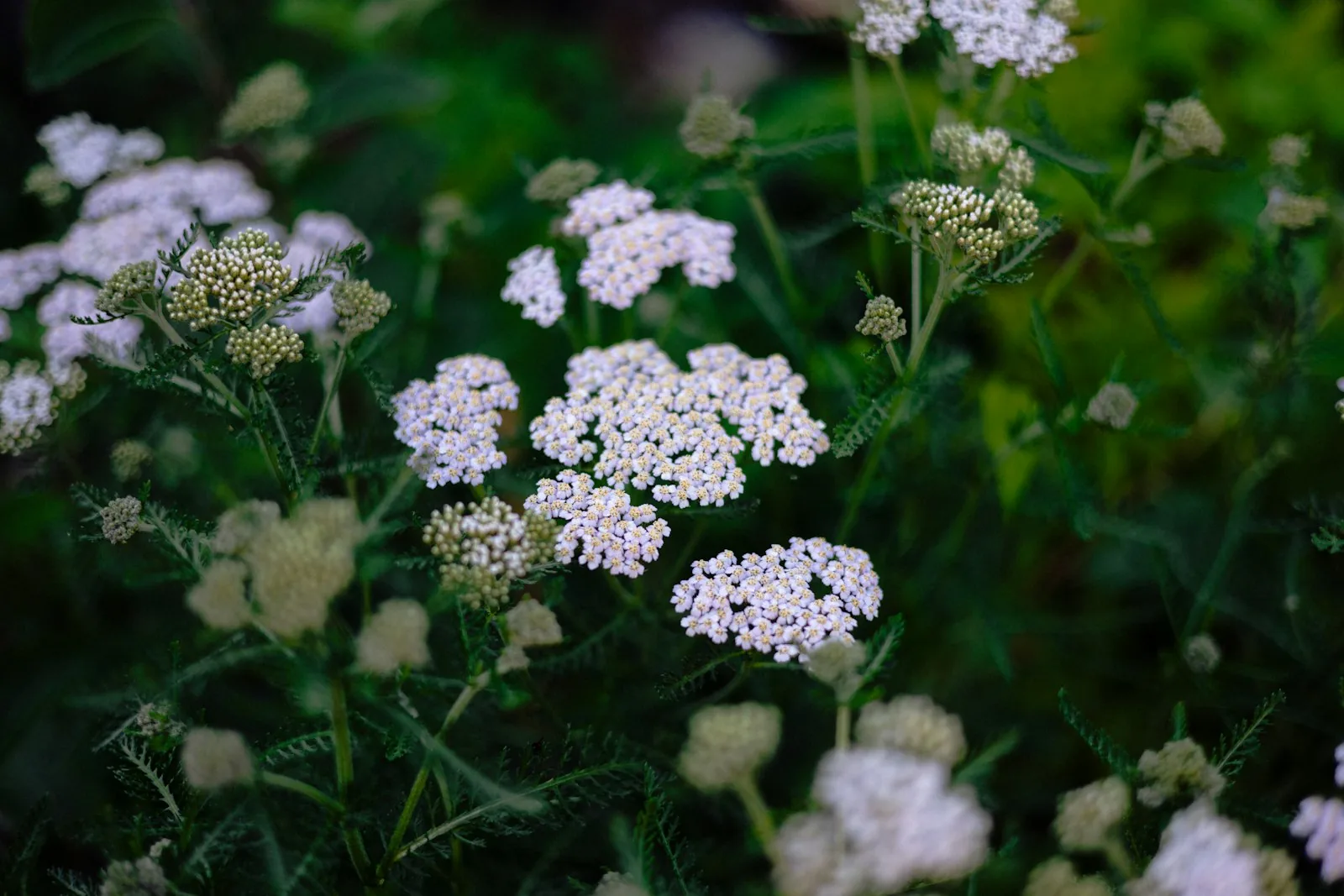
Achillea millefolium is one of the most genuinely tough perennials available to eastern U.S. gardeners. It tolerates poor soil, prolonged drought, and neglect, and it blooms from early summer into fall with deadheading. The main reason people struggle with it is choosing the wrong site — wet, heavy clay is its enemy — and failing to divide it before it spreads beyond its boundaries.
I don't grow yarrow in my current Long Island yard, so this guide draws on university Extension sources rather than personal observation.
This article contains affiliate links. As an Amazon Associate, we earn from qualifying purchases - at no extra cost to you. We only recommend products we have personally tested or that are the universal first recommendation from university Extension publications. See our full disclosure.
Species and cultivars
Achillea millefolium — common yarrow. Native to Europe and widely naturalized across North America. The species typically produces white or pale pink flowers. Per Missouri Botanical Garden, the species grows 2–3 feet tall and spreads aggressively.
Named cultivars — selected for flower color, compact habit, or reduced spreading. Per NC State Extension Plant Toolbox, commonly available cultivars include 'Paprika' (red fading to pink), 'Coronation Gold' (A. filipendulina hybrid, deep yellow), 'Moonshine' (A. taygetea hybrid, pale yellow), and 'Summer Pastels' (mixed soft colors). The hybrids involving A. filipendulina or A. taygetea are generally less aggressive spreaders than straight A. millefolium.
Invasive potential: Per Penn State Extension, A. millefolium can be weedy and is considered invasive or a nuisance in some natural areas when escaping gardens. It is listed as a weed in several states. In cultivated perennial borders, division and deadheading control it adequately; along roadsides or in natural areas it can displace native species.
More like this, monthly
Get the seasonal care notes — no upsell, unsubscribe any time.
One email per month from Thomas: what to plant, what to prune, what's about to break. Cited the same way as the guides.
Free. No spam. Same author as the guide you just read.
Got it — check your inbox to confirm. Welcome.
The pruners we use every day
The Felco F-2 is the gold standard — cuts up to 1-inch branches cleanly, every part replaceable, will outlast you. Read our full pick.