Species guide

Rose care: knockout vs hybrid tea vs shrub roses

Modern landscape roses like Knock Out and Drift have changed what low-maintenance rose growing looks like. Here is how they compare to hybrid teas, and what each type actually demands.
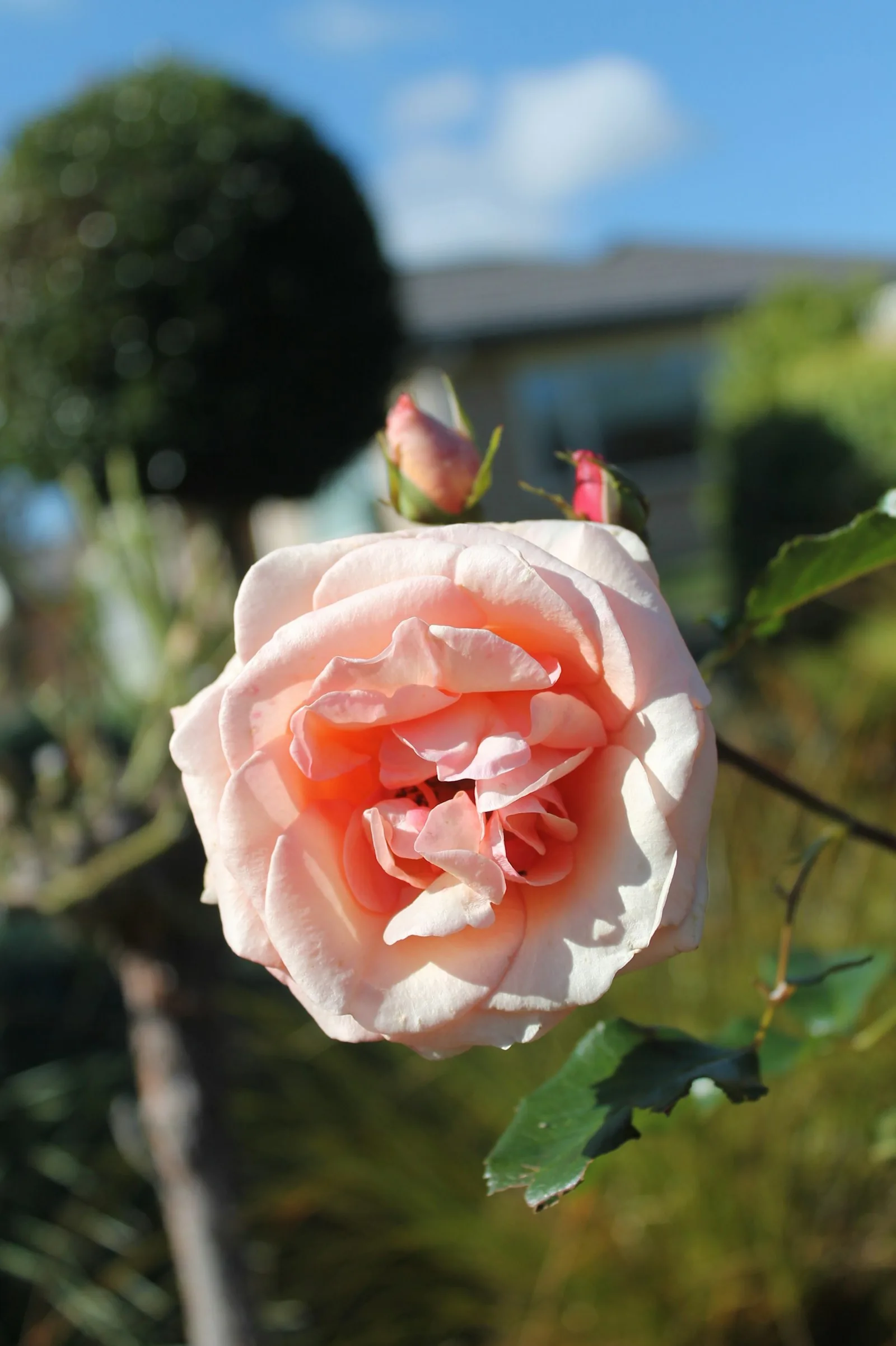
A delicate pink rose blooms in a garden setting
Photo: Unsplash on Unsplash

—- title: "Rose care" slug: rose-care hub: plants category: Species guide description: "I don't grow roses at home. My Long Island yard has moderate-to-high deer pressure, and after watching deer strip a neighbor's hybrid tea down to stubs twice in one winter, I decided roses were not." date: 2026-06-10 updated: 2026-06-10 author: "Thomas A." reading_time: 10 scientific: "Rosa spp." zones_min: 3 zones_max: 11 sun: "full sun" deer_resistant: false native: false pollinator: true bloom: "summer" height_min: 2 height_max: 8 —-

I don't grow roses at home. My Long Island yard has moderate-to-high deer pressure, and after watching deer strip a neighbor's hybrid tea down to stubs twice in one winter, I decided roses were not worth the fight in my conditions. So this guide is sourced entirely from university extension publications and Missouri Botanical Garden — the best I can do for a plant I've chosen not to grow myself.

That said, modern shrub roses have changed the calculus for a lot of gardeners. The gap between a high-maintenance hybrid tea and a nearly-self-maintaining Knock Out has never been wider.

The main rose categories

The word "rose" covers hundreds of cultivars divided into rough groups by growth habit, bloom type, and maintenance demands. The practical categories for most home gardeners are:

Hybrid tea roses

The classic long-stemmed cut flower rose. Per Missouri Botanical Garden, hybrid teas need "yearly pruning in the spring" with canes cut back to 6–8 inches after removing winter mulch. They bloom on new wood and typically flower in a strong flush in June, then again in late summer.

Hybrid teas are susceptible to black spot (Diplocarpon rosae) and powdery mildew. Per Penn State Extension, black spot "forms small, purplish spots on canes" and requires removal of infected canes and consistent protective fungicide applications. In humid climates, weekly spray schedules are not unusual for traditional hybrid teas.

Best zones: Per NC State Extension Plant Toolbox, Rosa (broadly) is adapted to zones 5a through 11b. Hybrid teas in particular are marginal in zones 4–5 without winter protection — per Penn State Extension, grafted hybrid teas require mounding the graft union with 6–8 inches of compost or topsoil once the plant is dormant.

Watering: Per Missouri Botanical Garden, roses need "at least 1–2 inches of water per week." Water at the base of the plant, never overhead. Wet foliage "encourages fungal diseases" per Missouri Botanical Garden.

Modern shrub roses — Knock Out, Drift, and similar

The Knock Out group, introduced in 2000 by star rosarian Bill Radler, changed expectations for what a low-maintenance rose could do. Per NC State Extension Plant Toolbox, Knock Out roses are "patented hybrid roses bred to be particularly resistant to blackspot, a disease common to most roses." They grow 3–4 feet tall and wide, require only light pruning in late February, and "repeat bloom through fall."

Per NC State Extension, Knock Out roses are "one of the few roses that will bloom reasonably well in partial shade," though performance is best in full sun. They are "tolerant of heat and humidity" — qualities that matter in zones 7–9 where black spot pressure is highest.

Drift roses are a lower-growing (2 feet) ground-cover type in the same disease-resistant lineage. Both Knock Out and Drift are sold in multiple colors; the original Knock Out is cherry red, which remains the most common.

Zone range: Per NC State Extension, Knock Out roses are rated zones 4a through 11b — broader cold hardiness than most hybrid teas.

Pruning Knock Out: NC State Extension says to "lightly prune in late February." Missouri Botanical Garden recommends cutting old wood "at or near the base of the plant" to stimulate vigorous new canes. Some growers cut Knock Out back by one-third to one-half in late winter; others leave it nearly unpruned for two or three years until it gets leggy. Neither approach will damage it.

Shrub roses — old garden and explorer series

Old garden roses (Gallicas, Damasks, Albas) and modern landscape shrub series like the Canadian Explorer roses (Rosa selections hardy to zones 3–5) offer substantial cold hardiness. Per NC State Extension Plant Toolbox, the Explorer Group cultivars are listed specifically as "hardy, disease-resistant." David Austin English roses fall into a similar category: bred for fragrance and flower form, with better disease resistance than traditional hybrid teas, but less so than Knock Out.

Pruning old and shrub roses: Per Missouri Botanical Garden, "old roses and shrub roses need very little maintenance pruning. These should receive a light spring pruning to shape the plant. Climbers should be pruned after flowering."

Climbing roses

Climbers are not a separate botanical class but a growth habit. They bloom primarily on second-year (old) wood, so pruning in late winter removes next season's flowers. Per Missouri Botanical Garden, "climbers should be pruned after flowering. Old canes should be removed at the base of the plant. This will stimulate the development of young, vigorous canes."

'New Dawn' is a climbing hybrid with "good disease resistance" per NC State Extension — a notable exception to the rule that climbers tend to be more disease-prone than modern shrub roses.

Light

Per Penn State Extension, "roses grow best in full sunlight, with a minimum of six hours daily. Roses that grow in partial sun weaken gradually, produce subpar blooms, and overwinter poorly." This holds true for hybrid teas, grandifloras, and floribundas. The NC State exception for Knock Out roses (reasonable blooming in partial shade) applies to that group specifically.

Avoid sites near large tree roots. Per Penn State Extension, "the roots of many roses do not compete well with those of nearby trees, shrubs, and grass roots."

Soil and planting

Per Penn State Extension, roses prefer "slightly acidic soil pH between 5.5 and 7.0" and "rich, well-drained soil." Per Missouri Botanical Garden, a basic rose soil mix is "3 parts loose loamy soil, 3 parts peat moss or preferably manure or compost, and 1 part sand."

For grafted hybrid teas and floribundas, the graft union (the knobby junction between rootstock and top growth) should be planted at or slightly above soil level per Missouri Botanical Garden. This is different from the older practice of burying the union 1–2 inches below ground, which was used in colder zones; current guidance leans toward keeping it at or near the soil surface except in zones 4–5 where deep planting may help protect the union from freeze-thaw damage.

Spacing: Per Penn State Extension, do not crowd roses — "good air circulation helps prevent fungal diseases and allows for better light penetration."

Fertilizing

Per Missouri Botanical Garden, fertilize roses "every 4 to 6 weeks after new plant growth appears in the spring." Per Penn State Extension, "start monthly fertilization in April and stop in August to reduce new growth that may not harden off before winter." A high-potassium fertilizer in fall, once dormancy is established, "may increase winter hardiness" per Penn State Extension.

Do not fertilize until a newly planted rose is well established.

The disease reality

Black spot is the primary disease problem for roses in the eastern United States and wherever humidity is high. It overwinters on fallen leaves and on infected canes. Per Penn State Extension rose disease guidance, black spot requires "removal of infected canes, remove and destroy fallen leaves, water in a manner that keeps foliage surfaces dry, and apply a fungicide to protect new foliage."

Modern disease-resistant roses (Knock Out, Oso Easy, Explorer series, many David Austin cultivars) substantially reduce but do not eliminate black spot. In very humid climates or wet summers, some spotting will appear even on resistant varieties.

Rose rosette disease is an increasingly serious concern. Per Penn State Extension, it is "vectored by eriophyid mites" and causes "plants to branch excessively (witches'-broom)." There is no cure — infected plants must be destroyed, and any nearby multiflora rose (Rosa multiflora) within 100 feet should be eliminated as a reservoir.

The deer reality

Per NC State Extension Plant Toolbox, roses are "susceptible to damage from rabbits and deer." Rutgers University rates roses as "occasionally severely damaged" in high-pressure deer zones. In practice, hybrid teas and most climbing roses will be browsed heavily in deer country. Modern shrub roses like Knock Out are not deer-resistant either — the difference is they recover more vigorously from browse than a hybrid tea, which can lose next season's flower buds along with the canes.

If deer are a consistent problem, roses require either physical exclusion (fencing) or a systematic repellent program applied before deer establish a feeding pattern.

Pruning timing by type

Rose typeBlooms onPrune when
Hybrid tea, grandiflora, floribundaNew woodLate winter/early spring when forsythia blooms
Knock Out, Drift, modern shrubNew woodLate February; light annual shaping
Old garden roses (once-blooming)Old woodImmediately after flowering
ClimbersOld wood (primarily)Immediately after flowering
Explorer series shrubsNew woodLate winter

Common problems

SymptomMost likely causeFix
Black spots on leaves with yellow halosBlack spot fungusRemove infected leaves; apply protective fungicide; water at base only
White powdery coating on leaves/budsPowdery mildewImprove air circulation; avoid overhead water; apply fungicide if severe
Plant branches excessively, stunted, distorted growthRose rosette diseaseRemove and destroy plant immediately; eliminate multiflora rose nearby
Canes die back to the groundWinter damage (grafted rose)Protect graft union with mulch mound in fall; cut back to live wood in spring
No blooms on climber after pruningPruned at wrong time (removed old wood)Only prune climbers immediately after flowering
Deer browse on new growth/canesDeer feedingExclusion fencing or repellent program; switch to Explorer series shrubs
Weak growth, yellowing leavesPoor drainage or wrong pHSoil test; amend; raise bed if drainage is poor
Recommended gear: Best forsythia cultivars by zone — our buyer's guide covering picks for every budget, ranked by Extension publication consensus and personal use.

Frequently asked

What is the difference between Knock Out and hybrid tea roses?

Hybrid teas are bred for cut-flower performance — long stems, large blooms, classic fragrance — and require a regular fungicide schedule to prevent black spot in humid climates. Per Missouri Botanical Garden, hybrid teas need yearly pruning, consistent fertilization, and, in zones 4–6, winter cane protection. Knock Out roses, per NC State Extension, are "patented hybrid roses bred to be particularly resistant to blackspot" and require only light late-February pruning. They do not produce long cutting stems but bloom continuously from spring through frost. The trade is: fragrance and flower form vs. resilience and low maintenance.

When should I prune roses?

It depends on the type. Per Penn State Extension, pruning time for hybrid teas and modern shrubs is early spring when forsythia blooms and leaf buds begin to break — roughly late March to mid-April in zones 5–7. Prune dead or weak canes first, then cut remaining canes back to 6–8 inches (hybrid tea) or shape for size (Knock Out/shrub types). Per Missouri Botanical Garden, old garden roses and climbers that bloom on old wood should be pruned only after they finish flowering — late winter pruning removes the flower buds.

Are roses deer-resistant?

No. Per NC State Extension Plant Toolbox, roses are susceptible to deer damage, and Rutgers University's landscape plant deer-resistance ratings classify roses as "occasionally severely damaged" in high-deer zones. Knock Out and shrub roses recover from browsing better than hybrid teas because they bloom on new wood and produce vigorous new growth — but they will still be eaten. In high-deer-pressure situations, roses require fencing or repellent.

Do I need to spray roses for black spot every week?

For traditional hybrid teas in humid climates, yes — a weekly or biweekly protective fungicide schedule is standard practice during the growing season. Per Penn State Extension, fungicide should be applied "to protect new foliage" before symptoms appear, not after. For disease-resistant modern shrubs like Knock Out, spraying is usually not needed unless symptoms appear. In coastal or high-humidity zones, even Knock Out may need occasional treatment in a wet summer.

Sources

  1. Missouri Botanical Garden — How do I care for my roses?.
  2. Missouri Botanical Garden — Roses factsheet (PDF).
  3. NC State Extension Plant Toolbox — Rosa Knock Out® Group.
  4. NC State Extension Plant Toolbox — Rosa (Rose, Roses).
  5. Penn State Extension — Protecting Your Roses Through Pennsylvania Winters.
  6. Penn State Extension — Rose Diseases (Outdoors).
  7. Penn State Extension — June Birth Flower: Rose.