Lavender care: English vs French vs Spanish and the soggy-soil killer
English lavender (zones 5-9) is the hardiest. All lavender kills from wet roots first. Gravel mulch, sharp drainage, and lean soil -- not compost -- are the keys.
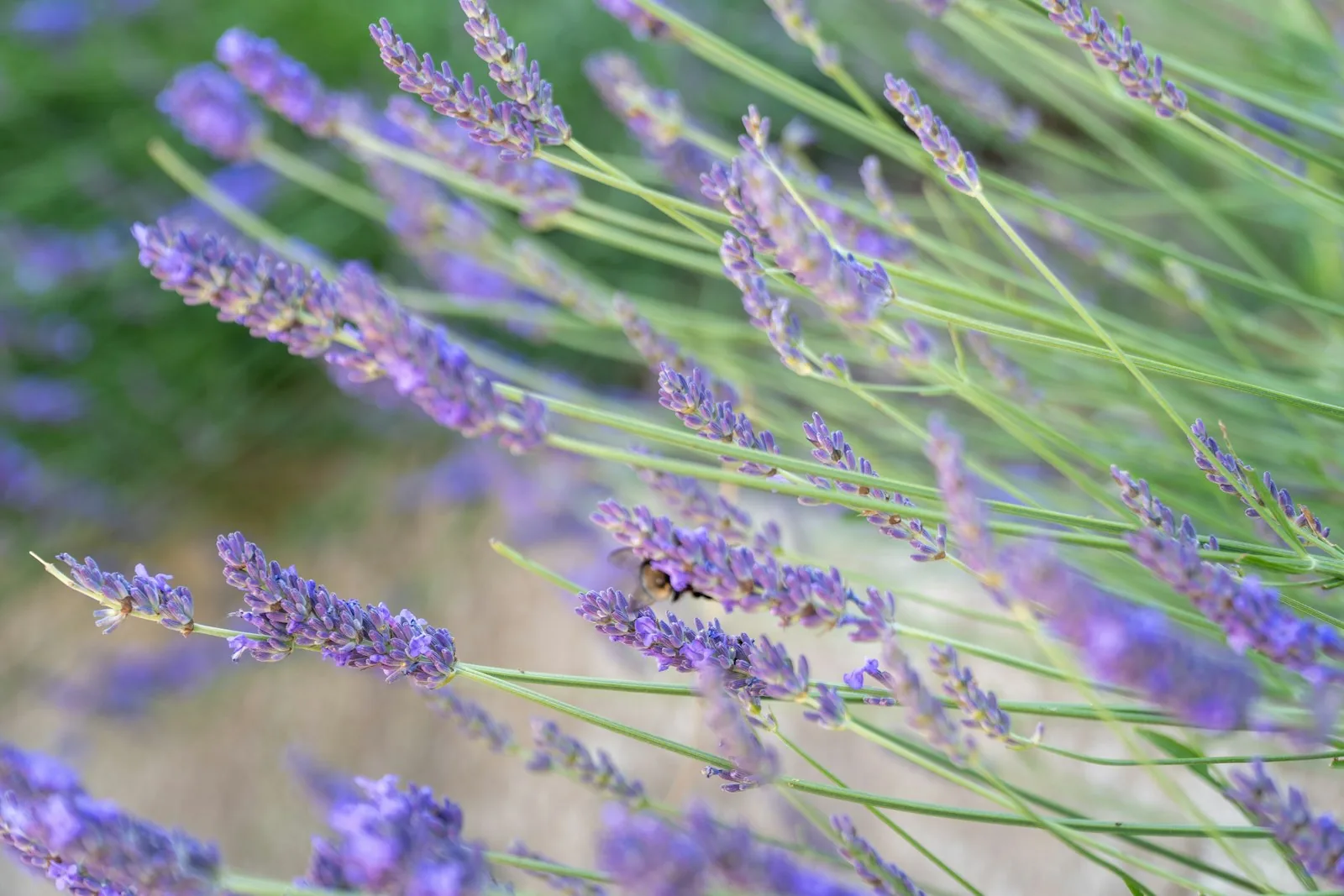
—- title: "Lavender care" slug: lavender-care hub: plants category: Species guide description: "I have killed lavender twice and kept it alive once. The two dead plants were Lavandula angustifolia 'Munstead' planted in amended beds with compost and mulched like the rest of the perennial." date: 2026-06-10 updated: 2026-06-10 author: "Thomas A." reading_time: 11 scientific: "Lavandula angustifolia" zones_min: 5 zones_max: 9 sun: "full sun" deer_resistant: true native: false pollinator: true bloom: "summer" height_min: 1 height_max: 3 —-
I have killed lavender twice and kept it alive once. The two dead plants were Lavandula angustifolia 'Munstead' planted in amended beds with compost and mulched like the rest of the perennial border. The one alive is also 'Munstead', in the same zone 7a Long Island yard, but planted in the worst-draining spot in the garden — which happens to also be the most gravelly, in a raised area along the driveway. That plant is in its fifth year. This is how lavender works: it punishes kindness and tolerates neglect.
English, French, or Spanish: the species question
Three lavender species dominate the garden market. Each has different cold hardiness, different pruning timing, and different fragrance character. The differences are large enough to determine whether the plant survives your winter.
Lavandula angustifolia — English lavender
The hardiest of the three and the one I grow. Per NC State Extension Plant Toolbox, English lavender is hardy in zones 5 through 9. Per Missouri Botanical Garden, it "typically grows to 1.5-3' tall" and blooms in late spring to early summer with purple flowers in terminal spikes.
This is the species used for culinary lavender, dried flowers, and essential oil production. The scent is the classic lavender scent most people associate with the name. MBG notes it is "broadly mounded" and is the best choice for zones 5 through 7.
Named cultivars worth knowing:
- 'Munstead' — one of the hardiest and most compact at about 12 to 18 inches tall. This is what I grow on Long Island.
- 'Hidcote' — compact, dark purple flowers, similar hardiness to 'Munstead.'
- 'Phenomenal' — a hybrid (L. x intermedia) that MBG notes has "slightly better" performance than straight angustifolia in humid climates.
Lavandula dentata — French lavender
French lavender is a different plant than most gardeners expect when they hear "lavender." Per NC State Extension Plant Toolbox, it is hardy in zones 8 through 11, making it suitable only for the mildest parts of North America. The leaves are toothed (dentata refers to this), the flowers are topped with decorative bracts, and it blooms for a long season including in winter in mild climates.
French lavender will not survive a zone 7 winter outdoors. It is a container plant or annual north of zone 8. The name "French lavender" is sometimes applied in garden centers to L. stoechas (Spanish lavender), which causes confusion — always verify the botanical name.
Lavandula stoechas — Spanish lavender
Per Missouri Botanical Garden, Spanish lavender is "hardy in Zones 7-10." The distinctive feature is the tuft of large purple bracts (the "bunny ears") perched on top of compact flower heads. The fragrance is more camphorous and medicinal than English lavender.
In zones 7 to 9, L. stoechas is a reliable garden plant. North of zone 7, it is unreliable to tender. Per Missouri Botanical Garden, it is "tolerant of shallow, rocky soils and drought" and should be pruned "as needed after flowering to maintain a dense, well-branched structure."
Lavandins (Lavandula x intermedia)
Lavandins are hybrids of L. angustifolia and L. latifolia. They are larger-growing than English lavender (to 3 feet and wider), have a stronger fragrance with more camphor notes, and are used heavily in the commercial fragrance industry. Cultivars include 'Grosso', 'Provence', and 'Phenomenal.' Per Missouri Botanical Garden, lavandins are "not reliably winter hardy throughout USDA Zone 5 where it appreciates a sheltered location and winter protection." Better suited to zones 6 to 9.
USDA hardiness zones by species
| Species | Common name | Hardiness zones |
|---|---|---|
| L. angustifolia | English lavender | Zones 5-9 per NC State |
| L. dentata | French lavender | Zones 8-11 |
| L. stoechas | Spanish lavender | Zones 7-10 per Missouri Botanical Garden |
| L. x intermedia | Lavandin | Zones 6-9; borderline zone 5 |
Light
All lavender species require full sun — 6 or more hours of direct sunlight daily per NC State Extension. Per Missouri Botanical Garden, English lavender should be "grow[n] in average, dry to medium, well-drained, alkaline soil in full sun."
In anything less than full sun, lavender produces fewer flowers, grows more loosely, and becomes more susceptible to disease. Do not plant it in partial shade as a "good enough" compromise. If your site only has partial sun, choose a different plant.
Drainage — the critical requirement
Lavender is native to the rocky, well-drained hillsides of the Mediterranean and requires similarly sharp drainage in cultivation.
Per NC State Extension: lavender "requires perfectly drained soil, preferably on the dry side; does not like wet feet; will die out in heavy clays."
Per Missouri Botanical Garden: "Well-drained soils are required, particularly in winter. Root rot commonly attacks plants grown in poorly drained soils." And: "Plants may not survive in winter if soils are not well-drained and/or if temperatures dip below zero degrees without protective snow cover."
The winter drainage point is critical. Even a lavender that survives the first summer can be killed over winter if water pools around the crown during freeze-thaw cycles. In clay-heavy soils, this is the typical failure mode.
Practical drainage improvements:
- Plant on a slope or raised bed to ensure water moves away from the crown
- Amend planting holes with coarse sand and gravel, not compost
- Use gravel mulch instead of organic mulch (per MBG, "consider using rock instead of organic mulch" to combat high humidity)
- Plant high — set the crown slightly above the surrounding soil grade so water flows away
I learned this the hard way. The two lavenders I killed were in amended beds with organic mulch. The one that thrives is on a raised driveway edge with gravel and no mulch at all.
Soil
Per NC State Extension, lavender prefers loam, sand, or shallow rocky soils with a neutral to alkaline pH (6.0 to above 8.0). Per Missouri Botanical Garden, it "prefers a light, sandy soil with somewhat low fertility."
That last point — low fertility — is not casual. Rich, heavily amended soil produces lush, disease-prone growth that dies faster than plants in lean, well-drained soil. This is the opposite of most garden plants. Do not add compost to the planting hole. If your soil is acidic, lime to bring pH above 6.5.
Watering
Once established, lavender is drought-tolerant. Per NC State Extension, it has strong "resistance to challenges: drought." In its first growing season, water regularly during dry spells to help roots establish. After the first year, most lavender in zones 5 to 7 survives on rainfall alone in typical years.
The risk with watering is always too much, not too little. Overwatering is a direct path to root rot. If in doubt, do not water. Lavender tolerates dry soil far better than it tolerates wet soil.
Fertilizing
Lavender does not benefit from fertilization in typical garden soil. Per Missouri Botanical Garden, it "prefers a light, sandy soil with somewhat low fertility." Fertilizing lavender — particularly with nitrogen — produces soft, lush growth that is prone to rot and disease, shortening the plant's life.
If you are on genuinely lean sandy or rocky soil and the plant is struggling (yellowing, very slow growth), a light application of a balanced slow-release fertilizer in spring is acceptable. In most garden soils, skip it entirely.
Pruning — timing and technique
Pruning is what keeps lavender from collapsing into a woody, sprawling mess. Left unpruned, lavender develops a woody center with living growth only at the tips, eventually splitting open from the base.
When to prune English lavender
Per Oregon State Extension: "The best time to prune lavender is after all chance of frost has passed, so that would be early March or so." For zone 7a Long Island, this is mid-March to early April.
Per Missouri Botanical Garden: "Prune to shape in spring after new leaves appear." And for rejuvenation: "Prune back to 8" in spring every 3 years to control plant size and to promote robust, new growth."
Remove spent flower spikes after the flowers fade in summer. This promotes continued bloom in varieties that produce a second flush.
What not to do
Do not cut lavender back into bare wood. Unlike shrubs that regenerate from old wood, lavender will not regrow from leafless brown stems. Always leave green growth when you prune. Per NC State Extension: "Cut it back yearly and remove the spent flower spikes after the flowers fade."
The hard rejuvenation cut (to 8 inches) recommended by MBG should only go into green tissue. If the plant is so woody that 8 inches is all bare wood, the plant may not recover and should be replaced.
Per Oregon State Extension, plants should be at least 2 to 3 feet apart with 3 to 6 feet between rows to ensure adequate air circulation and reduce fungal disease.
Humidity and the humid-climate problem
English lavender is native to the dry Mediterranean and struggles in high summer humidity. Per Missouri Botanical Garden, English lavender "can be difficult to grow in the St. Louis area, primarily because of winter stresses and high summer humidity. Well-drained soils are required, particularly in winter."
On Long Island in zone 7a, summer humidity is real. The mitigations that help: excellent drainage, gravel mulch instead of organic mulch, full sun (air moves better than in partial shade), and spacing plants generously for air circulation. In zones 7 through 9 in the humid Southeast, 'Phenomenal' lavandin is often recommended over straight L. angustifolia because of its better humidity tolerance.
Diseases and pests
Per NC State Extension, lavender has "no significant problems" but is "susceptible to leaf spot and root rot." Root rot from overwatering or poor drainage is the primary killer. Leaf spot is a secondary concern.
Per Missouri Botanical Garden: "Susceptible to leaf spot and root rot." Good air circulation prevents leaf spot. Drainage prevents root rot. There are no significant insect pests on established lavender in the home garden.
Common problems
| Symptom | Most likely cause | Fix |
|---|---|---|
| Plant dies over winter | Root rot from poor drainage; or cold beyond zone hardiness | Improve drainage; use gravel mulch; avoid low-lying sites |
| Plant splits open at center, sprawling woody base | Normal aging without pruning | Annual spring pruning to 8" prevents this; may not be recoverable once severe |
| Wilting despite watering | Root rot; overwatering | Stop watering; check roots; replant in better-drained site |
| Few flowers, leggy growth | Not enough sun, or too much nitrogen | Move to full sun; no fertilizer |
| White powder on leaves | Leaf spot or powdery mildew | Improve air circulation; avoid overhead watering |
| Short-lived plants (1-2 years) | Heavy clay soil with poor drainage | Raise beds; amend with coarse sand and gravel; use rock mulch |
Recommended gear: Best Raised Garden Bed Kits: Cedar vs. Metal vs. Fabric — our buyer's guide covering picks for every budget, ranked by Extension publication consensus and personal use.
Frequently asked
What zones does lavender grow in?
It depends on the species. Lavandula angustifolia (English lavender) is the hardiest, growing in zones 5 through 9 per NC State Extension. Lavandula stoechas (Spanish lavender) is hardy in zones 7 through 10 per Missouri Botanical Garden. Lavandula dentata (French lavender) is only reliably hardy in zones 8 through 11 — it is an annual or container plant north of zone 8. For most gardeners in zones 5 through 7, English lavender is the only reliable choice for a permanent planting.
Why does my lavender keep dying?
The most common cause is poor drainage. Per Missouri Botanical Garden, "root rot commonly attacks plants grown in poorly drained soils" and "plants may not survive in winter if soils are not well-drained." The problem is often not visible: the plant looks fine through the growing season, then dies over winter when the crown sits in cold, wet soil. The fix is to plant in a raised, gravelly site with no organic mulch. Amended beds with compost hold too much moisture.
When should I prune lavender?
Per Oregon State Extension, prune English lavender in early spring after frost risk has passed — late February to early April depending on your zone. Per Missouri Botanical Garden, "prune to shape in spring after new leaves appear" and cut back to 8 inches every 3 years for rejuvenation. Also remove spent flower spikes after bloom to encourage a second flush. Do not cut into bare wood — always leave green foliage.
Can lavender grow in clay soil?
Not without significant drainage improvement. Per NC State Extension, lavender "will die out in heavy clays." If your garden has clay soil, you have two realistic options: build a raised bed (at least 12 inches high) with a sandy, gravelly mix, or plant a different perennial. Amending the planting hole in clay is not sufficient — the surrounding clay still impedes drainage and creates a wet reservoir around the roots.
Sources
- NC State Extension Plant Toolbox — Lavandula angustifolia.
- Missouri Botanical Garden Plant Finder — Lavandula angustifolia.
- Missouri Botanical Garden Plant Finder — Lavandula stoechas ‘Bandera Deep Rose’.
- Missouri Botanical Garden Plant Finder — Lavandula x intermedia ‘Phenomenal’.
- Oregon State Extension — When is the best time to prune lavender?.
