Species guide

Japanese Maple Care: Cultivar Selection, Light, and the Truth About Leaf Scorch

Two failure modes account for most dead Japanese maples: planted too sunny in zones 7+ and planted in poor drainage where verticillium wilt takes them out within five years. Site selection is the entire game.

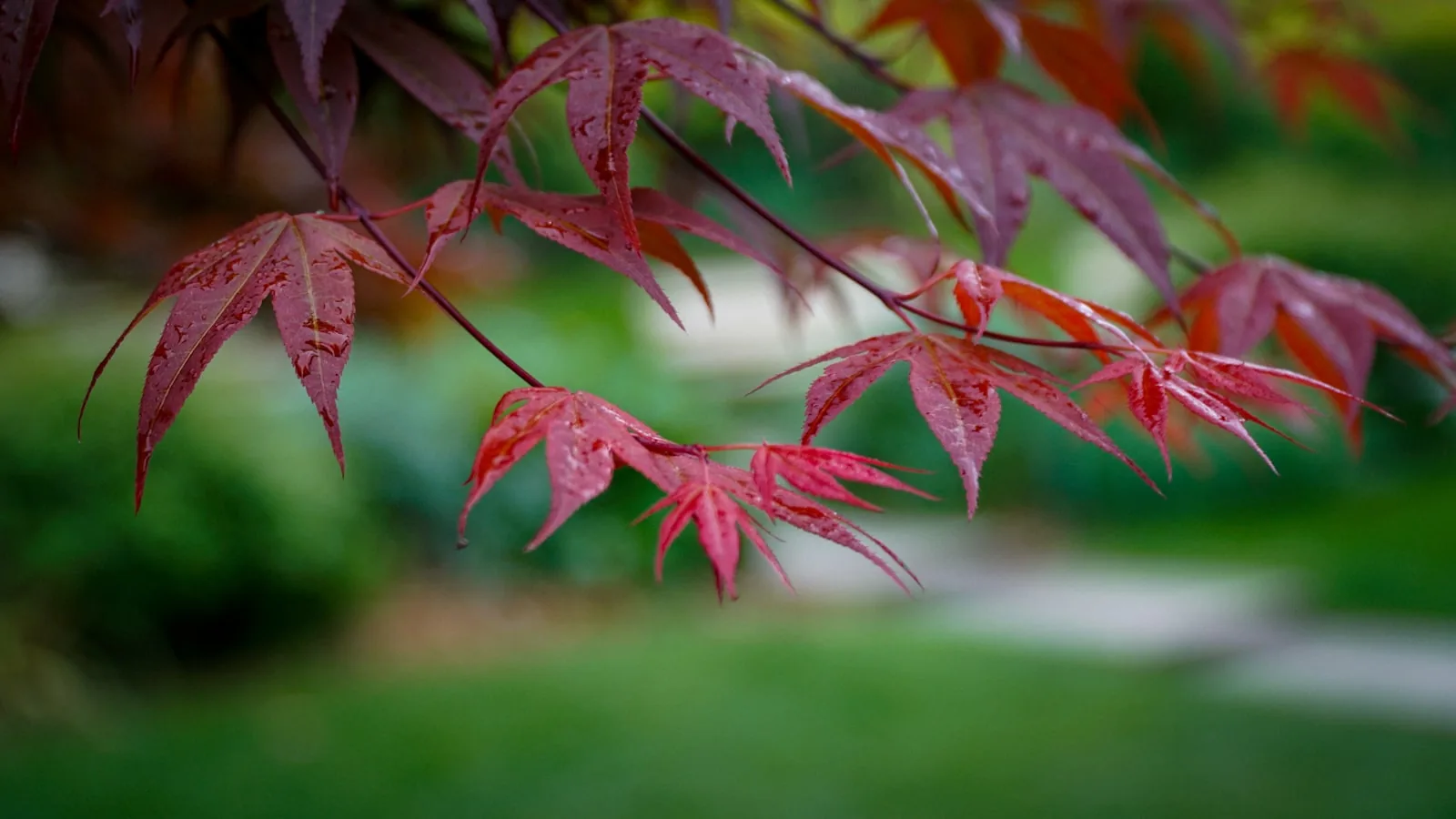
Red leaves of a japanese maple
Photo: Unsplash on Unsplash

—- title: "Japanese maple care" slug: japanese-maple-care hub: plants category: Species guide description: "A Japanese maple is one of the few small trees that does almost everything you want — it gives you spring color, summer texture, fall color that rivals New England forests in miniature, and an." date: 2026-06-10 updated: 2026-06-10 author: "Thomas A." reading_time: 13 scientific: "Acer palmatum" zones_min: 5 zones_max: 8 sun: "part shade" deer_resistant: true native: false height_min: 6 height_max: 25 —-

A Japanese maple is one of the few small trees that does almost everything you want — it gives you spring color, summer texture, fall color that rivals New England forests in miniature, and an architectural winter silhouette. It is also one of the most-killed landscape trees in suburban yards, almost always for the same two reasons: planted in too much afternoon sun, or planted in poorly draining soil and lost to verticillium wilt within five years.

I don't grow a Japanese maple at home — my yard doesn't have the right corner for one — so the bulk of this guide is sourced from NC State Extension Plant Toolbox, Missouri Botanical Garden, and the University of Minnesota Extension's maple diagnostic pages. My personal observations are limited to neighbors' trees and the cultivar collection at Old Westbury Gardens.

What "Japanese maple" actually means

The botanical name is Acer palmatum. Per NC State Extension Plant Toolbox, A. palmatum is a small ornamental tree (typically 15–25 feet at maturity, though some cultivars stay under 10 feet) native to Japan, Korea, and China. There are hundreds of named cultivars selected for leaf color, leaf shape, mature size, and growth habit.

The cultivars fall into a few practical groups:

The care fundamentals are the same across cultivars. The mature size, scorch sensitivity, and exact sun tolerance differ.

USDA hardiness

Per NC State Extension Plant Toolbox, A. palmatum is hardy in zones 5–8 — some sources extend the range to 5b–9, with the warmer end limited by summer heat tolerance, not cold. In zone 5, late spring frost damage is the most common winter issue: per Missouri Botanical Garden, "foliage tends to leaf out early in spring and is subject to damage from late spring frosts."

In zones 8–9, the limit is summer heat. Leaf scorch on the red-leafed cultivars becomes severe enough that the trees defoliate in late summer. If you garden in zone 8+, choose green-leafed varieties (which handle heat better) and site in afternoon shade.

Light — the make-or-break decision

The single most important siting decision for a Japanese maple is light exposure, and the answer changes by zone.

Zones 5–6: Full sun to part shade tolerated. Morning sun, afternoon part shade is ideal but full sun is workable in northern climates with adequate water.

Zones 7–8: Morning sun, afternoon shade. Per NC State Extension Plant Toolbox's 'Bloodgood' page: "the leaves can be scorched by hot dry summers." This is the cultivar that's marketed as one of the toughest red maples — and even it scorches in full afternoon sun in zones 7+.

Zone 8–9: Afternoon shade is mandatory. Filtered sun all day is better than direct sun for any portion of the afternoon.

The leaf scorch test: If the leaves are crispy brown at the edges and tips by July, the tree is getting too much sun or not enough water (usually both). The damage doesn't kill the tree but cumulative annual stress shortens its lifespan and reduces fall color.

Trunk sunburn: Per NC State Extension, the smooth gray bark of A. palmatum is vulnerable to sun scald on south and west-facing sides when planted in full sun. This is a particular issue for laceleaf forms whose mounded canopy shape means the trunk is exposed. Plant where the trunk is shaded by midday, or wrap young trunks in winter.

Soil and drainage — the verticillium question

Japanese maples need well-drained soil. Heavy clay, low spots where water pools after rain, sites with poor drainage — these are verticillium wilt sites, and verticillium will eventually kill the tree.

Verticillium wilt is a soil-borne fungal disease (Verticillium dahliae and V. albo-atrum) that infects through the roots and clogs the vascular system. Per Missouri Botanical Garden's verticillium wilt resource, maples are among the most susceptible woody ornamentals. Symptoms per University of Minnesota Extension:

There is no cure. Per Missouri Botanical Garden: "Fungicides are not generally effective or practical." Once a Japanese maple has verticillium, the tree will decline and die — over months or years depending on severity. The only management is to maintain the tree's vigor with adequate water and prune out dead branches to slow the decline.

Prevention is everything. Per NC State Extension Plant Toolbox's 'Bloodgood' page: "If it is planted without good drainage, it is prone to verticillium wilt." Plant in well-drained soil. If your site has heavy clay or stays wet after rain, amend with compost to a wide and deep area (not just the planting hole), or build a raised berm to elevate the root crown above the wet zone, or choose a different tree.

Soil pH: Slightly acidic to neutral (pH 5.5–7.0) is ideal. Per Missouri Botanical Garden's Emperor I page, "chlorosis may occur in high pH soils" — yellow leaves with green veins indicate iron deficiency from alkaline soil. Most eastern U.S. soils are naturally acidic enough; western soils may need amendment.

Planting

Plant in fall or early spring while the tree is dormant. Spring planting is more common but fall gives the roots a head start before summer heat.

  1. Dig a hole 2–3 times wider than the root ball, but no deeper. The top of the root ball should sit at or slightly above grade — never below.
  2. Loosen the roots of container-grown trees. Pot-bound roots circling the root ball will eventually girdle and kill the tree. Use your fingers or a knife to score the sides and tease out the outer roots.
  3. Backfill with the original soil. Per most extension guidance, heavy amendment of the planting hole alone creates a "bathtub" effect — water sits in the amended hole rather than draining into the surrounding native soil. If your soil is poor, amend the whole bed, not just the hole.
  4. Mulch 2–3 inches deep, but keep mulch 2 inches away from the trunk. Mulch volcanoes against the trunk cause rot and bark damage.
  5. Water deeply once a week for the first growing season. A slow soak that wets the root ball thoroughly. After the first year, water during dry spells but otherwise the tree handles itself.

Watering established trees

A mature Japanese maple in a well-sited spot needs supplemental water only during extended dry periods. Per most extension guidance for established woody ornamentals, 1 inch of water per week from rain or irrigation is the baseline. In hot dry summers, 1.5–2 inches per week supports the tree without leaf scorch.

Signs of underwatering: Wilting that doesn't recover overnight, crispy brown leaf edges, premature leaf drop.

Signs of overwatering: Yellowing leaves throughout the canopy (not just one branch), root rot symptoms, fungal growth at the base of the trunk.

A 2–3 inch layer of shredded hardwood mulch over the root zone (out to the drip line, not just at the trunk) is the single best moisture management intervention. Mulch suppresses evaporation, moderates soil temperature, and reduces competition from grass roots.

Pruning

Japanese maples need very little pruning. The natural form of the tree is the goal — overpruning destroys the architectural quality that's the whole reason to plant the tree.

When to prune: Late summer through fall, after leaves have hardened off. Winter pruning is acceptable but causes more sap bleeding (which is harmless but cosmetically alarming on cut branches in spring). Avoid pruning in early spring when sap is rising — bleeding is heaviest then.

What to prune:

What not to prune:

Per most extension guidance and the practical experience of arborists who specialize in Japanese maples: when in doubt, don't cut.

Other pests and problems

Beyond verticillium wilt and leaf scorch, Japanese maples are bothered by a short list of issues. Per NC State Extension Plant Toolbox:

Cultivar selection — a buyer's note

If you are buying your first Japanese maple, the safest choice is one of the upright red-leafed cultivars — Bloodgood or Emperor I. Both have decades of garden performance data, both are widely available, both reach a manageable 15–20 feet, and both have good heat and cold tolerance compared to more delicate cultivars.

If you want a smaller weeping form, Crimson Queen and Tamukeyama are the standard cut-leaf reds. Expect 6–10 feet at maturity. Site these in afternoon shade in zones 7+ or expect annual leaf scorch.

For a green-leafed reference cultivar, the species type A. palmatum or 'Sango-kaku' (Coral Bark) gives you the architecture plus a coral-orange winter twig color. Coral Bark is a great winter-interest choice for cold climates.

Avoid impulse-buying obscure cultivars unless you've researched the specific variety. Some named cultivars have known weak points — chlorotic in alkaline soil, scorch-prone, prone to dieback. Reputable specialty nurseries (Iseli Nursery, Mr. Maple) publish honest cultivar notes.

Common problems

SymptomMost likely causeFix
Brown crispy leaf edges in summerLeaf scorch from sun, wind, or droughtMove to afternoon shade; mulch deeper; water during drought
One branch wilts and dies; rest looks fineVerticillium wilt (early stage)Prune the affected branch; maintain tree vigor; long-term decline likely
Dark streaks in sapwood when bark is peeledVerticillium wilt (confirmed)No cure; manage decline with water and pruning
Yellow leaves with green veinsIron chlorosis from alkaline soilTest soil pH; apply chelated iron foliar; sulfur to lower pH
Sticky residue and black sooty mold on leavesAphid infestationHose off; predatory insects usually resolve
White or brown bumps on barkScale insectsHorticultural oil in dormant season; usually cosmetic
Fine webbing on leaf undersides; stippled leavesSpider mitesHose off; insecticidal soap; usually heat-stress related
Bark cracked or peeling on south side of trunkSun scaldWrap trunk in winter; site in afternoon shade
Late frost killed new leavesLate frost damage (not a cultivar problem)Wait 4–6 weeks for second flush; no other action needed
Tree didn't leaf out at all in springSevere winter dieback or vole damage to rootsScratch bark to check for green cambium; cut back to live wood if dieback
Recommended gear: Best Insecticidal Soap: How Potassium Salts Kill Soft-Bodied Pests — our buyer's guide covering picks for every budget, ranked by Extension publication consensus and personal use.

Frequently asked

How much sun does a Japanese maple need?

It depends on your zone. In zones 5–6, full sun to part shade is tolerated for most cultivars. In zones 7–8, morning sun with afternoon shade is the sweet spot, and even tough cultivars like 'Bloodgood' will show leaf scorch in full afternoon sun — per NC State Extension Plant Toolbox, "the leaves can be scorched by hot dry summers." In zones 8–9, afternoon shade is mandatory and filtered sun all day is better than direct sun for any part of the afternoon. Laceleaf and red-leafed cultivars are more sensitive to sun than upright green forms.

Why are the leaves on my Japanese maple turning brown at the edges?

In most cases this is leaf scorch — the tree is losing water from the leaves faster than it can pull water up from the roots. The two common causes are too much sun (especially afternoon sun in hot zones) and inadequate soil moisture, often together. Per NC State Extension, the issue is especially common on red-leafed cultivars in zones 7+. The fix is more shade, deeper mulch, and consistent watering during dry periods. If the entire canopy is browning quickly with no obvious sun or water cause, suspect verticillium wilt or other vascular disease — peel a strip of bark from a dying branch and look for dark streaks in the sapwood.

Is my Japanese maple dying from verticillium wilt?

Possibly. Per Missouri Botanical Garden, the diagnostic signs are: wilting on one branch or one section of the canopy while the rest looks fine; small, yellowed leaves on affected branches; brown leaf edges and tips; and — the definitive sign — dark brown or black streaks in the sapwood when you peel back the bark of a dying branch. Verticillium is soil-borne and there is no cure; per Missouri Botanical Garden, "fungicides are not generally effective or practical." Management is limited to maintaining tree vigor with deep watering and pruning out dying branches. Trees in well-drained soil rarely get verticillium; trees in heavy wet soil are at chronic risk.

Can I plant a Japanese maple in full sun?

In zones 5–6, yes, with adequate water. In zones 7–8, expect leaf scorch on red-leafed cultivars by mid-summer; consider afternoon shade. In zones 8–9, no — full sun all day will cause severe scorch and shorten the tree's life. The species evolved as an understory tree in Japanese forests where it received dappled or morning-only sun. Replicating that exposure (4–6 hours of morning sun, shade from about 1pm on) gives the best long-term performance across all but the coldest zones.

Sources

  1. NC State Extension Plant Toolbox — Acer palmatum (Japanese Maple).
  2. NC State Extension Plant Toolbox — Acer palmatum ‘Bloodgood’.
  3. Missouri Botanical Garden — Acer palmatum Plant Finder.
  4. Missouri Botanical Garden — Acer palmatum ‘Wolff’ (Emperor I).
  5. Missouri Botanical Garden — Verticillium Wilt.
  6. University of Minnesota Extension — Maple — Leaves turn completely yellow or brown.