Species guide

Daffodil Care: Growing Narcissus for Lasting Blooms

title: "Daffodil Care: Growing Narcissus for Lasting Blooms"
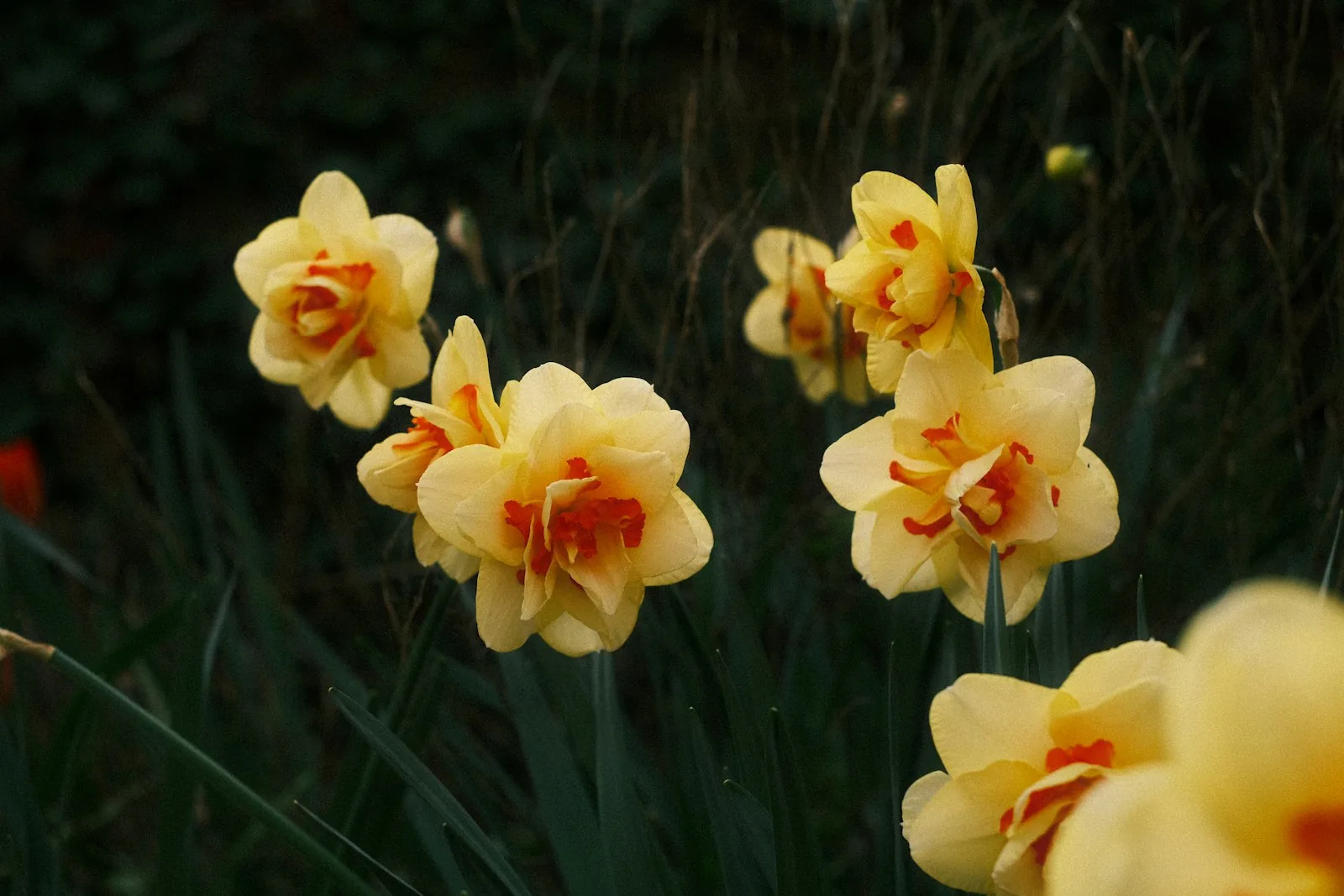
yellow daffodils with orange centers bloom in spring
Photo: Unsplash on Unsplash

—- title: "Daffodil Care: Growing Narcissus for Lasting Blooms" slug: daffodil-care hub: plants category: Species guide description: "How to grow daffodils (Narcissus) in zones 3–8. Planting depth, naturalizing, foliage management, and the one bulb deer won't touch. First-person zone 7a guide." date: 2026-06-10 updated: 2026-06-10 author: "Thomas A." reading_time: 9 scientific: "Narcissus spp." zones_min: 3 zones_max: 9 sun: "full sun" deer_resistant: true native: false pollinator: true bloom: "spring" height_min: 1 height_max: 2 —-

Daffodils are my first plant recommendation for anyone in a deer-pressure garden. Every spring in Melville, I have daffodils blooming when the deer have already eaten the tulips. The deer don't touch them — not the foliage, not the buds, not the spent stems. The entire plant is toxic to deer, and they know it. After six or seven springs of watching the deer selectively eat everything around my daffodils while leaving them untouched, I've expanded my plantings to about 150 bulbs spread across the front and back borders.

Narcissus is also the easiest spring bulb to establish for longevity. Unlike tulips, which decline and disappear after a few years in most of the eastern United States, daffodils naturalize — they multiply, spread, and often bloom more prolifically in year 5 than in year 1. The only active decision you need to make is where to put them and how deep.

Narcissus divisions and types

The American Daffodil Society recognizes 13 divisions of narcissus based on flower form and parentage. Per Missouri Botanical Garden, the most important for garden use include:

Division 1 — Trumpet daffodils. The classic daffodil form — one flower per stem with a trumpet as long as or longer than the petals. 'King Alfred', 'Dutch Master', 'Mount Hood' (white). Zones 3–8. These are the most familiar and generally the most vigorous naturalizers.

Division 2 — Large-cupped. One flower per stem, cup more than one-third but less than equal to petal length. 'Ice Follies', 'Carlton', 'Fortissimo'. Per Penn State Extension, large-cupped types are among the most reliable for naturalizing.

Division 4 — Double. Two or more rows of petals and/or a split or doubled cup. Per Missouri Botanical Garden, 'Tahiti' and 'Bridal Crown' are widely grown. Heavy flowers on tall stems can flop in rain.

Division 5 — Triandrus. Multiple nodding flowers per stem. 'Thalia' (white) is a classic. Per NC State Extension Plant Toolbox, triandrus types tend to naturalize well and have good longevity.

Division 7 — Jonquilla. Multiple fragrant flowers per stem, rush-like foliage. Per Missouri Botanical Garden, these are the most fragrant daffodils. Better heat tolerance than trumpet types — a better choice for zones 7–8.

Division 8 — Tazetta. Fragrant, multiple flowers per stem. Per Missouri Botanical Garden, includes 'Paperwhite', which is not reliably hardy in zones 5–7 outdoors. Garden tazettas for outdoor planting include 'Geranium' and 'Canaliculatus'.

USDA hardiness zones

Per Missouri Botanical Garden, most daffodil cultivars are hardy in zones 3–8. Trumpet and large-cupped types are the most cold-hardy; jonquilla and tazetta types are better in warmer zones (6–9) and less reliable in zones 3–4. In Long Island's zone 7a, all the major divisions perform well.

Per NC State Extension, daffodils need a period of cold (chilling) to bloom reliably. In zones 9 and warmer, this chilling requirement is not met in the ground and bulbs must be pre-chilled or replaced annually.

Planting

When: Fall, before the ground freezes. Per Penn State Extension, "daffodils and other spring bulbs should be planted in fall, typically from mid-September through November." I plant mine in October in zone 7a — the soil is cooling but workable and there's time for root establishment before hard freezes.

Depth: Per Missouri Botanical Garden, plant bulbs 6–8 inches deep (measured from the bottom of the bulb) in zones 5–7. The common mistake is planting too shallow — shallow planting produces flowering bulbs that don't multiply well and are subject to frost heaving. In loose, sandy soil, I plant mine at the deeper end (8 inches) for stability.

Spacing: 4–6 inches apart for a natural drift appearance; 6–8 inches for a more formal planting. Per NC State Extension, daffodils naturalize and will fill in over time — initial spacing doesn't need to be tight.

Orientation: Pointed end up. Per Penn State Extension, plant pointed end up; if the top is not clearly identifiable, plant on its side and the shoot will orient itself.

Light

Full sun to partial shade. Per Missouri Botanical Garden, daffodils "perform best in full sun to light shade." Planting under deciduous trees works well because the bulbs bloom in early spring before the tree leafs out, receiving adequate sun during the critical growth period. By the time the canopy casts heavy shade in May, the daffodils are finishing bloom.

Several of my plantings are under the oak tree in the front yard — they get full sun in March and April when they bloom, then deep shade from May onward. They've naturalized and multiplied reliably.

Watering and fertilizing

Daffodils need most of their moisture during fall root establishment and spring growth. Per Clemson Extension HGIC, "water bulbs thoroughly after planting to settle the soil and encourage root growth." In my experience, natural fall and early spring rainfall in zone 7a is adequate for daffodils — I provide no supplemental irrigation.

Fertilizer: Per Clemson Extension HGIC, fertilize at planting with a low-nitrogen bulb fertilizer or Espoma Plant-tone worked into the backfill. Apply again in early spring when shoots emerge. Per NC State Extension, avoid high-nitrogen fertilizers, which produce lush foliage at the expense of bloom and reduce bulb longevity.

The foliage rule — why it matters

Per Clemson Extension HGIC, daffodil foliage must remain in place and green until it yellows and dies back naturally — typically 6–8 weeks after bloom. During this period, the foliage is photosynthesizing and sending energy back into the bulb to fuel next year's flower. Cutting, braiding, bundling, or otherwise damaging the foliage before it yellows reduces bloom significantly in subsequent years.

This is the single most important ongoing care rule for naturalizing daffodils. I have a cluster of bulbs along the front walk that a previous owner had planted; someone had been cutting the foliage back early for years. When I stopped cutting it and let it die naturally, bloom count more than doubled over two seasons.

Per Penn State Extension, "resist the temptation to braid, rubber-band, or otherwise tie up daffodil foliage." Hiding the ripening foliage under other plants — ornamental grasses, geraniums, hostas — is the garden design solution, not cutting it back.

Companion plants

Common problems

SymptomMost likely causeFix
Fewer flowers each yearFoliage cut back too early; overcrowded bulbsLet foliage die naturally; divide overcrowded clumps after foliage dies
Foliage but no flowersBulbs were planted too shallow; insufficient sun; nutrient-depletedReplant deeper; move to more sun; fertilize at planting
Foliage yellowing very earlyBulb rot or narcissus fly damageDig and inspect; discard rotten bulbs
"Blind" stems with no budOvercrowded clumps; late frost on budDivide after foliage dies; protect early-emerging bulbs if frost threatens
Deer damageNone expected — daffodils are deer-proofConfirm species (tulips nearby may be the target)
Basal rot (mushy at base)Fusarium basal rotDiscard affected bulbs; improve drainage

Frequently asked

When do daffodils bloom in zone 7a?

In Melville, Long Island (zone 7a), the earliest small-cupped and tazetta types break ground in late February to early March. Trumpet daffodils typically peak in late March to mid-April. Large-cupped and double types extend into late April. With careful cultivar selection spanning early to late varieties, I can have daffodils blooming for 6–7 weeks, from early March through late April. Per Missouri Botanical Garden, bloom time shifts 1–2 weeks later per zone cooler.

Are daffodils truly deer-proof?

Per Rutgers NJAES, daffodils are rated "rarely damaged" by deer and are among the most reliably deer-resistant bulbs available. The entire plant contains alkaloids (principally lycorine and galantamine) that are toxic to deer and make the bulbs unpalatable. In six or more years of growing daffodils in high-deer-pressure Melville, I have never had deer damage on daffodils, while adjacent tulips and crocus were eaten the same week. This is what makes daffodils the practical answer for naturalized spring color in deer-dominated suburban gardens.

Can I grow daffodils under trees?

Yes, and I do. Per Missouri Botanical Garden, daffodils perform well under deciduous trees because their bloom period (March–April) precedes full leafing of the tree canopy, providing adequate sunlight during the critical photosynthesis period. The tree roots are deep enough not to compete significantly with the shallow bulb planting zone. The tree canopy then covers the ripening foliage in May, visually integrating the clumps into the landscape.

Recommended gear: 15 best [hosta cultivars by leaf color and size](https://outdoorplantcare.com/plants/best-hosta-cultivars/) — our buyer's guide covering picks for every budget, ranked by Extension publication consensus and personal use.

Sources

  1. Missouri Botanical Garden &mdash; <a href="https://www.missouribotanicalgarden.org/PlantFinder/PlantFinderDetails.aspx?kempercode=c691">Narcissus</a>.
  2. NC State Extension Plant Toolbox &mdash; <a href="https://plants.ces.ncsu.edu/plants/narcissus/">Narcissus</a>.
  3. Penn State Extension &mdash; <a href="https://extension.psu.edu/spring-bulbs">Spring Bulbs</a>.
  4. Clemson Extension HGIC &mdash; <a href="https://hgic.clemson.edu/factsheet/daffodil/">Daffodil</a>.
  5. Rutgers NJAES &mdash; <a href="https://njaes.rutgers.edu/pubs/publication.asp?pid=FS1312">Landscape Plants Rated by Deer Resistance</a>.

Sources