Pollinator

Best Plants for Bees: Native and Honeybee Favorites

title: "Best Plants for Bees: Native and Honeybee Favorites"

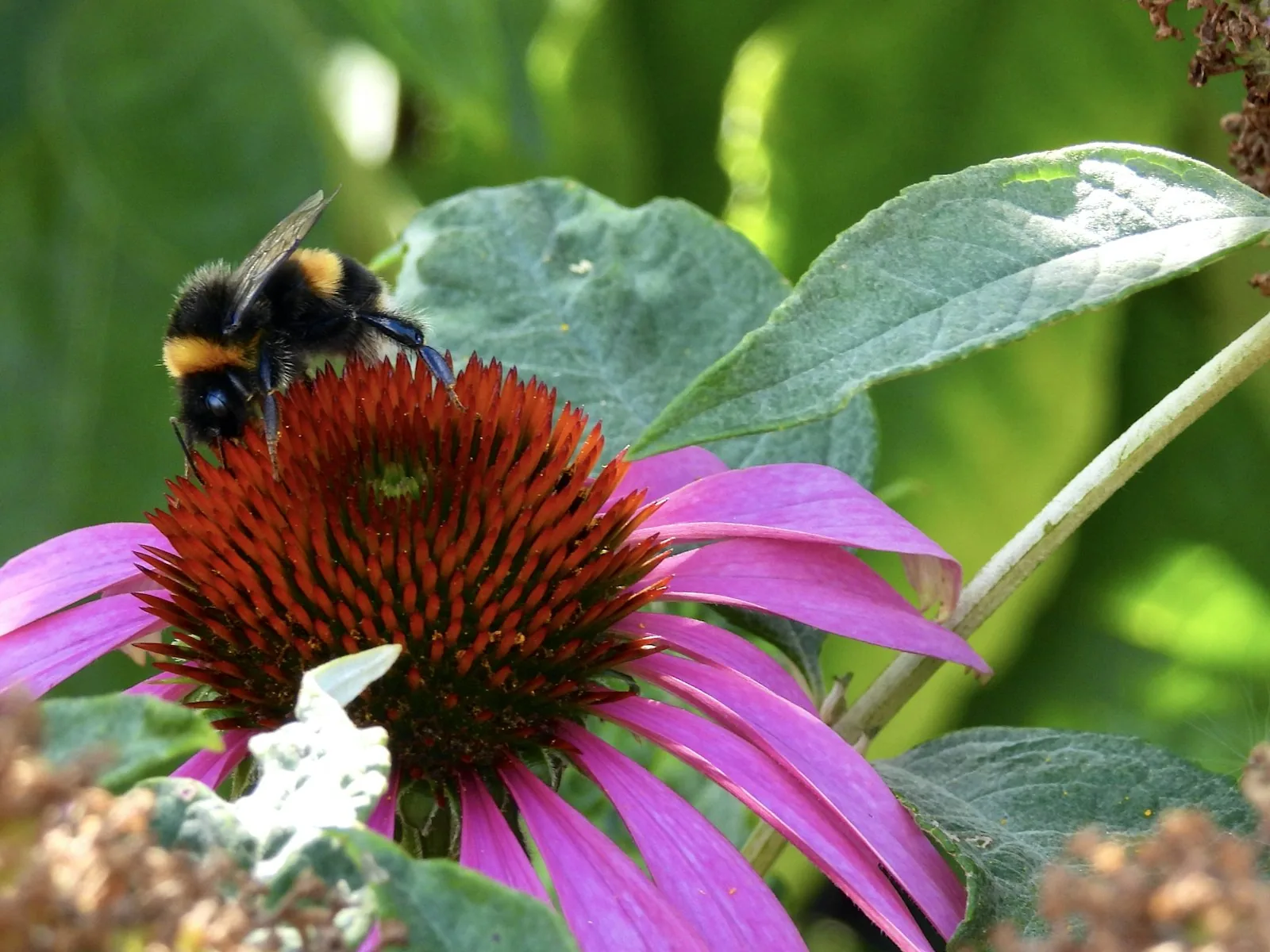
A bee sitting on top of a pink flower
Photo: Unsplash on Unsplash

—- title: "Best Plants for Bees: Native and Honeybee Favorites" slug: plants-for-bees hub: care category: Pollinator description: "The best plants for native bees and honeybees, ranked by pollen and nectar value. Includes bloom times, zones, and a full plant table backed by Xerces Society data." date: 2026-06-10 updated: 2026-06-10 author: "Thomas A." reading_time: 9 —-

Most garden advice on "plants for bees" collapses two very different groups into one. Honeybees (Apis mellifera) are generalists from Europe, well studied and commercially important. Native bees — the roughly 3,600 species documented in North America per the USDA Agricultural Research Service — are a separate ecological category, with many species specialized to forage on specific plant families. A garden built only for honeybees can underserve native bees dramatically. This guide covers both.

Why native bees need different plants than honeybees

Honeybees are generalists. They will work clover, lavender, sunflowers, fruit tree blossoms, and cover crops with equal willingness. Their primary constraint is accessible flower structure — they are physically excluded from long tubular flowers they cannot reach with their tongue.

Native bees include both generalists (bumble bees, sweat bees, mining bees) and specialists. Per the Xerces Society's Gardening for Bees publication, specialist bees — those that collect pollen only from one plant genus or family — make up a significant portion of North American bee diversity. Squash bees (Peponapis pruinosa) forage almost exclusively on cucurbits. Many species of Andrena are specialists on Solidago (goldenrod) or Aster. If those host plant genera are absent from a landscape, those bee species cannot complete their life cycle there.

This is why a garden of strictly non-native ornamentals — even bee-friendly ones like lavender and catmint — provides less ecological value than a garden that includes natives in the families those specialists need. Both types of plants belong in a well-designed pollinator garden; neither is sufficient alone.

Spring bloomers: filling the hunger gap

Early-season bloom is the most critical period. Native bee queens emerge from overwintering sites in March and April when many landscapes are still bare. Per Penn State Extension's pollinator planting guide, the late-winter-to-early-spring gap in bloom is the period most damaging to bee populations.

Willows and maples are the most important early sources. Native willows (Salix spp.) flower before their leaves emerge and provide pollen and nectar to queens and newly-emerged bees. Per the Xerces Society, willows support over 100 bee species in North America. If you have space for a shrub or small tree, a native willow is among the highest-value additions possible.

Wild blue lupine (Lupinus perennis) is one of the first perennial forbs to bloom in the Northeast and Midwest — late April to May depending on latitude. It is also the sole larval host for the endangered Karner blue butterfly, but from a bee perspective it is a significant pollen source, particularly for bumble bees.

Serviceberry (Amelanchier spp.) is a native shrub/small tree with white bloom in April-May before most competitors. Per the Lady Bird Johnson Wildflower Center, serviceberry is native from zones 3-9 depending on species.

Virginia bluebells (Mertensia virginica) and other early spring ephemerals bridge the March-April gap in woodland settings.

Summer bloomers: the peak forage season

Summer is when bee populations are largest and competition for forage is highest. The plants that carry the most weight during this period are largely in the aster and mint families.

Coneflowers and black-eyed Susans

I grow both at home in Melville. The coneflowers (Echinacea purpurea) in my back border have been in place for six years. They start blooming mid-July and carry into September. On any given summer morning I count bumble bees, smaller sweat bees, and honeybees working the same patch simultaneously. Black-eyed Susans (Rudbeckia hirta) come on in late June, slightly earlier, and provide a nearly identical range of visitors.

Per Cornell University's Department of Entomology resources on pollinator planting, the central disk of composite flowers like coneflowers is an accessible landing pad for bees of varying tongue lengths. The pollen is exposed rather than hidden in a tube, making these plants high-value for generalist bees.

Catmint

Catmint 'Walker's Low' (Nepeta × faassenii) is one of the most consistent bee plants I grow. June through August it is covered with small bees — primarily sweat bees and bumble bees — from early morning. The second flush of bloom after cutting back in July extends the forage period. Honeybees work it too, though less intensively than the smaller native species that seem better suited to its small florets.

Native mints and bergamots

Bee balm (Monarda spp.) is the native North American equivalent of catmint in bee value. Wild bergamot (M. fistulosa) and scarlet bee balm (M. didyma) are both documented by UMass Extension's pollinator resources as high-value for bumble bees and native bees broadly.

Goldenrod

Per the Xerces Society, goldenrod (Solidago spp.) collectively is among the highest-value bee forage plants native to North America. It blooms August through October — the critical late-season period when bees are building winter reserves. Goldenrod supports an estimated 100+ specialist bee species that forage primarily on it. The myth that goldenrod causes hay fever is false; goldenrod pollen is too heavy to be wind-borne. The culprit is ragweed (Ambrosia spp.), which blooms at the same time but is nearly invisible.

Late-season bloomers: building winter reserves

The late-season forage gap — August through killing frost — is nearly as important as the early-spring gap. Bumble bee queens and solitary female bees need to build fat reserves before overwintering. Native asters are the primary solution.

Native asters (Symphyotrichum spp.) bloom September through October across most of North America. Per Xerces Society publications, asters are among the top 10 late-season bee plants continent-wide. New England aster (S. novae-angliae), smooth aster (S. laeve), and aromatic aster (S. oblongifolium) are all well-documented high-value species.

Switchgrass (Panicum virgatum) doesn't provide nectar but its structure provides nesting habitat. I grow it in my back border and have watched ground-nesting bees use the disturbed soil at its base in spring.

Alliums: underappreciated bee magnets

Ornamental alliums (Allium spp.) are the most visited plants in my May garden. 'Purple Sensation' and 'Globemaster' are covered with bumble bees and honeybees from first bloom. Per the Pollinator Partnership's ecoregional planting guides, alliums are noted as high-value spring-to-early-summer bee plants across multiple ecoregions. The exposed floret structure of an allium globe is accessible to bees with any tongue length.

Plant table

Common NameScientific NameUSDA ZonesBloom TimeHeightBee Value
Wild blue lupineLupinus perennis3–8Apr–Jun1–2 ftHigh; bumble bee specialist pollen
ServiceberryAmelanchier spp.3–9Apr–May8–25 ftHigh; critical early-season pollen
Virginia bluebellsMertensia virginica3–9Mar–May1–2 ftModerate; early pollen/nectar
Wild bergamotMonarda fistulosa3–9Jul–Sep2–4 ftVery high; bumble bee magnet
Scarlet bee balmMonarda didyma4–9Jul–Aug2–4 ftHigh; long-tongued bees
Purple coneflowerEchinacea purpurea3–9Jul–Sep2–4 ftVery high; generalist
Black-eyed SusanRudbeckia hirta3–9Jun–Oct1–3 ftHigh; generalist
Catmint 'Walker's Low'Nepeta × faassenii4–8Jun–Aug18–24 inHigh; sweat bees, bumble bees
Ornamental alliumAllium spp.4–9May–Jun1–4 ftVery high; accessible florets
Wild columbineAquilegia canadensis3–8Apr–Jun1–3 ftHigh; long-tongued bumble bees
Anise hyssopAgastache foeniculum4–9Jul–Sep2–4 ftVery high; documented honeybee/native
PhaceliaPhacelia tanacetifoliaannualMay–Aug1–3 ftVery high; honeybee forage crop
Goldenrod (various)Solidago spp.3–9Aug–Oct1–5 ftHighest; 100+ specialist spp.
New England asterSymphyotrichum novae-angliae4–8Aug–Oct3–6 ftVery high; critical late-season
Aromatic asterSymphyotrichum oblongifolium3–9Sep–Nov2–3 ftHigh; extends season latest
BorageBorago officinalisannualJun–Sep1–2 ftHigh; honeybee, bumble bee
SunflowerHelianthus annuusannualJul–Sep3–10 ftVery high; pollen-heavy generalist
White cloverTrifolium repens3–9May–Sep3–6 inHigh; top honeybee forage
Lavender 'Munstead'Lavandula angustifolia5–8Jun–Aug12–18 inHigh; honeybees, bumble bees
Mountain mintPycnanthemum virginianum4–8Jul–Sep2–3 ftVery high; insect diversity record

Structural plants: nesting habitat matters as much as forage

Forage plants feed bees. Structural plants give them places to live. Per the Xerces Society's Attract Native Bees to Your Garden, approximately 70% of North American native bee species are ground-nesters that require bare or sparsely vegetated soil patches. The remaining 30% are cavity-nesters that use hollow stems, pithy stems, or pre-existing cavities in wood.

Leaving a patch of undisturbed bare soil in a sunny location, not mulching every square inch of the garden, and leaving hollow plant stems standing through winter (or cutting to 12+ inches) instead of chopping them to the ground all provide nesting resources that forage plants alone cannot.

Pesticide considerations

Per EPA guidance on protecting pollinators, systemic neonicotinoid pesticides — imidacloprid, clothianidin, thiamethoxam, dinotefuran — persist in plant tissue, including pollen and nectar, and are associated with sublethal effects on bee navigation and foraging behavior. Plants purchased from nurseries may be pre-treated with neonicotinoids at planting; per the Xerces Society's neonicotinoid factsheets, residues can persist in plant tissue for more than a year. When buying plants for pollinator gardens, ask about systemic pesticide treatment at the nursery level.

Frequently asked

Do honeybees and native bees compete with each other?

Per research summarized by the Xerces Society, high densities of managed honeybee hives can reduce forage availability for native bees, particularly in areas where floral diversity is limited. In a diverse garden with bloom from spring through fall, competition is less acute because different species partition forage by flower type and bloom time. The concern is greatest in landscapes near commercial apiaries or in habitats with limited floral resources.

What is the single most valuable plant group for native bees?

Per the Xerces Society, goldenrod (Solidago spp.) and the asters (Symphyotrichum spp.) are collectively the highest-value plant genus groups for North American native bees, both by number of supported specialist species and by total late-season forage value. Any garden that can accommodate a native goldenrod and a native aster has addressed the most critical gap in most suburban landscapes.

How many bee-friendly plants do I need?

The Xerces Society recommends a minimum of three species in bloom at all times from early spring through late fall, with a target of 10 or more species total in the garden to support generalist and specialist species across the season. Diversity of flower structure — flat composite flowers, tubular flowers, open cup flowers — supports a broader range of bee tongue lengths and foraging behavior.

Are all lavender types equally valuable for bees?

No. Per Rothamsted Research studies on lavender varieties and bee visitation, nectar volume and composition vary substantially by cultivar. True English lavender (Lavandula angustifolia) varieties consistently outperform French and hybrid types in bee visitation rates. 'Vera', 'Hidcote', and 'Munstead' are among the highest-rated cultivars in studies measuring visitation frequency.

Is butterfly bush (Buddleja davidii) actually good for bees?

Butterfly bush provides nectar accessible to long-tongued visitors including honeybees and bumble bees. However, per the Oregon Department of Agriculture's invasive species program, it is listed as a noxious weed in Oregon and Washington, and its dense stands can displace native plants that support specialist species. In states where it is invasive, sterile cultivars (labeled as non-seeding) are the safer choice. The nutritional value of its nectar to native bee larvae has not been studied to the same degree as native alternatives.

Recommended gear: Best [coneflower cultivars beyond purple](https://outdoorplantcare.com/plants/best-coneflower-cultivars/) — our buyer's guide covering picks for every budget, ranked by Extension publication consensus and personal use.

Sources

Sources