Watermelon Care: How to Grow Sweet Melons in the Home Garden
How to grow sweet, crack-free Citrullus lanatus in the home garden — from seed-starting and transplant timing through thumping the melon to check ripeness.
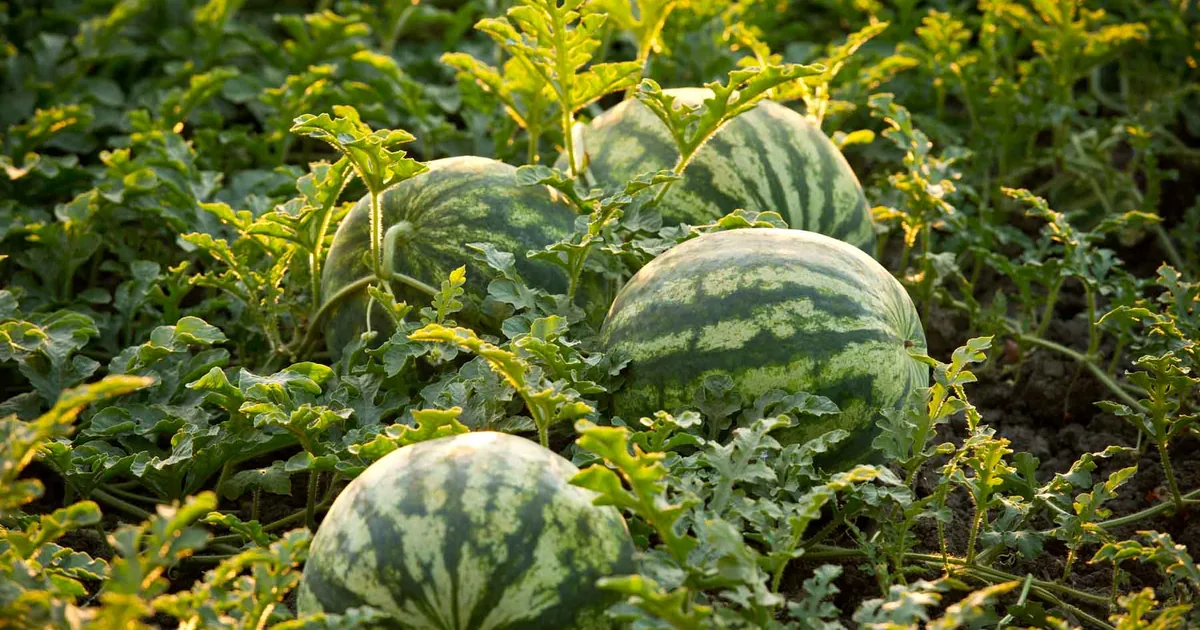
Which type of watermelon should you grow?
Watermelons are all Citrullus lanatus, but commercial breeding has produced dramatically different varieties suited to different garden sizes and climates. Per Texas A&M AgriLife Extension, the main categories are:
Icebox and personal-size varieties
Round fruits weighing 6–12 pounds, vines that spread 4–6 feet. Varieties like 'Sugar Baby', 'Crimson Sweet' (compact), and 'Bush Sugar Baby' are standard choices for gardeners with limited space. Days to maturity: 70–80 days. These are the most practical choice for zone 4–6 gardeners working with a shorter heat season.
Standard and picnic types
The 15–30+ pound melons you see at farm stands. 'Jubilee', 'Charleston Gray', and 'Allsweet' are classic varieties. Vine spread of 10–15 feet per plant is common. These need 85–95 warm days to mature and are best suited to zones 7–10 where summers are long and hot.
Seedless varieties
Seedless watermelons require a "pollinator" seeded variety planted alongside them — per University of Minnesota Extension, "you must plant a seeded variety nearby to provide pollen, because seedless varieties produce sterile pollen." Without a pollinator at roughly one seeded plant per three seedless plants, fruit set fails. Most growers find seeded varieties simpler for home gardens.