Pea Care: Snap, Snow, and Shelling Peas in the Home Garden
Growing snap, snow, and shelling peas (Pisum sativum) in the home garden — spring and fall planting windows, trellising, and harvesting before heat triggers vines to die back.
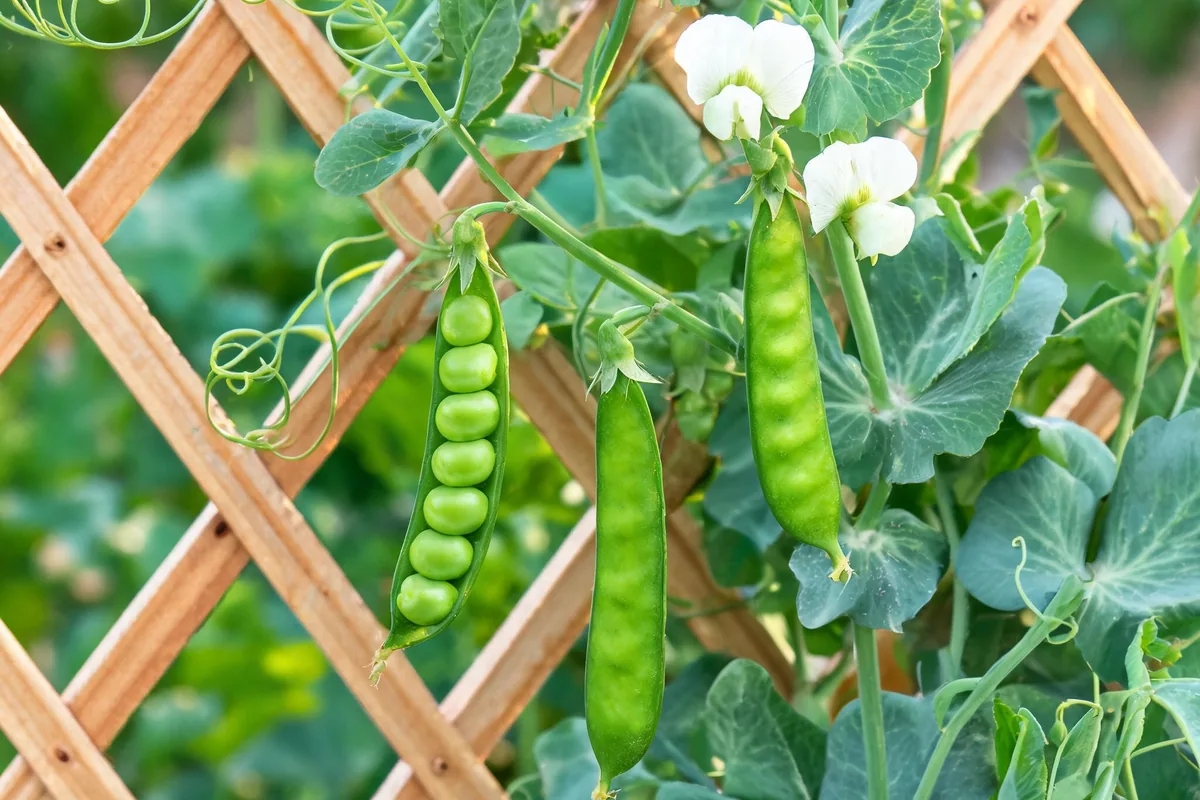
Types of peas
All are Pisum sativum, but the three main types are harvested differently:
Shelling peas (English peas, garden peas)
Grown for the starchy round seeds inside tough, inedible pods. 'Wando', 'Lincoln', 'Green Arrow', and 'Alderman' are classic shelling types. Most take 70–80 days to mature and require proper timing to shell and blanch for freezing. Per Penn State Extension, "shelling peas decline quickly after peak maturity" — harvest windows are short.
Snow peas
Harvested when the flat pod is fully developed but seeds are immature and not visible. The entire pod is eaten. 'Mammoth Melting Sugar' and 'Oregon Sugar Pod' are common varieties. Snow peas are ready 50–65 days from sowing and are eaten raw or stir-fried. Once the seeds inside begin to swell visibly, the pod toughens and loses its sweet, tender quality.
Snap peas
The most popular home-garden type. Thick, round pods with full-size seeds — the entire pod is eaten at peak sweetness. 'Sugar Snap' (the original, taller climbing type), 'Sugar Ann' (bush type, earlier), and 'Super Sugar Snap' are standard varieties. Per University of Minnesota Extension, "snap peas are the most popular type for fresh eating" because of their long harvest window and sweet flavor.