Vegetable

Growing Winter Squash: Butternut, Acorn & Kabocha

title: "Growing Winter Squash: Butternut, Acorn, and Kabocha Guide"

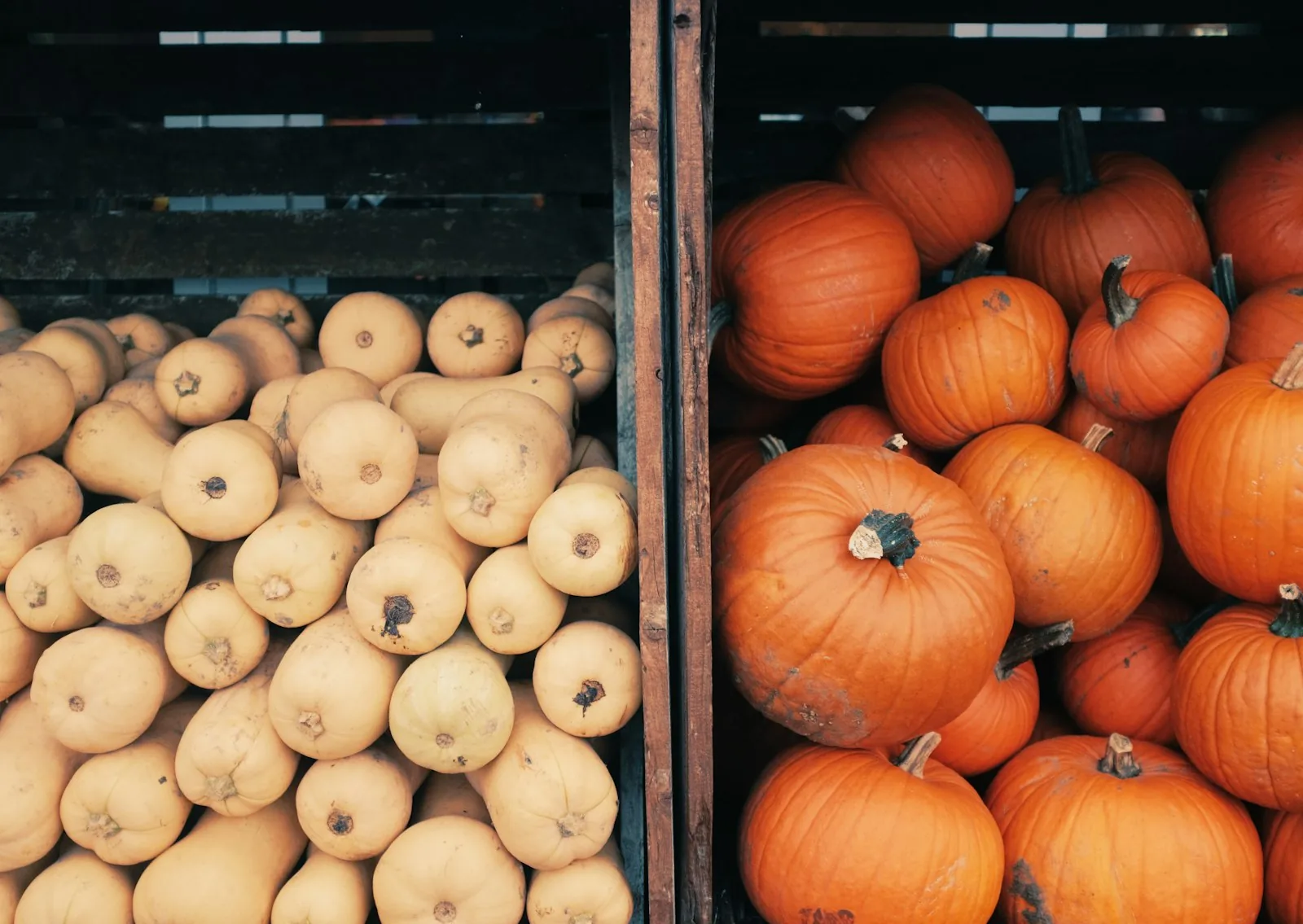
crates filled with pumpkins and butternut squash
Photo: Unsplash on Unsplash

—- title: "Growing Winter Squash: Butternut, Acorn, and Kabocha Guide" slug: growing-winter-squash hub: vegetables category: Vegetable description: "How to grow butternut, acorn, and kabocha squash: spacing, vine management, pollination, curing, and controlling squash vine borer. Extension-sourced." date: 2026-06-10 updated: 2026-06-10 author: "Thomas A." reading_time: 10 —-

I don't grow winter squash at my Long Island plot — the vine size is incompatible with my existing bed layout and the squash vine borer pressure in zone 7a is significant. This guide is sourced from Cornell Cooperative Extension, Penn State Extension, and NC State Extension, along with Johnny's Selected Seeds growing guides, which collectively offer the most thorough published guidance on home winter squash production.

Winter squash is not difficult, but it is demanding of space. A single butternut vine can cover 50—80 square feet by midsummer. Gardeners who understand the vine architecture, the pollination requirement, and the two diseases that shorten seasons — squash vine borer and powdery mildew — will harvest more and lose fewer plants.

Species and variety selection

The term \"winter squash\" encompasses three species:

Cucurbita maxima: Hubbard, Kabocha types, Rouge Vif d'Étampes (Cinderella), Atlantic Giant pumpkin. Generally the sweetest flesh and best storage. Per Cornell Cooperative Extension, Hubbard squash is one of the best keepers, storing 6+ months under proper conditions.

Cucurbita moschata: Butternut types. Per Cornell, C. moschata types are \"more resistant to squash vine borer\" than C. pepo types because of their harder, cork-like stem — vines are more difficult for larvae to penetrate. 'Waltham Butternut' (85 days) is the standard home garden butternut.

Cucurbita pepo: Acorn squash, Delicata, Spaghetti squash. Shortest season (55—80 days) but most susceptible to squash vine borer.

Recommended varieties by type:

Butternut: 'Waltham Butternut' (85 days, the standard), 'Butternut Supreme' (85 days, smoother skin, easier peeling), 'Honeynut' (110 days; mini butternut at 6—8 inches, exceptional sweetness, Cornell-developed hybrid per Cornell AgriTech).

Acorn: 'Table Ace' (70 days), 'Table Queen' (75 days), 'Carnival' (75 days, ornamental coloring).

Kabocha: 'Red Kuri' (92 days), 'Sunshine' (95 days), 'Bon Bon' (95 days).

Days to maturity: 70 days ('Table Ace' acorn) to 95+ days ('Bon Bon' kabocha).

USDA zones and temperature requirements

Winter squash grows as a warm-season annual across USDA zones 3—10. Per Cornell Cooperative Extension, winter squash requires soil temperatures of at least 60°F for germination, with optimal growth at air temperatures of 65—85°F.

Per Penn State Extension, plant after all danger of frost has passed and soil has reached 60°F. In zone 7a (Long Island), this is typically mid-May to early June for direct sowing.

Winter squash needs at least 75 frost-free days even for the fastest acorn types; most butternut and kabocha types require 85—110 days. In zone 7a with approximately 165 frost-free days, all common types can be grown successfully. In zones 3—4, choose short-season varieties (acorn types at 70 days) or start transplants indoors 3 weeks before last frost to extend the effective season.

Seeding and transplanting

Per Cornell Cooperative Extension, plant seeds 1 inch deep, with 3—4 seeds per hill. Thin to the 2 strongest plants per hill after germination. For transplants started indoors, use peat pots or soil blocks to avoid disturbing the taproot at transplanting; squash resents root disturbance.

If starting indoors, begin 3—4 weeks before last frost per Penn State Extension. Transplant when seedlings have the first true leaf — overgrown transplants do not establish well.

Spacing

Per Cornell Cooperative Extension, space hills 5—6 feet apart in rows 8—12 feet apart for large vining types (butternut, Hubbard, kabocha). Acorn types can be spaced in hills 4 feet apart with 6—8 feet between rows.

In smaller gardens, per Penn State Extension, vines can be trained to grow in one direction to reduce the effective footprint, or grown vertically on a trellis — though fruiting on a trellis requires supporting individual fruits with slings (mesh bag, old pantyhose) once they exceed 4—5 pounds.

Soil and fertilizing

Per Cornell, winter squash grows best in fertile, well-drained loam with a pH of 6.0—6.8. Incorporate 3—4 inches of compost before planting. Per Penn State Extension, apply 2—3 pounds of 10-10-10 fertilizer per 100 square feet before planting.

Side-dress with nitrogen when vines begin to run (approximately 3 weeks after transplanting or when vines reach 2—3 feet long): per NC State Extension, apply 1/3 cup of 10-10-10 per hill, worked into the top inch of soil 6 inches from the plant base. Espoma Plant-tone 5-3-3 provides an organic option.

Pollination

Winter squash produces separate male and female flowers on the same plant. Male flowers appear first (1—2 weeks before female flowers); female flowers are distinguished by the small immature fruit at the base of the flower. Per Cornell, both flower types must be open simultaneously for pollination. Bees transfer pollen; hand-pollination using a small brush or by removing a male flower and touching it to the center of a female flower can improve fruit set in areas with low bee populations.

The first several female flowers often abort if the vine is still young or if temperatures are extreme. Per Penn State Extension, persistent fruit set typically begins once vines are well-established.

Watering

Per Cornell, winter squash needs 1—2 inches of water per week during active growth. Water deeply and infrequently, keeping foliage as dry as possible to reduce powdery mildew pressure. Soaker hose or drip irrigation is preferred over overhead watering. Per NC State Extension, reduce irrigation slightly once fruits are fully sized to encourage rind hardening before harvest.

Squash vine borer

Squash vine borer (Melittia cucurbitae) is the primary insect threat to winter squash in zones 4—9, particularly for C. pepo types. Per the squash vine borer guide on this site, the adult moth is a clearwing moth that resembles a wasp. It lays eggs at the base of squash stems in early summer; larvae bore into the stem and feed internally, causing sudden wilt.

Per Cornell, management options:

If larvae are found inside a stem, they can be surgically removed by slitting the stem longitudinally, removing the larva, and covering the wound with moist soil to promote re-rooting.

Powdery mildew

Per Cornell, powdery mildew (Erysiphe cichoracearum) appears as white powdery spots on upper leaf surfaces in late summer. It rarely kills the plant outright but reduces photosynthesis and accelerates the end of the season. Per NC State Extension, mildew-resistant varieties are available: 'Bush Delicata', 'Honey Boat' (both C. pepo). Adequate plant spacing (per Penn State Extension, maintaining 5—6 feet between hills) reduces humidity and slows spread.

Harvesting and curing

Per Cornell Cooperative Extension, harvest winter squash when the rind is hard and cannot be dented with a fingernail, and when the stem is fully dry and corky. Harvest before first frost; exposure to freezing temperatures reduces storage life.

Use pruners to cut the stem 2—3 inches from the fruit — do not snap the stem at the vine. Per Penn State Extension, stems that are broken or cut too short allow decay organisms to enter the fruit.

Curing: Per Cornell, cure butternut and Hubbard types at 80—85°F for 10—14 days to harden skin and heal surface wounds. Acorn squash does not benefit from curing and should be stored directly at 50—55°F. After curing, store butternut and Hubbard types at 50—60°F with 60—70% relative humidity. 'Waltham Butternut' stores 2—3 months; Hubbard types store 5—6 months.

Common problems

SymptomMost likely causeFix
Sudden wilt of one vine; sawdust-like frass at baseSquash vine borer larvaeSlit stem; remove larva; mound soil over wound; floating row cover next year
White powdery spots on leavesPowdery mildewMildew-resistant varieties; spacing; reduce overhead water
Flowers dropping without fruitNo pollination; only male flowers presentWait for female flowers; ensure bee activity; hand-pollinate
Soft spots or rot on stored fruitIncomplete curing; stem damageCure fully; cut stems 2—3 inches from fruit
Short vines, poor growthSoil too cold at planting; low fertilityPlant after 60°F soil; fertilize at vine run
Rinds still soft at expected harvest dateInsufficient heat; harvested too earlyAllow rind to harden (fingernail test); more sun
Recommended gear: Best Soaker Hose for Vegetable Gardens (2026) — our buyer's guide covering picks for every budget, ranked by Extension publication consensus and personal use.

Frequently asked

What is the difference between butternut, acorn, and kabocha?

All three are \"winter squash\" but from different species with distinct characteristics. Butternut (Cucurbita moschata, 'Waltham Butternut') has tan skin, sweet orange flesh, and is the most vine-borer-resistant of the three because of its hard stem. Acorn (C. pepo) is the smallest and fastest-maturing (70—75 days) with ribbed dark green skin; it does not store as long (1—2 months). Kabocha (C. maxima, 'Sunshine', 'Red Kuri') has dense, dry, sweet flesh — closer to a baked sweet potato in texture — and stores 3—5 months. Per Cornell, C. maxima types are among the best-keeping winter squash.

How do I protect winter squash from squash vine borer?

Per NC State Extension and Cornell, the most reliable approaches are: (1) use butternut or kabocha types (C. moschata or C. maxima) which are substantially more resistant than acorn or zucchini; (2) Agribon row cover from transplanting through early flower; (3) wrap stem bases with aluminum foil during peak moth activity (late June through July in zone 7a). Chemical treatment at the stem base with spinosad has some efficacy per NC State, but timing is critical and coverage must be thorough.

When is winter squash ready to harvest?

Per Cornell, harvest when the rind is hard enough that a fingernail cannot dent it, the skin has reached full mature color, and the stem connecting fruit to vine has dried and become corky. For butternut, the tan skin should be fully developed and the blossom end should show slight give when pressed (a sign of proper starch conversion). Harvest before first frost in all zones.

Does winter squash need curing?

It depends on the type. Per Penn State Extension, butternut, Hubbard, and kabocha types benefit from curing at 80—85°F for 10—14 days, which hardens skin and improves storage life. Acorn squash skips this step — curing actually reduces acorn squash quality by increasing fiber content. After curing, store butternut and Hubbard types at 50—60°F, not in the refrigerator.

Sources