Vegetable

Growing Sweet Potatoes: Slips, Curing & Storage Guide

title: "Growing Sweet Potatoes: Complete Garden Guide"

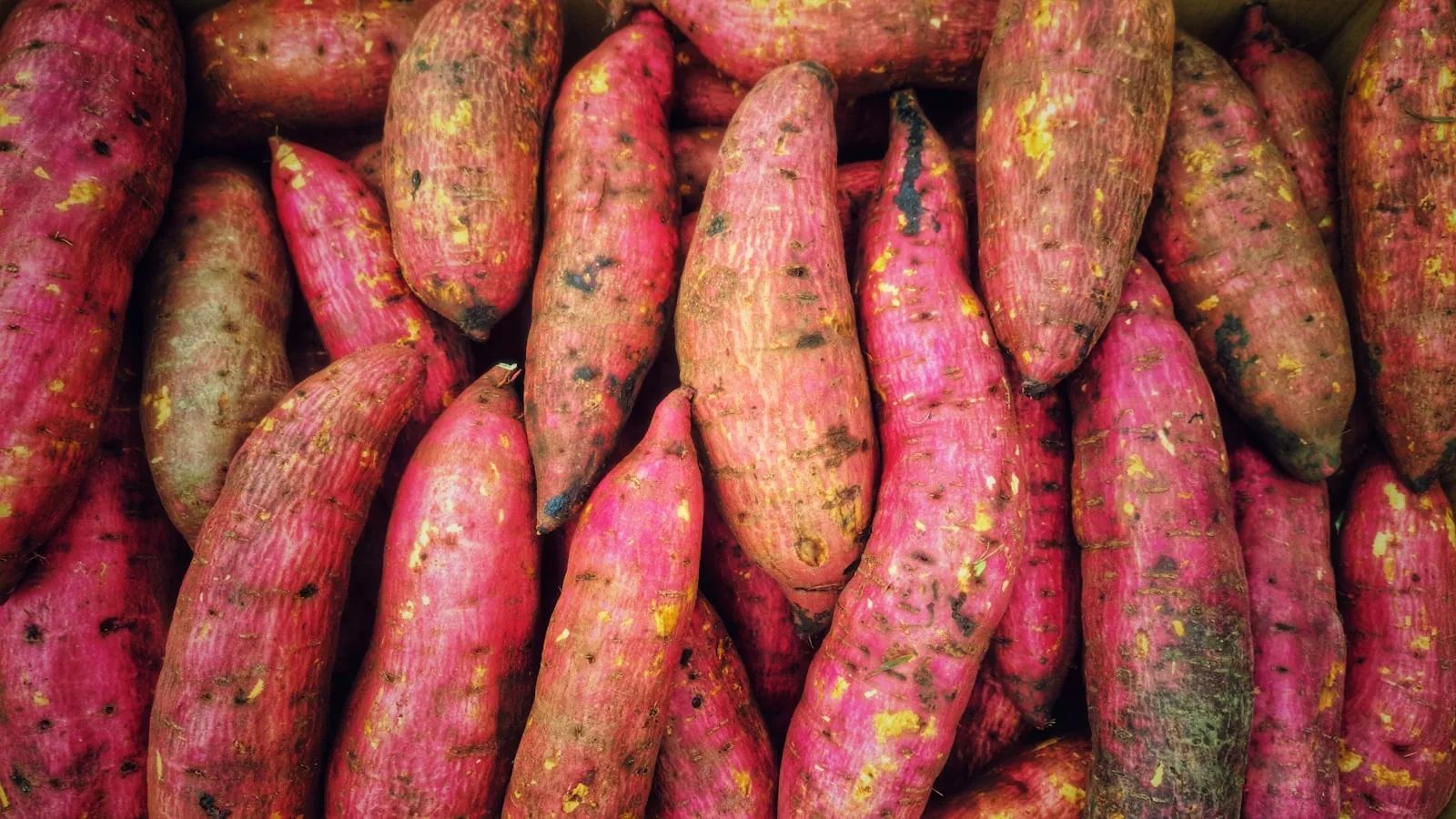
a pile of pink and yellow sweet potatoes
Photo: Unsplash on Unsplash

—- title: "Growing Sweet Potatoes: Complete Garden Guide" slug: growing-sweet-potatoes hub: vegetables category: Vegetable description: "How to grow sweet potatoes from slips: planting timing, soil prep, spacing, watering, curing, and managing pests. Sourced from Extension research." date: 2026-06-10 updated: 2026-06-10 author: "Thomas A." reading_time: 9 —-

I don't grow sweet potatoes at my Long Island plot — the 90—120 day season requirement and the soil warming needs have kept them off my list. This guide draws from NC State Extension, Clemson HGIC, Penn State Extension, and Cornell Cooperative Extension, which publish the most detailed guidance on home sweet potato production across the Southeast, mid-Atlantic, and Northeast.

Sweet potatoes are a warm-season crop that needs a long, hot growing season. In zone 7a they are achievable but require starting slips early indoors, waiting for soil to warm thoroughly, and accepting that you will be racing against first frost at the end of the season. In zones 8—10, they are among the most reliable and low-maintenance vegetables in the garden.

Variety selection

Ipomoea batatas cultivars vary in flesh color, skin color, and vine habit:

Orange flesh: 'Beauregard' (90 days, the most widely grown commercial variety; early, high-yielding), 'Covington' (95 days, excellent flavor, NC State-bred), 'Georgia Jet' (90 days, performs well in northern zones). Per NC State Extension, 'Covington' and 'Beauregard' are the most widely recommended for home gardens in the mid-Atlantic.

White/cream flesh: 'O'Henry' (100 days, white flesh, mild flavor), 'Murasaki' (95 days, white flesh, red-purple skin; Japanese type with drier texture and nuttier flavor).

Purple flesh: 'Stokes Purple' (110 days), high in anthocyanins. Requires a longer season than orange types.

Bush/compact types: 'Bush Porto Rico' (110 days), produces shorter vines (2—3 feet vs. the standard 8—10 feet). Per Clemson HGIC, bush types are useful where standard vining types would overwhelm a small bed.

Days to maturity: 90 ('Beauregard', 'Georgia Jet') to 110+ ('Stokes Purple', 'Bush Porto Rico').

USDA zones and temperature requirements

Sweet potatoes are grown as warm-season annuals in USDA zones 3—11, but perform best and most reliably in zones 7—11. Per NC State Extension, sweet potatoes require a minimum of 90 frost-free days, with consistent temperatures above 65°F.

Per Clemson HGIC, sweet potatoes require soil temperatures of 65°F or higher for consistent establishment and root development. Cold soil at planting causes slow growth, reduced yield, and increased disease risk.

In zone 7a (Long Island, last frost mid-April, first frost mid-October): approximately 165 frost-free days are available, sufficient for 90—110 day varieties. Plant slips after soil has warmed to 65°F — typically late May to early June. Use black plastic mulch to accelerate soil warming by 5—8°F per Penn State Extension, which can mean planting 1—2 weeks earlier.

Starting slips

Sweet potatoes are not grown from seed. They are propagated from slips — rooted cuttings produced by a sprouting sweet potato root. Per NC State Extension, slips can be purchased from garden centers or mail-order suppliers, or produced at home.

Producing slips at home: Per Clemson HGIC, place a sweet potato in a warm (70—80°F), moist location 8—10 weeks before the intended planting date. Slips will sprout from the root. When slips are 6—9 inches long with visible root initiation at the base, they can be removed and transplanted. Do not produce slips from grocery store sweet potatoes, which may be treated with sprout inhibitors.

Source certified disease-free slips from a reputable supplier to avoid introducing soil pathogens, including sweet potato scurf and internal cork virus.

Planting depth and spacing

Per NC State Extension, plant slips 3—4 inches deep, 12 inches apart in rows 36—42 inches apart. The wide row spacing is necessary because sweet potato vines run 4—10 feet and need room to spread without blocking adjacent plants.

Per Clemson HGIC, plant slips so that 2—3 nodes are below ground; these underground nodes produce the storage roots. Planting too shallow reduces the number of production nodes; planting too deep slows establishment.

Soil preparation

Per NC State Extension, sweet potatoes grow best in well-drained, sandy loam or loam soils with a pH of 5.8—6.2. They tolerate sandier soils better than most vegetables; clay soils produce misshapen, rough-skinned roots. Per Clemson HGIC, in heavy clay soils, grow sweet potatoes in raised rows (\"hills\") mounded 6—8 inches high to improve drainage and warming.

Fertilizing: Per NC State Extension, avoid high-nitrogen fertilizers at planting; excess nitrogen promotes vine growth at the expense of root development. Per Clemson HGIC, apply 3—5-7 or similar low-nitrogen fertilizer at the rate of 3 pounds per 100 square feet before planting. Espoma Plant-tone 5-3-3 is a balanced organic option at moderate rates.

Watering

Per NC State Extension, sweet potatoes need 1 inch of water per week during active growth. Per Clemson HGIC, consistent moisture is especially critical during the first 2—3 weeks after transplanting while slips establish, and again during the root-bulking period (roughly 60—90 days after planting).

Reduce irrigation 3—4 weeks before harvest to allow roots to firm up and skins to set. Wet conditions at harvest produce soft roots with reduced storage life.

Soaker hose irrigation under black plastic mulch reduces weed pressure, maintains soil moisture, and keeps the root zone warm throughout the season.

Harvesting and curing

Per NC State Extension, harvest sweet potatoes before the first frost. Roots exposed to temperatures below 50°F suffer chilling injury, which causes internal discoloration and accelerated decay in storage. In zone 7a, harvest by early to mid-October.

Per Clemson HGIC, use a garden fork to loosen soil; dig carefully, as roots extend 12—18 inches from the plant and are easily cut. Handle gently — bruised roots decay quickly.

Curing is essential. Per NC State Extension, cure freshly harvested sweet potatoes at 85—90°F with 90—95% relative humidity for 4—7 days. This heals wounds, converts starches to sugars (the freshly dug root is not particularly sweet; sweetness develops during curing), and develops the protective periderm that allows long-term storage.

In practice, curing at home means keeping roots in a warm room (80—85°F) for 1—2 weeks if 85—90°F cannot be achieved. After curing, store at 55—60°F in a cool, dry room out of the refrigerator. Per NC State Extension, properly cured sweet potatoes keep 4—6 months. Do not refrigerate — below 50°F causes chilling injury and rapid rot.

Pests and diseases

Sweet potato weevil (Cylas formicarius): Per Clemson HGIC, the most destructive pest of sweet potatoes in the Southeast. Adults are small (5—6 mm), ant-like weevils with orange-red and metallic blue coloring; larvae tunnel through roots and vines, rendering roots inedible. Per NC State Extension, weevil infestations are primarily a problem in zones 8—10. Management: use certified disease-free slips; rotate away from previous sweet potato plantings; destroy crop debris immediately after harvest. Soil insecticide treatment with Scotts GrubEx1 can reduce soil pest pressure, though weevil management in severe infestations may require stronger interventions.

Wireworms: Per Penn State Extension, wireworm tunneling produces the same bored tunnels as weevils in zones where weevil is not present. Per Cornell, beneficial nematodes (HB) applied to soil at 55—85°F help manage wireworm populations as part of an integrated approach.

Fusarium wilt (Fusarium oxysporum f.sp. batatas): Per NC State Extension, causes yellowing, wilting, and stem discoloration. Use certified disease-free slips; rotate with non-Ipomoea crops for 3+ years.

Black rot (Ceratocystis fimbriata): Per Clemson HGIC, causes black, sunken circular lesions on roots, beginning at wounds. Prevent by handling roots gently at harvest and curing promptly. Do not store infected roots with healthy ones.

Common problems

SymptomMost likely causeFix
Very long, ropy vines but small rootsExcess nitrogen; too little sunReduce nitrogen; plant in full sun; avoid high-N fertilizer
Misshapen, knobby rootsClay soil; irregular moisture; wirewormsRaised mounds in clay; consistent irrigation; nematodes
Roots not sweetNot properly curedCure at 85—90°F/high humidity for 4—7 days before eating
Roots rotting in storageCured inadequately; stored too coldCure fully; store at 55—60°F (never refrigerate)
Chilling injury (internal discoloration)Storage or harvest temperature below 50°FHarvest before frost; store above 55°F
Bored tunnels in roots (no weevil present)WirewormsAvoid recently-sod soil; beneficial nematodes
Wilting, yellow leaves with stem discolorationFusarium wiltRemove plant; rotate away from sweet potato for 3+ years
Recommended gear: Best Soaker Hose for Vegetable Gardens (2026) — our buyer's guide covering picks for every budget, ranked by Extension publication consensus and personal use.

Frequently asked

Can I grow sweet potatoes in zone 7a?

Yes, with careful timing. In zone 7a (Long Island), the frost-free window is approximately 165 days — enough for 90—110 day varieties like 'Beauregard', 'Georgia Jet', or 'Covington'. Per NC State Extension, plant slips after soil has reached 65°F, typically late May to early June in zone 7a. Using black plastic mulch to warm soil 5—8°F ahead of schedule per Penn State Extension allows slightly earlier planting. Harvest before the first frost in mid-October.

Why aren't my sweet potatoes sweet?

Freshly dug sweet potatoes are starchy, not sweet. Per NC State Extension, sweetness develops during curing as enzymes convert starches to sugars. Cure at 85—90°F with high humidity for 4—7 days — this is not optional if you want the sweet, rich flavor associated with sweet potatoes. A root eaten the day of harvest will taste bland and starchy.

They are not closely related. Per the USDA, sweet potatoes (Ipomoea batatas) are in the Convolvulaceae (morning glory family), while potatoes (Solanum tuberosum) are in the Solanaceae (nightshade family). They share the common name \"potato\" but have no significant disease overlap and do not need to be rotated away from each other.

How do I store sweet potatoes after harvest?

Per NC State Extension, after a 4—7 day cure at high temperature and humidity, store sweet potatoes at 55—60°F in a cool, dry room. Do not refrigerate — temperatures below 50°F cause chilling injury, which produces internal discoloration and accelerated decay. Per Clemson HGIC, properly cured and stored sweet potatoes keep 4—6 months.

Sources