Diagnostic guide

Webbing on Plants: Diagnostic Guide

Webbing on plants — how to distinguish spider mite webs, tent caterpillar silken tents, fall webworm nests, and actual spider webs, with the right response for each.
Fall webworm silken web nest at the end of a cherry tree branch in late summer
Original brand image — Outdoor Plant Care

The diagnostic decision tree

Step 1: Where is the webbing located?

Step 2: Is there leaf damage within the webbing?

Spider mite webbing is incidental — the damage is stippled, bronzed leaves. Tent caterpillar and fall webworm nests contain caterpillars feeding on enclosed foliage; heavy defoliation may occur inside or near the nest. Spider webs contain no feeding damage — they're traps for prey insects.

Cause 1: Spider mites

How to confirm

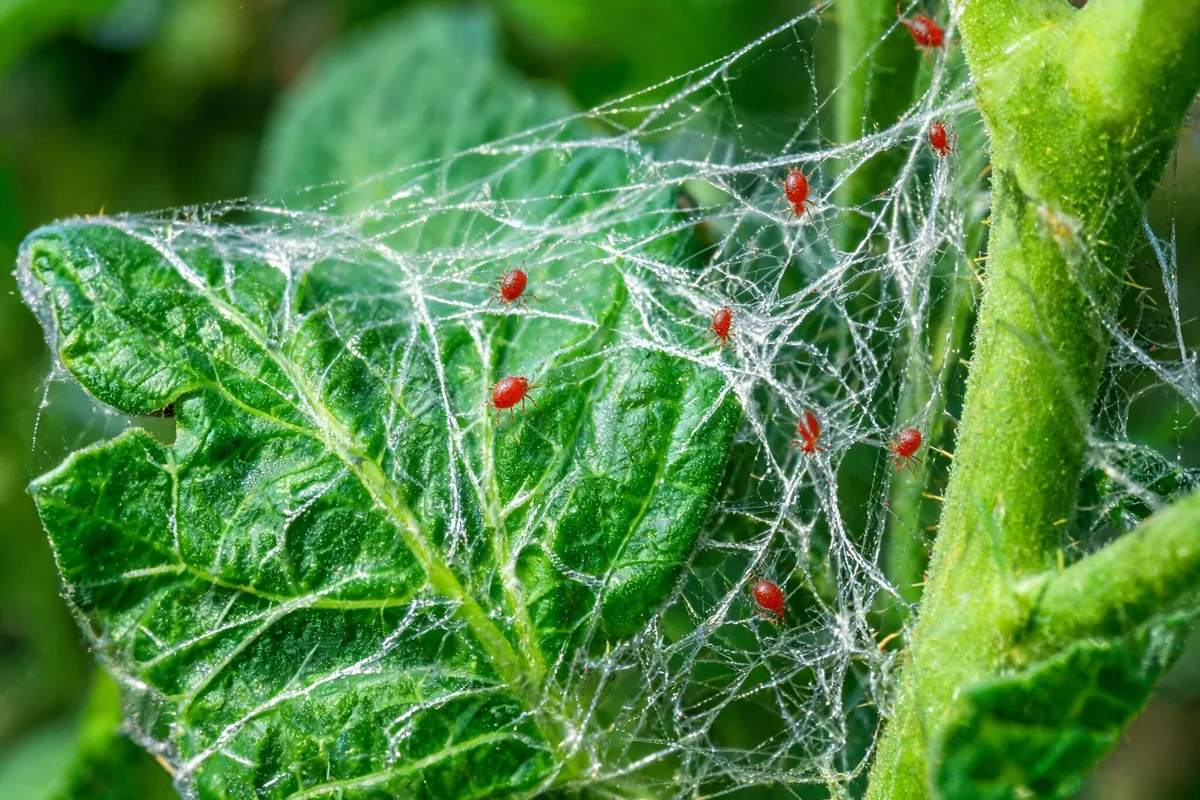
Fine, wispy webbing on leaf surfaces and between stems, often concentrated on the undersides of leaves. Leaves show stippling (tiny pale dots) and may appear bronzed or silvery in heavy infestations. Per UC IPM, "spider mite infestations are most severe in hot, dry, dusty conditions and during drought stress." Shake a branch over white paper — tiny moving dots (the mites) will fall out. Two-spotted spider mite (Tetranychus urticae) is the most common; other species vary by plant host.

How to fix

Strong water sprays to leaf undersides disrupt colonies. Insecticidal soap or neem oil applied thoroughly to leaf undersides controls active infestations. Per UC IPM, avoid broad-spectrum insecticides because "many pesticides kill natural enemies of spider mites but do not kill the mites themselves, often making infestations worse." Keep plants well-irrigated — stressed plants support larger mite populations. See our red spots on leaves guide for more on mite damage identification.

Recovery timeline

Mite populations can be reduced dramatically within 1–2 weeks with consistent treatment. Stippled leaves will not fully recover but new growth will be clean. In hot weather, retreat every 5–7 days as residue from soap and neem oil degrades quickly.

Cause 2: Eastern tent caterpillar

How to confirm

Silken tents in branch crotches of wild cherry (Prunus serotina), apple, crabapple, and related trees in spring (March–May). Tents begin as small silken masses and expand as the colony grows. Caterpillars are black with a white stripe down the back and a row of blue spots on each side. They leave the tent to feed during the day, returning at night. Per Penn State Extension, eastern tent caterpillars "are among the most common defoliating insects of ornamental trees in the eastern United States" but "healthy trees suffer little permanent damage from a single season's defoliation."

How to fix

For most homeowners: leave it alone unless the tree is already stressed by drought, disease, or other factors. Per Penn State Extension, "treatment is rarely necessary for healthy trees, which will refoliate normally after the caterpillars pupate in June." If intervention is desired: remove tents physically using a stick or gloved hand (do this in early morning or evening when caterpillars are inside the tent). Bacillus thuringiensis (Bt) var. kurstaki spray is effective on young caterpillars and is harmless to birds and other wildlife. The populations fluctuate significantly from year to year — a bad year is typically followed by lower populations the next season as natural enemies build up.

Recovery timeline

Caterpillars pupate in June; defoliation ends by early summer. Healthy trees refoliate by mid-summer and lose no permanent function. Impact on long-term tree health: minimal for single-season infestations.

Cause 3: Fall webworm

How to confirm

Large, loose silken bags at the tips of branches enclosing green leaves and the caterpillars feeding within them. Appears in late summer (August–September) on a wide range of trees and shrubs — nearly 100 host species including cherry, walnut, persimmon, and many others. Caterpillars are pale green or yellow with long white hairs. Per Penn State Extension, fall webworm is "one of the most common late-summer defoliators of ornamental and forest trees in North America" but "rarely causes serious long-term damage to otherwise healthy trees."

How to fix

Cosmetically unappealing but ecologically harmless in most cases. Per Penn State Extension, "treatment is rarely warranted since defoliation occurs late in the season when trees are already preparing for dormancy." If desired: prune out small nests and dispose of them; physically disrupt larger nests with a pole. Bt spray is effective on young caterpillars inside accessible nests. Many natural predators (parasitic wasps, birds) attack fall webworm colonies — spraying insecticides reduces these beneficial impacts.

Recovery timeline

Caterpillars complete feeding by September–October. Trees leaf out normally the following spring with no lasting damage in most cases. Trees already under significant stress (drought, root damage, other pests) may be more affected by late-season defoliation.

Cause 4: Actual spider webs — do nothing

Many gardeners are alarmed by webs between plant stems and branches, but these belong to spiders — beneficial predators that consume aphids, whiteflies, caterpillars, beetles, and many other garden pests. Per UC IPM, spiders "are among the most important natural enemies of garden pests." Orb weavers, funnel weavers, and jumping spiders are all beneficial. The only spider in most North American gardens that warrants caution is the black widow — recognizable by its shiny black body and red hourglass marking, found in dry, sheltered locations like wood piles rather than on active plant foliage.

Leave spider webs in your garden undisturbed. Removing them eliminates pest control that costs nothing and harms nothing. If a web is in a high-traffic path, relocate the spider by placing a gloved finger near it and waiting for it to crawl on, then releasing it elsewhere in the garden.

Sources