Problem

Leaf Spot Diseases: Septoria, Alternaria, Bacterial

title: "Leaf Spot Diseases: Septoria, Alternaria, and Bacterial Leaf Spot"
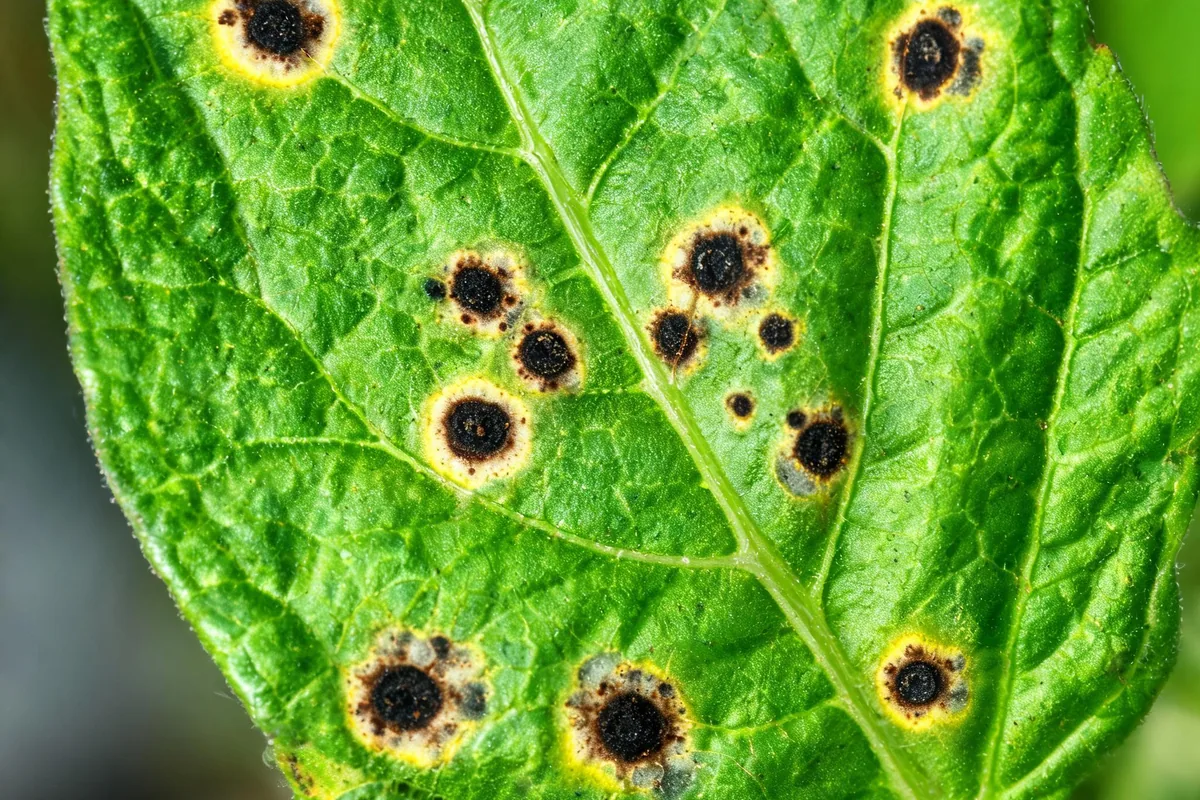
plant with disease affecting leaves
Photo: Unsplash on Unsplash

—- title: "Leaf Spot Diseases: Septoria, Alternaria, and Bacterial Leaf Spot" slug: leaf-spot-diseases hub: problems category: Problem description: "Leaf spot on tomato, vegetables, and ornamentals: how to distinguish Septoria leaf spot, Alternaria blight, and bacterial leaf spot, and how to manage each." date: 2026-06-10 updated: 2026-06-10 author: "Thomas A." reading_time: 8 —-

"Leaf spot" describes the symptom, not the disease. Multiple pathogens — fungal and bacterial — cause spots on leaves, and the management differs depending on which organism is responsible. Treating bacterial leaf spot with a fungicide won't help. Treating septoria leaf spot with a bactericide is similarly pointless.

This guide covers the most common leaf spot diseases on outdoor vegetable crops and ornamentals in the Northeast, with diagnostic features for each and management protocols sourced from university Extension publications.

Septoria leaf spot on tomato

Pathogen and appearance

Septoria lycopersici is a fungal pathogen specific to tomato. Per Penn State Extension, it is the most common and destructive tomato leaf disease in the northeastern United States.

Identification:

Per Cornell Cooperative Extension, septoria leaf spot first appears in the Northeast after plants are set out in warm, wet weather — typically June in Long Island gardens. By August, unmanaged plants may be nearly defoliated. The defoliation reduces fruit size and quality because exposed fruit sunscalds.

Conditions favoring infection: Per Penn State Extension, the disease is most active when temperatures are 60–80°F and leaf wetness events (rain, dew, overhead irrigation) occur frequently. New England and Middle Atlantic states have summer weather that consistently meets these criteria.

Alternaria blight of tomato

Alternaria solani causes early blight on tomato, despite the confusing name — it is not limited to early in the season.

Per Rutgers NJAES, Alternaria blight symptoms on tomato:

The concentric ring pattern (bullseye) distinguishes Alternaria blight from septoria leaf spot, which has uniform circular spots with lighter centers.

Bacterial leaf spot of tomato and pepper

Xanthomonas vesicatoria (and related Xanthomonas species) cause bacterial leaf spot, which is distinct from fungal spots.

Per Penn State Extension:

The key distinction: Bacterial leaf spot lesions often appear water-soaked and angular (following leaf veins); fungal spots are more uniform and circular with defined borders.

Leaf spot on ornamentals

Rose black spot vs. leaf spot

Per Missouri Botanical Garden, Diplocarpon rosae causes black spot on rose — circular black spots with fringed (feathery) edges on upper leaf surfaces, followed by yellowing and defoliation. This is technically a leaf spot disease though commonly listed separately.

Bacterial leaf scorch

Per Clemson HGIC, bacterial leaf scorch of trees and shrubs (Xylella fastidiosa) causes brown scorch patterns on leaf margins that resemble drought stress. This is a systemic bacterial disease distinct from spot-pattern leaf diseases.

General ornamental leaf spots

Per Clemson HGIC, ornamental plants can develop leaf spots from a wide variety of fungal pathogens (Cercospora, Phyllosticta, Marssonina, Entomosporium, and others). Management principles are similar across hosts:

  1. Remove and dispose of infected leaves promptly
  2. Avoid overhead watering
  3. Improve air circulation
  4. Apply fungicide preventively in high-risk periods
  5. Fall cleanup to remove overwintering spore source

Diagnostic comparison table

FeatureSeptoria Leaf SpotAlternaria BlightBacterial Leaf Spot
Pathogen typeFungus (Septoria lycopersici)Fungus (Alternaria solani)Bacterium (Xanthomonas spp.)
Spot shapeSmall, circular, uniformLarger, irregular, bullseye ringsAngular, irregular, water-soaked
Spot colorGray-white center, dark borderBrown with concentric ringsBrown or black, water-soaked initially
Yellow haloOccasionalCommonCommon
Spore bodies visibleYes (dark specks in center)NoNo
Fruit affected?NoYes (stem end)Yes (raised scabby spots)
Starts onLower/older leavesLower leaves, stemsLower leaves
TreatmentChlorothalonil, copper, mancozebSame fungicidesCopper bactericide

Management

Cultural controls

Avoid overhead watering. Per Penn State Extension, wet foliage is required for septoria spore germination. Drip irrigation or a soaker hose keeps foliage dry and significantly reduces leaf spot infection.

Mulch. Per Cornell Cooperative Extension, mulching soil prevents rain splash from spreading spores from infected soil and plant debris onto lower leaves. A 3-inch layer of straw, wood chips, or shredded leaves under tomatoes is one of the most effective management practices.

Remove infected leaves. Per Penn State Extension, when leaf spots appear, remove and destroy infected leaves immediately. Do not compost diseased foliage. This reduces the spore load available to spread to upper leaves.

Space plants adequately. Tomatoes crowded together dry more slowly after rain or irrigation. Per Rutgers NJAES, standard spacing for indeterminate tomatoes is 24—36 inches in-row; larger spacing improves air circulation and reduces disease severity.

Fall cleanup. Per Cornell Cooperative Extension, septoria overwinters on infected plant debris in the soil. Remove all tomato plant material in fall — stems, leaves, fruit — and dispose of it. This reduces the spore load for the next season.

Crop rotation. Per Penn State Extension, rotate tomatoes to a different bed each year. The fungus does not survive multiple years in the absence of tomato tissue, so a 2- to 3-year rotation significantly reduces disease pressure.

Fungicide options (fungal diseases)

Per Penn State Extension, for septoria and Alternaria blight:

Begin applications at transplanting or when weather conditions favor disease, before symptoms appear. Per Cornell Cooperative Extension, "fungicides are only effective as preventives."

For bacterial leaf spot

Copper-based bactericides (copper hydroxide, copper octanoate) are the primary treatment. Per Penn State Extension, copper applications are most effective when initiated early and repeated at 7-day intervals during wet weather. Copper does not cure existing lesions but reduces spread to healthy tissue.

Note that conventional fungicides (chlorothalonil, mancozeb) do not affect bacterial diseases. Use copper for bacterial leaf spot.

Common problems table

SymptomCauseFix
Small circular spots with gray centers on tomato lower leavesSeptoria leaf spotRemove infected leaves; mulch; apply chlorothalonil preventively
Brown bullseye spots on tomato leaves and stemsAlternaria blightSame cultural and chemical management as septoria
Angular water-soaked spots on tomato or pepperBacterial leaf spotCopper bactericide; avoid overhead watering; remove infected tissue
Leaf spots despite fungicide applicationExisting spots cannot be curedContinue protection of healthy tissue; focus on fall cleanup
Rapid defoliation from bottom upSevere septoriaStake plants for airflow; remove all lower infected leaves; fungicide program

Frequently asked

Will my tomatoes die from septoria leaf spot?

Usually not, but severe defoliation reduces yield and exposes fruit to sunscald. Per Penn State Extension, the plant typically survives the season with reduced production. Tomatoes are most productive when they retain a full canopy of healthy leaves. Losing the lower two-thirds of the plant's leaves by August, which is common without management, produces undersized fruit.

Is it safe to eat tomatoes from plants with leaf spot?

Yes. Septoria leaf spot and Alternaria blight do not contaminate the fruit, though Alternaria can cause a stem-end rot on fruit in severe infections. Bacterial leaf spot can produce raised scabby lesions on green fruit; the lesions do not penetrate deeply and the rest of the fruit is safe to eat.

How do I tell septoria from early blight (Alternaria)?

The spot pattern is the key. Per Rutgers NJAES, septoria spots are small (1/8—1/4 inch), circular, and have a gray-white center with a dark brown border and visible tiny dark specks in the center. Alternaria spots are larger, irregular, and display the distinctive concentric ring (bullseye) pattern. Both start on lower leaves and progress upward.

Can I prevent leaf spot entirely?

No — not in a typical Northeast summer with warm, wet weather. Per Cornell Cooperative Extension, the combination of mulching, drip irrigation, crop rotation, and resistant varieties (where available) can dramatically reduce disease severity, but in a wet June and July on Long Island, some septoria infection is the normal baseline.

Recommended gear: Best Soaker Hose for Vegetable Gardens (2026) — our buyer's guide covering picks for every budget, ranked by Extension publication consensus and personal use.

Sources

  1. Penn State Extension &mdash; <a href="https://extension.psu.edu/septoria-leaf-spot-of-tomato">Septoria Leaf Spot of Tomato</a>
  2. Penn State Extension &mdash; <a href="https://extension.psu.edu/bacterial-leaf-spot-of-tomato-and-pepper">Bacterial Leaf Spot of Tomato and Pepper</a>
  3. Cornell Cooperative Extension &mdash; <a href="https://cals.cornell.edu/new-york-state-integrated-pest-management/outreach-education/whats-wrong-my-plant/vegetables-herbs-fruits/septoria-leaf-spot">Septoria Leaf Spot</a>
  4. Rutgers NJAES &mdash; <a href="https://njaes.rutgers.edu/plantdisease/">Plant Disease Profiles</a>
  5. Missouri Botanical Garden &mdash; <a href="https://www.missouribotanicalgarden.org/gardens-gardening/your-garden/help-for-the-home-gardener/advice-tips-resources/insects-pests-and-problems/problems/rose-black-spot">Rose Black Spot</a>
  6. Clemson HGIC &mdash; <a href="https://hgic.clemson.edu/factsheet/leaf-spots/">Leaf Spots</a>

Sources