Home/Problems/Japanese beetle damage and control: what actually works
Problem
Japanese beetle damage and control: what actually works
The first Japanese beetle I ever saw was on my neighbor's rose in Melville in June 2017. By the end of July that summer, the beetles were in my yard too — on the basil, on the Virginia creeper, working their way through
The first Japanese beetle I ever saw was on my neighbor's rose in Melville in June 2017. By the end of July that summer, the beetles were in my yard too — on the basil, on the Virginia creeper, working their way through the raspberry canes. By August, a dozen roses on the block looked like brown lace. I've managed them in my Long Island garden every summer since.
Japanese beetles are one of the more honest garden problems: the damage is unmistakable, the biology is well-documented, and the extension research on what works and what doesn't is clear enough that there's no excuse for still using pheromone traps.
This article contains affiliate links. As an Amazon Associate, we earn from qualifying purchases - at no extra cost to you. We only recommend products we have personally tested or that are the universal first recommendation from university Extension publications. See our full disclosure.
Identification and damage
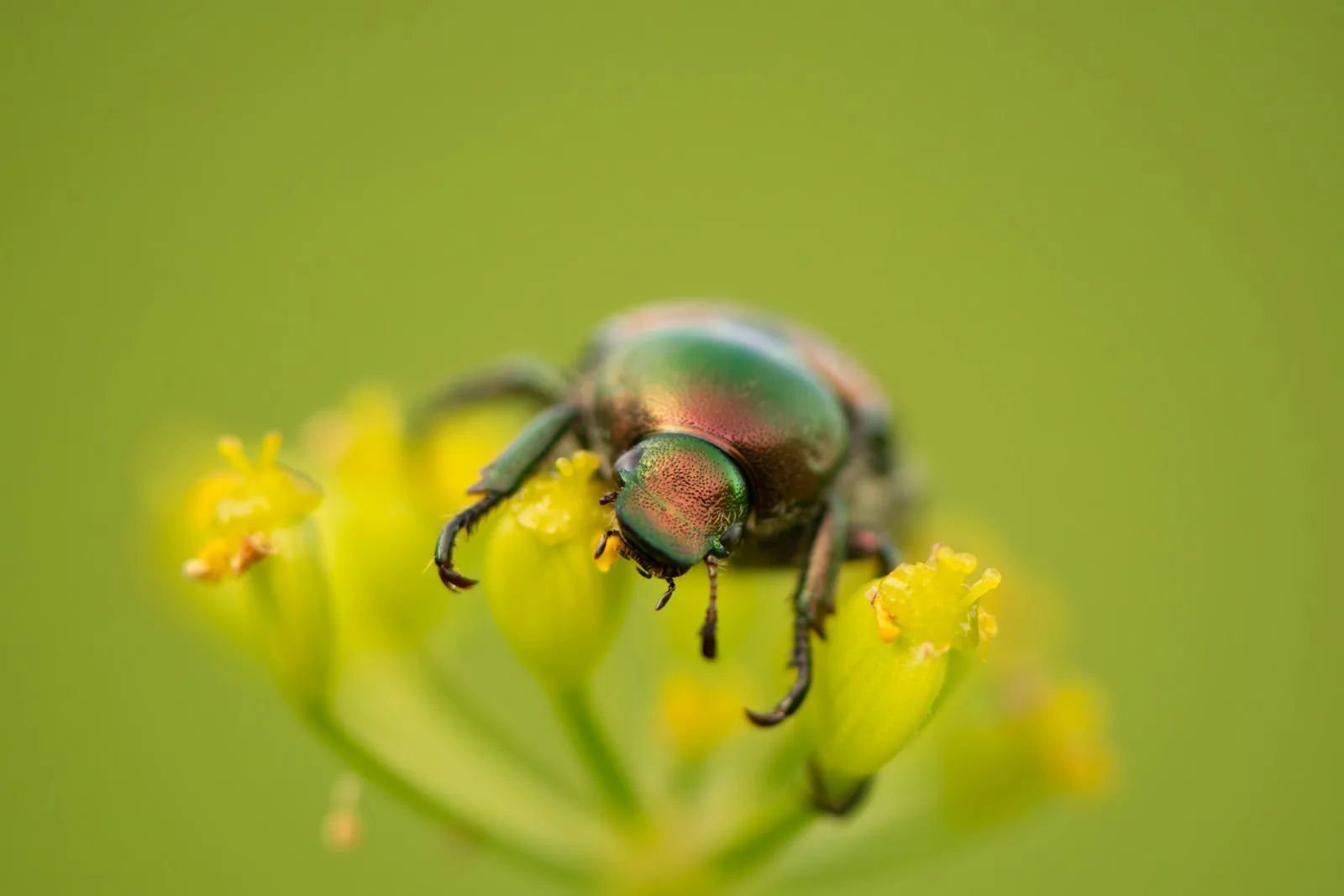
Popillia japonica is a distinctive insect. Adults are about 3/8 inch long with a metallic green head and thorax, copper-brown wing covers (elytra), and white tufts of hair along the sides of the abdomen. The combination of metallic green and copper brown makes them identifiable at a glance once you've seen one.
Adult feeding damage: Adults feed on the upper surface of leaves, consuming tissue between the veins. Per University of Minnesota Extension, this skeletonizing leaves, giving them "a lace-like appearance." Damaged leaves turn brown and may fall. Adults also feed on flowers, which are often more attractive to them than foliage.
Adults feed on more than 300 plant species per University of Minnesota Extension. Preferred plants include rose, grape, linden, apple, crabapple, cherry, plum, birch, elm, raspberry, Virginia creeper, hollyhock, marigold, basil, and corn silks. In my yard, the basil takes the worst of it — a single basil plant in full sun can be stripped to stems in two days during peak emergence.
Per University of Minnesota Extension, healthy, mature trees and shrubs can tolerate significant feeding without long-term injury. Young or unhealthy plants may be stunted or killed.
Grub damage: The larval stage (white grubs) feeds on grass roots in the soil. Per University of Minnesota Extension, "healthy turfgrass can typically tolerate up to 10 grubs per square foot." Above that threshold, dead patches develop that can be peeled back like a carpet. Moles, skunks, and crows digging in the lawn in late summer are a secondary sign of grub infestation.
More like this, monthly
Get the seasonal care notes — no upsell, unsubscribe any time.
One email per month from Thomas: what to plant, what to prune, what's about to break. Cited the same way as the guides.
Free. No spam. Same author as the guide you just read.
Got it — check your inbox to confirm. Welcome.
The feed-and-forget option
Osmocote coated prills feed for 6 months on a single application. Balanced N-P-K, won't burn roots. Read our full pick.