Regional guide

Native Plants for the Southwest: Arid-Adapted Garden Natives

Desert-adapted native plants for the arid Southwest in zones 7–10 — cacti, succulents, desert wildflowers, and the right strategy for extreme heat, alkaline soils, and monsoon moisture.
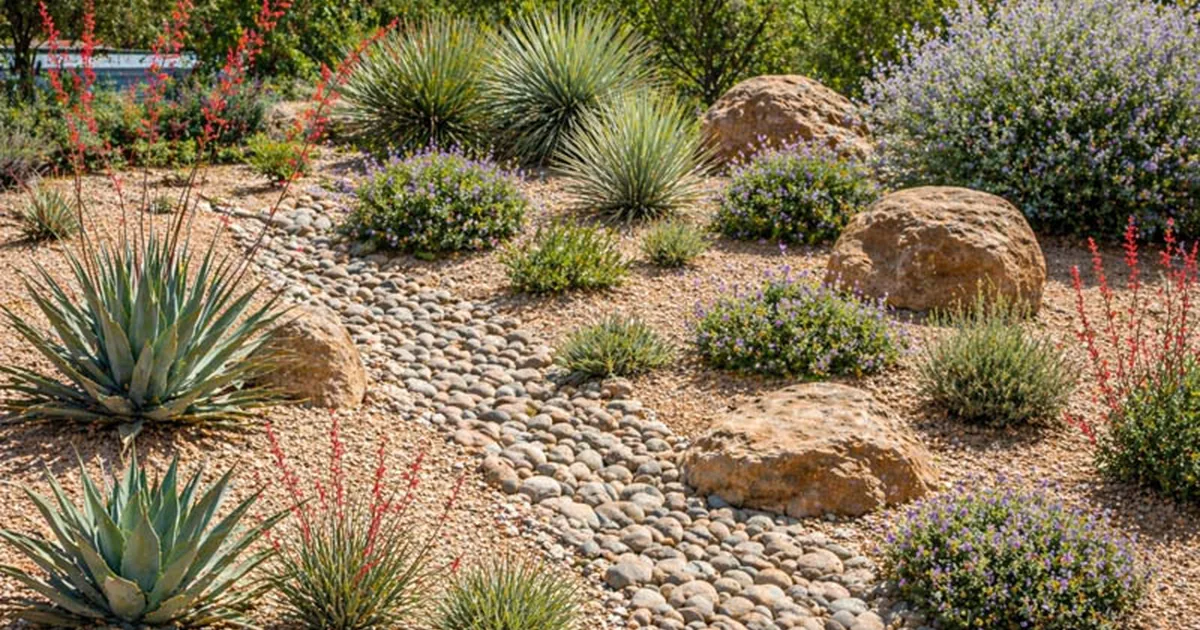
Native desert marigold, penstemon, and prickly pear cactus blooming in an Arizona xeriscape garden
Original brand image — Outdoor Plant Care

Understanding the Southwest monsoon and plant growth timing

Unlike most of North America, much of the Southwest receives its primary rainfall in July–September (the North American Monsoon) and again in winter. Spring is often the driest time of year. Per Texas A&M AgriLife Extension, this distinct rainfall pattern means "many Southwest natives are programmed to flush growth after summer rains, not in spring like eastern species." Understanding this timing helps prevent the frustration of spring-planted natives that appear to do nothing until July.

Best planting time: fall (October–November) in lower-elevation Sonoran and Chihuahuan desert areas; late spring (April–May) at higher elevations before monsoon rains begin. Avoid planting in the heat of summer before monsoons arrive or in the brief but cold winter freezes at higher elevations.

True natives vs. "desert-adapted" plants

The Southwest trade is full of plants from other warm, dry climates (South Africa, Australia, the Mediterranean) sold as drought-tolerant alternatives to traditional landscapes. These may be water-efficient, but they are not native and provide no ecological relationships with Southwest insects and wildlife. Per University of Arizona Extension, "native plants support 4 times more caterpillar species and 3 times more native bee species than comparable non-native drought-tolerant plants."

Specific non-natives to avoid misidentifying as native: Bougainvillea (South America), Lantana camara (tropical America, invasive in some areas), and Agave americana (while iconic, many agaves sold in the Southwest are from Mexico, not native to U.S. zones — check species carefully). Texas A&M's native plant database is the best reference for separating native from non-native in Texas; the Arizona Native Plant Society's plant list covers Arizona.

Top 14 native plants for Southwest gardens

1. Desert marigold (Baileya multiradiata)

Zones 6–10. Brilliant yellow daisy-like flowers nearly year-round in milder areas, spring through fall elsewhere. Extremely drought-tolerant, thrives in poor, alkaline, caliche-laden soils. Per Texas A&M AgriLife Extension, "one of the most adaptable and long-blooming native wildflowers for the arid Southwest." Short-lived perennial; self-sows reliably. Full sun required.

2. Desert willow (Chilopsis linearis)

Zones 7–11. Small native tree or large shrub to 20 feet with long, willow-like leaves and showy orchid-like flowers in pink, white, or burgundy, May–September. Attracts hummingbirds throughout its long bloom period. Per University of Arizona Extension, it is "one of the best hummingbird plants in the Southwest" and tolerates extreme heat, dry soils, and alkaline conditions. Deep taproot; drought-tolerant once established.

3. Penstemon (Penstemon parryi, P. eatonii, P. superbus)

Zones 5–9. The Southwest has more native penstemon species than any other region. Tubular flowers in red, pink, purple, and white attract hummingbirds and native bees. Per Texas A&M AgriLife Extension, "penstemons are among the most valuable native plants for hummingbirds in arid regions." Most Southwest penstemons are short-lived perennials that self-sow; the key is establishing a self-sustaining population rather than relying on individual long-lived plants.

4. Saguaro (Carnegiea gigantea)

Zones 9–11. The iconic large cactus of the Sonoran Desert. Grows only in the Sonoran Desert of Arizona and Sonora, Mexico — not appropriate for the Chihuahuan Desert (New Mexico, west Texas) or higher elevations. Extremely slow-growing but provides critical nesting cavities for Gila woodpeckers and elf owls. Per University of Arizona Extension, buying saguaros from licensed nurseries (never collected from the wild, which is a felony in Arizona) is mandatory. Even small plants require proper permits if transplanted.

5. Prickly pear (Opuntia spp.)

Zones 4–10 depending on species. Native prickly pear cacti are among the most ecologically important plants in the Southwest — the fruits feed javelinas, coyotes, and many bird species; flowers attract specialist bees; pads provide water for wildlife. Extremely drought-tolerant and cold-hardy. Per Texas A&M AgriLife Extension, Texas prickly pear (O. engelmannii) is "one of the most wildlife-valuable plants in the Chihuahuan Desert."

6. Blackfoot daisy (Melampodium leucanthum)

Zones 5–9. Small, compact perennial (12–18 inches) covered in white daisy flowers with yellow centers nearly year-round in mild areas, spring through fall elsewhere. One of the most garden-appropriate Southwest natives — doesn't become weedy, blooms for months. Per Texas A&M AgriLife Extension, it is "one of the easiest and most rewarding native wildflowers for hot, dry Texas and Southwest landscapes."

7. Autumn sage (Salvia greggii)

Zones 6–9. Compact shrubby sage with bright red (also pink, coral, white) flowers from spring through frost. One of the most important hummingbird plants in the Southwest and Texas. Per Texas A&M AgriLife Extension, Gregg's sage is "the most planted native perennial in Texas landscapes" for its long bloom period, heat tolerance, and hummingbird appeal. Drought-tolerant; avoid clay soils.

8. Arizona fescue (Festuca arizonica)

Zones 4–8. Native bunchgrass of mountain grasslands and open pine forests above 6,000 feet. Tolerates cold winters and summer monsoon rains. Per University of Arizona Extension, it is "one of the most important grasses for high-elevation Southwest landscapes, providing overwintering cover for grassland birds."

9. Velvet mesquite (Prosopis velutina)

Zones 8–11. Native tree to 30 feet with feathery compound leaves, fragrant yellow flower catkins in spring, and seed pods that are critical wildlife food. The most ecologically important tree of the Sonoran Desert. Per University of Arizona Extension, mesquite "supports over 40 bird species" and its fallen leaf litter is a primary input to desert soil biology.

10. Globemallow (Sphaeralcea ambigua)

Zones 5–10. Drought-tolerant perennial with gray-green foliage and orange, red, or pink flowers spring through fall following rains. Native to the Sonoran and Mojave Deserts. Per Texas A&M AgriLife Extension, globemallow is "one of the most reliable long-blooming native perennials for arid landscapes." Supports specialist bees in the tribe Diadasia.

11. Desert milkweed (Asclepias subulata)

Zones 8–11. Nearly leafless, rush-like stems with small white flowers. Monarch host plant native to the Sonoran Desert. More appropriate for low-desert monarch habitat than A. curassavica (tropical milkweed). Per Xerces Society, using native milkweed species for the specific desert region is critical for monarch conservation in the Southwest.

12. Ocotillo (Fouquieria splendens)

Zones 7–11. Distinctive plant with spiny cane-like stems bearing brilliant red flower clusters at tips in spring and after summer rains. Critical hummingbird plant — the flowers produce abundant nectar aligned with the spring migration of hummingbirds through the Sonoran Desert. Extremely drought-tolerant. Zones 8–11 for reliable establishment.

13. Apache plume (Fallugia paradoxa)

Zones 4–9. Shrub to 6 feet with white rose-like flowers followed by feathery pink-purple seed heads. Native to rocky slopes from Texas to Colorado. Very drought-tolerant, cold-hardy. Per Texas A&M AgriLife Extension, it is "one of the most attractive native shrubs for the western Texas and New Mexico landscape."

14. Desert zinnia (Zinnia grandiflora)

Zones 4–10. Low-growing native (8–12 inches) with bright yellow flowers nearly all season when established. Native to the shortgrass prairies and desert grasslands of west Texas and New Mexico. Per Texas A&M AgriLife Extension, it is "extraordinarily drought-tolerant once established" and self-sows to maintain colonies.

Site preparation

Amend minimally or not at all. Per University of Arizona Extension, Southwest native plants are "adapted to poor, alkaline, low-nutrient soils" and "will often perform worse in amended, fertile soils." Caliche layers (hardened calcium carbonate) may need to be broken through to allow drainage for deep-rooted species, but enrichment of the soil above is counterproductive. Use decomposed granite mulch rather than wood chip mulch in desert landscapes — it keeps the soil environment dry, which Southwest natives prefer.

Common mistakes

Over-irrigating established desert plants is the single most common failure mode. Learn each species' water requirements and group plants accordingly into water-use zones. Plants in the low-water-use zone — saguaro, ocotillo, desert willow, prickly pear — require zero supplemental irrigation once established beyond the first year.

Sources