Species guide

Magnolia Care: Deciduous and Evergreen Species Compared

Deciduous and evergreen Magnolia species span zones 4–10 and have different pruning timing, transplant sensitivity, and frost risks — the guide distinguishes star, saucer, sweetbay, and southern magnolia and explains the care that applies to each.
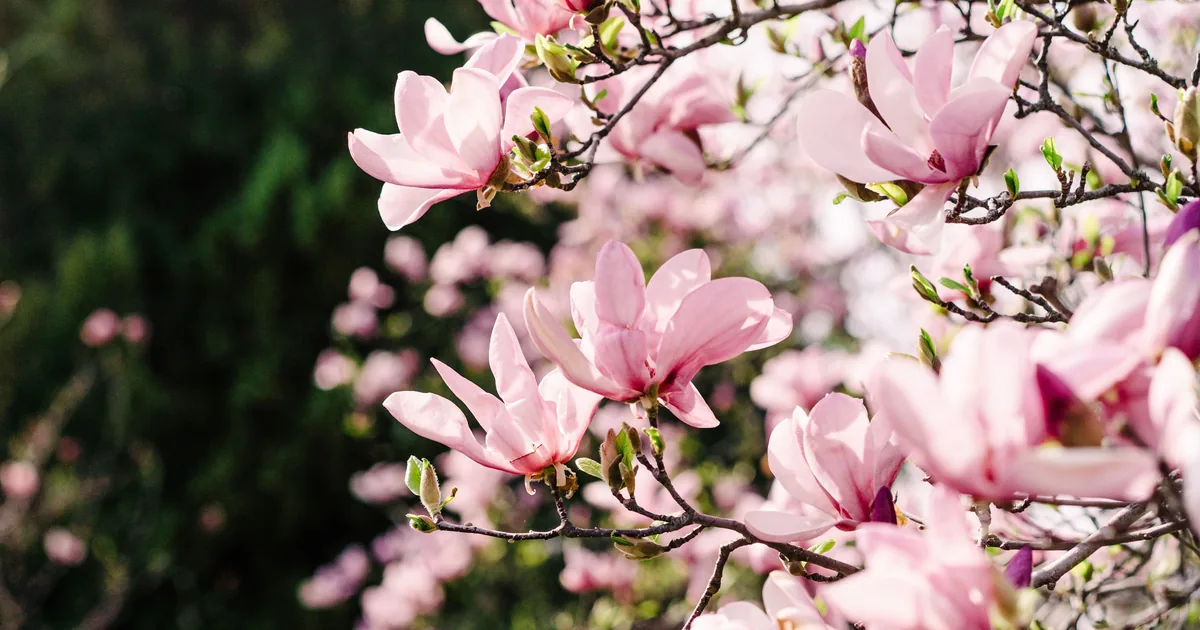
Large pink and white saucer magnolia flowers on bare spring branches against blue sky
Photo: Unsplash

Magnolia types: deciduous and evergreen

The genus Magnolia contains over 200 species. North American gardeners encounter four main landscape types, each with different hardiness zones and care considerations.

Saucer magnolia (Magnolia × soulangeana)

The most widely planted ornamental magnolia. Large, tulip-to-saucer-shaped flowers in white, pink, rose, or deep purple, appearing on bare branches in early spring. Can reach 20–25 feet. Per Penn State Extension, saucer magnolia is "the most popular ornamental magnolia in the eastern United States, but early spring bloom makes it vulnerable to late frost damage in zones 5–6." Hardy in zones 4–9. The flowers appear before or with the first leaves in March–April and are frequently killed by late frosts — brown-papery flowers are one of the most common spring disappointments for magnolia growers.

Star magnolia (Magnolia stellata)

Smaller than saucer magnolia — typically 15–20 feet — with strap-petaled white or pink flowers. Per Missouri Botanical Garden, star magnolia is hardy in zones 4–8 and blooms even earlier than saucer magnolia, making it similarly vulnerable to late frosts. Its smaller size makes it suitable for residential gardens where a 25-foot saucer magnolia would outgrow the space.

Sweetbay magnolia (Magnolia virginiana)

A native North American species, semi-evergreen in zones 7–9 and deciduous in colder zones. Creamy white, very fragrant flowers in May–June and often intermittently through summer — later than saucer or star, which means frost rarely damages the bloom. Per Penn State Extension, sweetbay magnolia is "one of the most reliable magnolias for zone 5–7 because its later bloom largely avoids late spring frosts." Hardy in zones 5–10. Grows 10–35 feet depending on form.

Southern magnolia (Magnolia grandiflora)

The large-leafed evergreen magnolia of the American South. Massive white flowers in June–July, up to 12 inches across. Per Texas A&M AgriLife, southern magnolia is "widely grown throughout the South and lower Midwest" and is the magnolia of Southern landscape heritage. Hardy in zones 6b–10. The "Little Gem" cultivar is a dwarf selection reaching 20 feet, widely used in zone 7 landscapes where a 60-foot specimen is too large.

USDA hardiness and where magnolias grow

Hardiness varies significantly by species. As a practical summary per Penn State Extension: star and saucer magnolias are zones 4–8; sweetbay magnolia is zones 5–10; southern magnolia is zones 6b–10. Most magnolias are not suited for zone 4 and colder without species selection specifically for cold hardiness.

The mid-Atlantic, Midwest, and Pacific Northwest represent the core hardiness range for deciduous magnolias. Zone 5–6 gardeners experience the most frost damage to early-blooming deciduous types and often find sweetbay or later-blooming selections more reliable for consistent annual bloom.

Light

All magnolias prefer full sun to partial shade. Per Clemson HGIC, "magnolias in full sun bloom most heavily and develop the best form." Partial shade is tolerated, especially by sweetbay, which grows naturally in moist woodland edges where it receives dappled light. Southern magnolia in full shade develops an open, sparse canopy without the dense pyramidal form it is known for. For best ornamental performance, site deciduous types in full sun and evergreen types in full sun to light shade.

Watering

Young magnolias need consistent watering during establishment — typically the first 2–3 years after planting. Per Clemson HGIC, "magnolias are moderately drought-tolerant once established but should receive 1 inch of water per week during the first few growing seasons." Sweetbay magnolia is the most water-tolerant and actually grows wild in swamps and stream margins; it is the best choice for sites that are occasionally wet.

Established saucer and star magnolias handle moderate drought but benefit from supplemental watering during hot, dry summers. Deep, infrequent watering — soaking the root zone to 12 inches once a week during dry spells — is better than shallow, frequent irrigation. Mulch (2–3 inches of shredded hardwood) over the root zone is critical for moisture retention in the establishment period.

Soil and pH

Per Penn State Extension, magnolias prefer "moist, well-drained, slightly acidic soil with a pH of 5.0–6.5." They do not perform well in heavy clay, alkaline soils, or persistently waterlogged conditions. Saucer and star magnolias are particularly sensitive to poor drainage — root rot on these species is a common cause of decline in heavy clay soils. Amend clay soils with coarse organic matter and consider raised planting beds in heavy-drainage situations.

Southern magnolia is somewhat more adaptable to clay and slightly alkaline conditions than the deciduous types, which helps explain its prevalence in the Southeast where soils vary widely.

Planting

Magnolias have fleshy, rope-like roots that are easily damaged by planting disturbance. This makes correct initial siting critical — transplanting established magnolias is extremely risky and often fails. Per Clemson HGIC, "plant magnolias in a permanent location and avoid moving them once established." Container-grown plants transplant much better than balled-and-burlapped specimens; bare-root magnolias have poor transplant success rates and are rarely sold for landscape use.

Plant in spring in zones 4–6, or in fall in zones 7–9. Dig the planting hole 2–3 times the width of the root ball and exactly the depth of the root ball — magnolias planted too deep develop crown rot and decline. Backfill with native soil; extensive amendment creates a "bathtub effect" where water pools in the amended planting hole. Mulch the root zone from the drip line to within a few inches of the trunk at planting time.

Fertilizing

Established magnolias in average garden soil need minimal fertilization. Per Clemson HGIC, "an annual application of a slow-release balanced fertilizer in early spring is sufficient for established magnolias." Young trees benefit more from fertilization than mature specimens — a balanced fertilizer applied during the first 3–5 years supports root establishment and canopy development. Do not fertilize in late summer or fall, which can push soft growth that suffers winter damage in zones 5–7.

Pruning

Magnolias require very little pruning and respond poorly to heavy cutting. The fleshy wood doesn't callus over cuts well, making large wounds slow to close and prone to decay. Per Penn State Extension, "prune only to remove dead, damaged, or crossing branches and to shape young trees — heavy pruning damages magnolias and is rarely needed." The best time to prune is immediately after flowering for deciduous species (spring), or in late summer for evergreen species. Avoid pruning in fall, which encourages new growth that may winterkill.

Common problems

Frost damage to flowers

The most common complaint about saucer and star magnolias in zones 5–6. Late frosts (late March to April) kill the early-opening flowers, turning them brown and mushy. The plant itself is undamaged and will produce foliage normally; the loss is only to the current year's flowers. The only long-term solution is choosing a site with good frost drainage (a south-facing slope rather than a frost-collecting hollow), planting a later-blooming species like sweetbay, or accepting that this is a normal annual risk.

Scale insects

San Jose scale and magnolia scale (Neolecanium cornuparvum) cause branch dieback and sooty mold buildup. Per Penn State Extension's magnolia scale guidance, "magnolia scale is the largest scale insect in North America" and can severely weaken infected branches. Horticultural oil applied in late winter before bud break kills overwintering scales effectively. Systemic insecticide (imidacloprid) can be applied as a soil drench for severe infestations.

Leaf spots and sooty mold

Several fungal diseases cause brown leaf spots on magnolia foliage. Per Clemson HGIC, leaf spots are "primarily cosmetic and rarely threaten plant health." Sooty mold — black coating on leaves — is associated with scale or aphid infestations and resolves when the pest population is controlled.

Root rot

Caused by Phytophthora in wet, poorly drained sites. Symptoms include yellowing, wilting, and bark discoloration at the soil line. Per Clemson HGIC, "there is no fungicide cure — prevention through correct site selection and soil drainage is the only effective strategy."

Frequently asked

Why are my magnolia flowers turning brown?

The most common cause in zones 5–6 is late frost damage — the tender flowers open in warm weather and are then killed by a subsequent freeze. This is normal and does not harm the plant. Per Penn State Extension, this is "the most common disappointment with saucer magnolia in cold climates." A warm, sheltered microclimate and choosing later-blooming species reduces the risk but does not eliminate it.

How big does a magnolia get?

Depends entirely on species. Star magnolia stays at 15–20 feet and is manageable in most residential gardens. Saucer magnolia reaches 20–25 feet. Sweetbay magnolia reaches 10–35 feet depending on climate and cultivar. Southern magnolia can reach 60–80 feet — the 'Little Gem' cultivar stays at 20 feet and is a better choice for most residential landscapes per Texas A&M AgriLife.

Can I prune my magnolia to keep it smaller?

Frequent heavy pruning is not a sustainable strategy for managing magnolia size. Per Clemson HGIC, "magnolias do not respond well to heavy pruning and develop decay at large wounds." Repeated hard pruning also removes the flowering wood and reduces bloom. If size is a concern, choose a naturally compact cultivar from the start.

Do magnolias have invasive roots?

Magnolia roots are fleshy and tend to stay within the drip line — they are not considered highly aggressive like willows or silver maples. Per Missouri Botanical Garden, magnolias "rarely cause foundation or sewer line problems if planted at an appropriate distance from structures — generally 15–20 feet away."

Sources