Species guide

Hollyhock Care: Biennials That Reach Seven Feet

Alcea rosea hollyhocks are biennial or short-lived perennials that self-sow prolifically — this guide covers the two-year sowing cycle, rust disease management, and how to keep them flowering for multiple seasons through strategic seed collection.
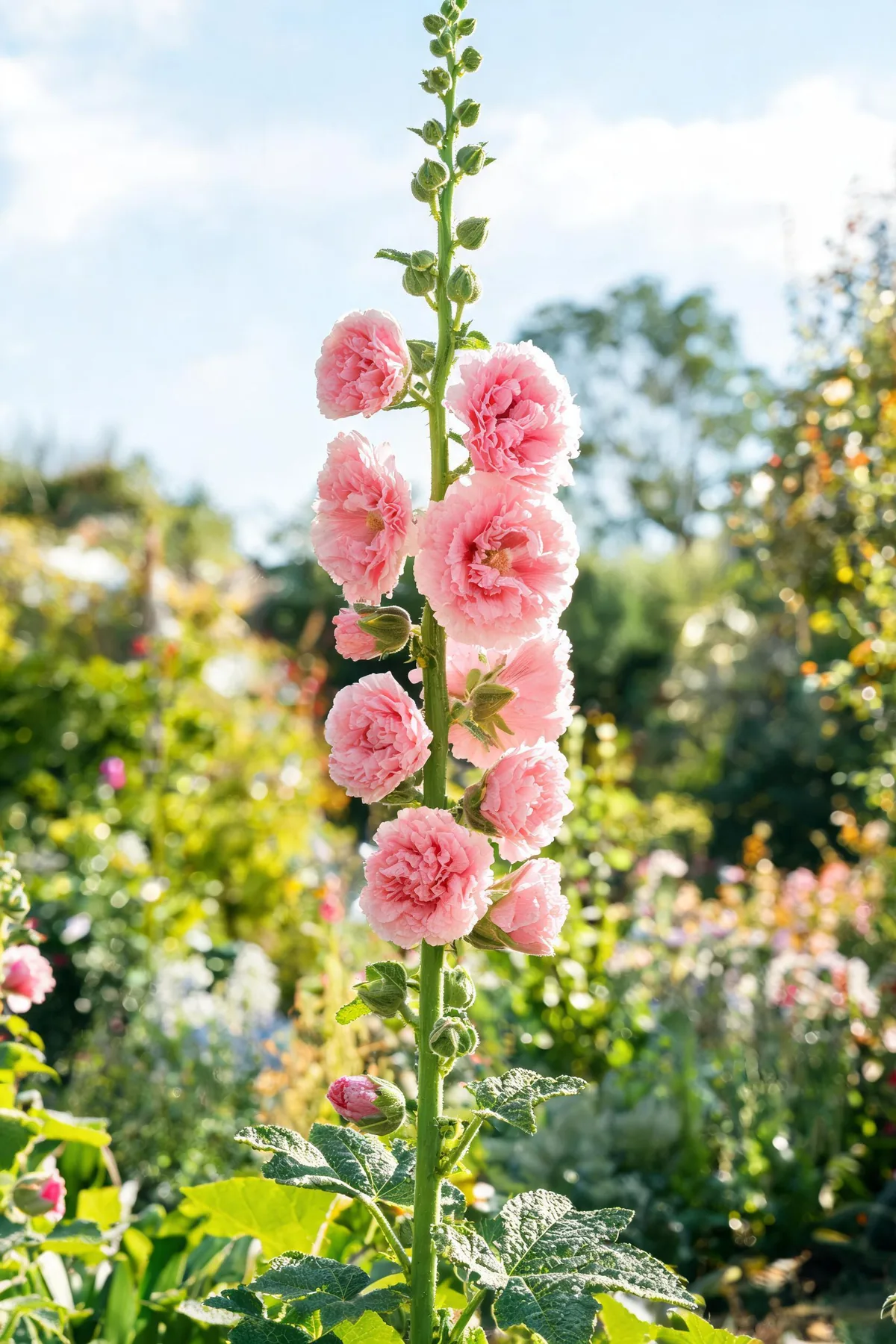
Tall hollyhock spires in pink and red blooming against a weathered fence in summer
Photo: Unsplash

Hollyhock growth cycle

Alcea rosea is the common hollyhock, a native of southwestern China and the Middle East. Per Penn State Extension, hollyhocks are "typically biennial — they germinate and form a leaf rosette in the first year, then flower, set seed, and die in the second year." Some varieties behave more like short-lived perennials and may survive for a third season after their first bloom, particularly in zones 5–6 where summers are not extreme. Per Clemson HGIC, however, "most hollyhocks are considered biennials or short-lived perennials and require replanting or self-sowing to maintain a permanent planting."

Understanding this biennial cycle is essential for planning. If you sow hollyhock seeds for the first time in spring, you will get foliage the first year and no flowers. Flowers appear the following summer. To have bloom every year, stagger sowings in consecutive years or rely on the plant's self-sowing habit.

USDA hardiness and where hollyhocks grow

Per Missouri Botanical Garden, hollyhocks are hardy in USDA zones 3–8. They are well-adapted to the full range of temperate North American climates. The biennial rosette overwinters successfully across this range — the low, flat rosette of first-year foliage is resistant to cold and rarely damaged by zone 3–7 winters without protection. Zone 9 and warmer is problematic because insufficient winter chilling disrupts the blooming trigger.

Hollyhocks have been grown in American cottage gardens since colonial times. They thrive against walls, fences, and barn sides where they get good air circulation, full sun, and the slight lean-soil dryness that reduces rust severity. Per University of Minnesota Extension, they are "a classic cottage garden plant suited to well-drained, sunny locations throughout the upper Midwest and Northeast."

Light

Full sun is essential — hollyhocks need 6–8 hours of direct sunlight to produce the tall (5–7 foot), bloom-studded spires they are known for. Per Clemson HGIC, "hollyhocks in partial shade produce taller, weaker stems with fewer flowers and are more susceptible to rust." Shade also limits the drying effect of sun and wind that helps keep rust from spreading aggressively in humid climates.

Against a south- or west-facing wall that reflects heat is a traditional and effective siting — the extra warmth and reflectivity dries the foliage faster after rain and tends to reduce rust pressure compared to open garden beds.

Watering

Hollyhocks are moderately drought-tolerant once established. Per University of Minnesota Extension, "established hollyhocks require little supplemental irrigation in most of the eastern U.S. once they reach blooming size." The first-year rosette needs consistent moisture during the establishment phase — the first 4–6 weeks after germination or transplanting. After that, water during extended dry spells (more than 2 weeks without meaningful rain) but let the soil dry out between waterings.

Critical technique: water at the base of the plant, not from overhead. Wet foliage is the primary environmental driver of hollyhock rust spread. Per Penn State Extension, "overhead irrigation significantly increases rust severity on hollyhocks." Drip irrigation or careful hand-watering at the crown is strongly preferred.

Soil and pH

Per Clemson HGIC, hollyhocks "prefer well-drained, fertile soil with a pH of 6.0–8.0." They tolerate moderately poor soils better than many ornamentals, which partly explains their long history as farmyard and cottage garden plants where they often naturalized in disturbed, average-quality soil. The critical requirement is drainage: soggy soil causes crown rot on the overwintering rosette and root rot on blooming-season plants. Against walls and fences where pavement and roof edges shed water, make sure the planting area has sufficient drainage before siting hollyhocks there permanently.

Planting

Hollyhocks grow readily from seed and are best direct-sown or started from seed for best performance. Per Penn State Extension, seeds sown directly in the garden in late spring through mid-summer will germinate and form first-year rosettes that overwinter and bloom the following summer. For bloom in the second year, sow seeds by July 1 in zones 5–7 to give the rosette enough growing time to reach blooming size before winter dormancy.

Container transplants are available at garden centers and can be planted in spring; make sure you know whether you are buying a first-year plant (won't bloom that season) or a second-year plant (will bloom). Space plants 18–24 inches apart to allow the air circulation that reduces rust. Per Clemson HGIC, "adequate spacing is one of the most important cultural practices for managing hollyhock rust."

Fertilizing

Hollyhocks benefit from modest fertilization. Per University of Minnesota Extension, "a single application of a balanced fertilizer in early spring when new growth emerges supports healthy growth and bloom." Avoid excessive nitrogen — it produces lush foliage that is more attractive to aphids and more susceptible to rust. If plants were heavily mulched with composted manure over winter, additional spring fertilization may be unnecessary.

Pruning and deadheading

Remove spent flowers from the bottom of the spike upward as blooming progresses. Per Penn State Extension, "deadheading prolongs the bloom season" by slowing the plant's transition to seed production. Leave the last few flower clusters to form seed if you want the plant to self-sow and maintain a permanent planting.

After all blooms have finished, cut the entire flower spike down to the basal rosette. This reduces the amount of rust-infected foliage (most of the damage accumulates on the tall flowering stems) and conserves energy for the overwintering rosette if the plant is a short-lived perennial type. Remove and dispose of cut stems — do not compost rust-infected material. Per Clemson HGIC, "removing infected plant debris in fall reduces the rust inoculum available the following spring."

Common problems

Hollyhock rust (Phragmidium malvacearum)

The defining pest of hollyhocks. Orange-yellow pustules on leaf undersides, brown spots on upper leaf surfaces, spreading up the plant as the season progresses. Per Penn State Extension, rust "is a fungal disease that is nearly ubiquitous on hollyhocks in humid climates and is primarily a cosmetic problem — it rarely kills the plant." Management focuses on slowing spread rather than elimination:

Per UC IPM's guidance on rust diseases, sulfur-based fungicides are effective as preventives but must be applied before infection for best results. Once rust is widespread, cosmetic damage cannot be reversed in that season.

Aphids

Clusters on new growth and flower buds. Manage with water spray or insecticidal soap per UC IPM.

Stem borer

The hollyhock weevil (Apion longirostre) and other borers occasionally tunnel into the hollow stem bases. Per University of Minnesota Extension, "removing and destroying old stems in fall eliminates much of the overwintering habitat for stem borers." No insecticide is reliably effective once borers are inside the stem.

Frequently asked

Will hollyhocks bloom the first year from seed?

Standard varieties will not bloom the first year from seed — they spend year one forming a rosette. Annual hollyhock varieties have been bred to bloom in year one when started early indoors. Per Penn State Extension, 'Annual Majors' and similar annual-type selections "will bloom the first year if started indoors 8–10 weeks before the last frost date."

Do hollyhocks come back every year?

Standard hollyhocks are biennial — they bloom in year two and usually die after setting seed. Short-lived perennial types may persist for 3–4 years. In most gardens, the appearance of perennial return is created by prolific self-sowing, not the original plant surviving. Per Clemson HGIC, "allowing some self-sowing is the easiest way to maintain a permanent hollyhock display."

How do I stop hollyhock rust?

Complete control is not achievable in humid climates. Per Penn State Extension, the realistic goal is slowing the spread through the season — removing infected lower leaves early, spacing plants at 18–24 inches for airflow, and avoiding overhead irrigation. Fungicide applications (sulfur or copper) beginning before infection appears in spring provide the best suppression. Accept that foliage will look rough by August; the flowers are the main attraction.

Are hollyhocks toxic?

Per the Royal Horticultural Society's toxicity guidance, hollyhocks are not considered toxic to humans or most pets and have been used medicinally and as a food plant. The flowers are edible and occasionally used as a garnish or in salads. The leaves can cause mild skin irritation in sensitive individuals when handled in quantity.

Why are my hollyhocks not blooming?

Most likely the plant is in its first year and has not yet reached blooming size — this is normal for biennials. If the plant is in its second year with a visible tall stem, insufficient sun, drought stress, or a very heavy rust infection may be reducing bloom quality. Per University of Minnesota Extension, "hollyhocks in too much shade produce few or no flowers."

Sources