Species guide

Foxglove Care: Growing Digitalis purpurea

title: "Foxglove Care: Growing Digitalis purpurea"

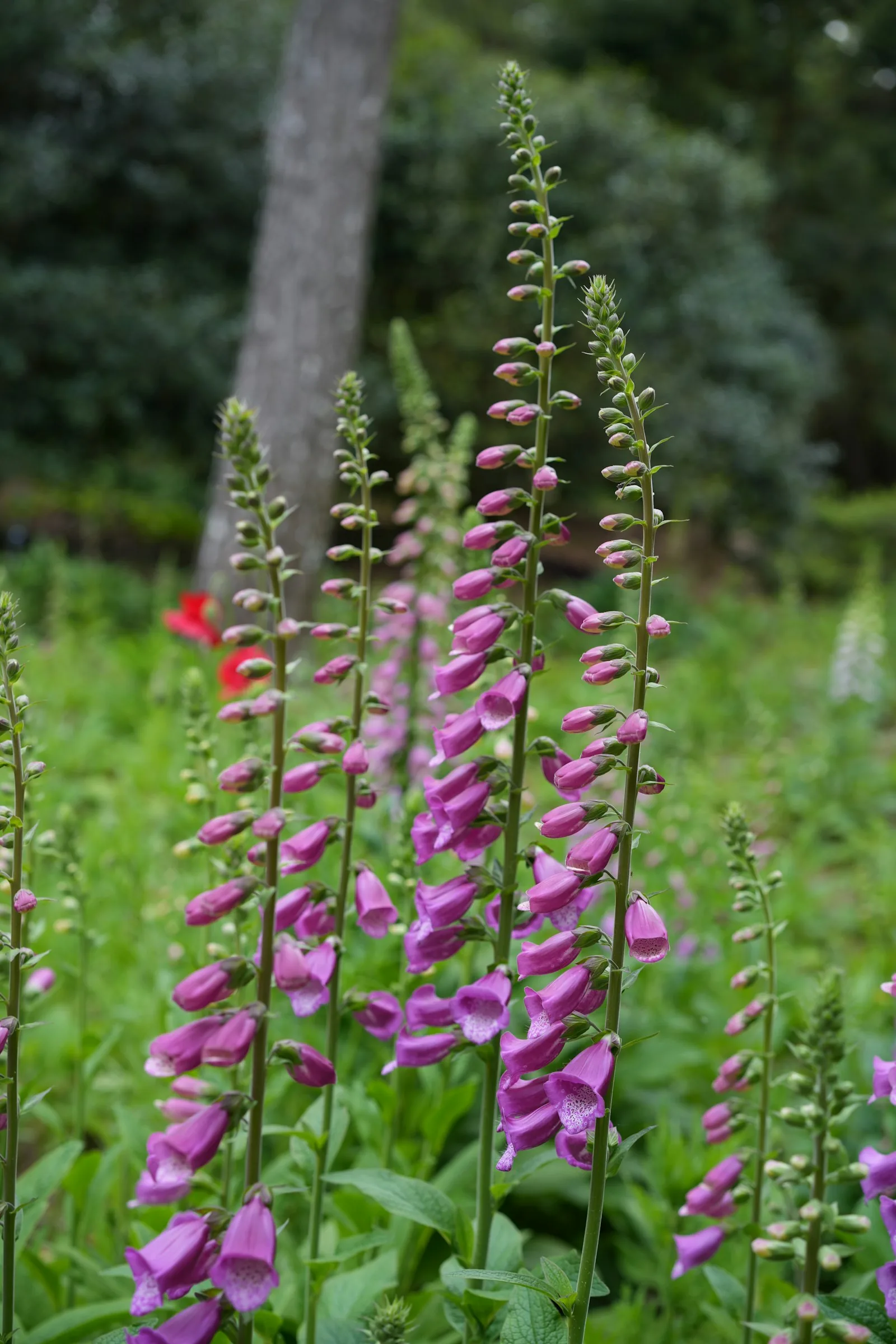
A vibrant pink foxglove blooms in a garden
Photo: Unsplash on Unsplash

—- title: "Foxglove Care: Growing Digitalis purpurea" slug: foxglove-care hub: plants category: Species guide description: "How to grow foxglove (Digitalis purpurea) as a biennial and short-lived perennial in zones 4–9. Toxicity, self-seeding, and companion planting guide." date: 2026-06-10 updated: 2026-06-10 author: "Thomas A." reading_time: 9 scientific: "Digitalis purpurea" zones_min: 4 zones_max: 8 sun: "part shade" deer_resistant: true native: false pollinator: true bloom: "summer" height_min: 3 height_max: 5 —-

Digitalis purpurea — common foxglove — produces tall flower spikes covered with tubular blooms in shades of purple, pink, white, and cream, typically with spotted inner throats. It is one of the most dramatic vertical elements available for a shaded or partly shaded border. The catch: it is toxic to humans and animals, and it behaves as a biennial in most North American climates, flowering in its second year and dying afterward. Understanding this cycle is the foundation of successful foxglove gardening.

I don't grow foxgloves in my Long Island yard. This guide is sourced from Extension and botanical garden publications.

Biennial vs. short-lived perennial — what foxglove actually is

Per Missouri Botanical Garden, Digitalis purpurea is "typically a biennial" but "may persist as a short-lived perennial" in some garden conditions. In the first year, the plant forms a basal rosette of large, woolly leaves. In the second year, it sends up flower spikes 3–5 feet tall and sets seed before dying.

The perennial behavior some gardeners observe comes from:

  1. Side shoots from the base forming after the main spike is cut back — per NC State Extension, cutting the central spike promptly can encourage side shoot development.
  2. Self-sown seedlings appearing around the parent plant, creating the illusion of a perennial clump.

Per Penn State Extension, some cultivars like 'Camelot' series have been selected for better perennial persistence, but even these are typically short-lived. Treat foxglove as a biennial and let it self-sow rather than expecting permanent perennial behavior.

USDA hardiness zones

Per Missouri Botanical Garden, Digitalis purpurea is hardy in zones 4–9. The first-year basal rosette is cold-hardy and overwinters reliably in zones 4–7. In zones 8–9, foxgloves are often grown as cool-season annuals or winter-planted biennials because summer heat prevents the full biennial cycle. In zone 7a (Long Island), foxgloves complete their biennial cycle successfully.

Light

Partial shade to full sun. Per Missouri Botanical Garden, foxgloves perform best in "partial shade" — dappled woodland light or morning sun with afternoon shade. In zones 6 and cooler, full sun is tolerated and produces good bloom. In zones 7+, afternoon shade reduces heat stress and extends bloom quality.

Foxglove is native to western and central European woodlands and open clearings — it is naturally a plant of partially shaded edges, not open prairie. This makes it one of relatively few tall, dramatic flowering plants that perform in part-shade borders or under deciduous tree canopies.

Soil

Per Missouri Botanical Garden, foxgloves prefer "humus-rich, moist, well-drained soils" with a slightly acidic pH (5.5–6.5). Amend planting areas with 2–3 inches of compost. Unlike drought-tolerant perennials such as yarrow or salvia, foxgloves need consistent moisture — they naturally grow in woodland clearings where organic matter is high.

Good drainage remains essential despite moisture preference: consistent standing water causes crown rot. The ideal is a soil that retains moisture between rains but drains freely.

Planting from seed

Foxgloves grow readily from seed and are among the easier biennials to establish by self-seeding.

Per Missouri Botanical Garden:

For a continuous display of flowering plants, sow seeds in two successive years to ensure both first-year and second-year plants are always present in the garden.

Watering and fertilizing

Water: Per NC State Extension, foxgloves "prefer moist soil" and should receive approximately 1 inch of water per week during the growing season. Do not allow the soil to dry completely during first-year establishment. Established second-year plants tolerate brief dry periods but bloom better with consistent moisture.

Fertilizer: Per Clemson Extension HGIC, a single early-spring application of a balanced slow-release fertilizer is adequate. Avoid high-nitrogen applications, which produce excessive vegetative growth and can delay or reduce bloom.

Deadheading and self-seeding management

Allowing self-seeding: Leave some flower spikes to fully ripen and shatter seed before cutting. Per Missouri Botanical Garden, foxglove "freely self-seeds in the garden" and will maintain itself over time. The self-sown seedlings appear as basal rosettes in late summer and fall, overwintering and flowering the following spring.

Preventing spread: If self-seeding is not wanted, cut the entire spent flower spike immediately after bloom before seed sets and ripens.

Side shoots: After the main spike finishes, cut it back to encourage side shoot development. Per NC State Extension, side shoots produce smaller, secondary flower spikes later in the season that extend the overall bloom period.

Toxicity — the information that belongs in every foxglove article

Per NC State Extension, all parts of Digitalis purpurea are toxic to humans, dogs, cats, and livestock. The plant contains cardiac glycosides — primarily digitoxin and digoxin — that are the basis of the cardiac drug digoxin, but which are dangerous in uncontrolled amounts. Symptoms of ingestion include nausea, vomiting, irregular heartbeat, and potentially cardiac arrest.

This does not mean foxgloves should be avoided in every garden, but it does mean:

Per Clemson Extension HGIC, foxglove is toxic to horses particularly — the plant can cause fatal cardiac problems if consumed by livestock.

Companion plants

Pests and diseases

Per Missouri Botanical Garden, foxgloves have few serious pest problems. Aphids can colonize growing tips; per NC State Extension entomology, a water spray or insecticidal soap controls most infestations.

Crown rot in poorly drained soils is the most common cultural problem. Per Penn State Extension, the fix is drainage improvement before planting.

Leaf spot fungi (Alternaria, Colletotrichum) appear in humid conditions. Per NC State Extension, these are rarely severe; avoid overhead watering and remove infected leaves.

Deer: Per Rutgers NJAES, foxgloves are rated as "rarely damaged" by deer — likely because of the cardiac glycoside content. In high-pressure deer areas, foxgloves may actually be a safer choice than more palatable perennials.

Common problems

SymptomMost likely causeFix
No flowers in year oneNormal biennial behaviorWait for year two
Plant dies after floweringNormal biennial death cycleAllow self-seeding; replant each year
No self-seedingSeed set prevented by early deadheadingAllow some spikes to ripen fully
Crown rotPoor drainageImprove drainage; replant
Stunted, yellowed plantsAlkaline soil; pH too highConfirm pH with soil test; acidify if above 6.5
Floppy spikesExcess shade; loose, overly rich soilMore sun; lean down soil amendments

Frequently asked

Does foxglove come back every year?

Digitalis purpurea is typically a biennial — it comes back in its second year to flower, then dies. Per Missouri Botanical Garden, it may act as a short-lived perennial in some conditions by producing side shoots after the main spike is cut back. The practical way to maintain foxgloves is through self-seeding, which produces a continuous cycle of first- and second-year plants. For guaranteed annual bloom, sow seeds two years in succession so both plant generations are established.

Is foxglove safe to grow with children or pets?

Per NC State Extension, all parts of Digitalis purpurea are toxic to humans, dogs, cats, horses, and other animals. The cardiac glycosides it contains can cause serious harm if ingested. In gardens where young children or plant-chewing pets have unsupervised access, foxglove should be planted with caution or avoided. In typical adult gardens where the plant is not being consumed, the risk is minimal — wear gloves when handling, wash hands afterward, and do not eat any part of the plant.

When does foxglove bloom?

Per Missouri Botanical Garden, foxgloves bloom in late spring through early summer — typically May through June in zones 5–7. The flower spikes open from the bottom upward over a period of 2–3 weeks. Cutting the central spike after bloom and allowing side shoots to develop extends the overall bloom period by 2–3 additional weeks.

Recommended gear: Best Insecticidal Soap: How Potassium Salts Kill Soft-Bodied Pests — our buyer's guide covering picks for every budget, ranked by Extension publication consensus and personal use.

Sources

  1. Missouri Botanical Garden &mdash; <a href="https://www.missouribotanicalgarden.org/PlantFinder/PlantFinderDetails.aspx?kempercode=c375">Digitalis purpurea</a>.
  2. NC State Extension Plant Toolbox &mdash; <a href="https://plants.ces.ncsu.edu/plants/digitalis-purpurea/">Digitalis purpurea</a>.
  3. Penn State Extension &mdash; <a href="https://extension.psu.edu/perennials-in-the-landscape">Perennials in the Landscape</a>.
  4. Clemson Extension HGIC &mdash; <a href="https://hgic.clemson.edu/factsheet/digitalis-purpurea/">Digitalis</a>.
  5. Rutgers NJAES &mdash; <a href="https://njaes.rutgers.edu/pubs/publication.asp?pid=FS1312">Landscape Plants Rated by Deer Resistance</a>.

Sources