Species guide

Dogwood Care: Flowering Cornus Florida and Kousa Compared

Flowering dogwood (Cornus florida) and Kousa dogwood (C. kousa) are two different trees with opposite bloom sequences, different disease susceptibility, and different site requirements — this guide compares both and explains anthracnose management for C. florida.
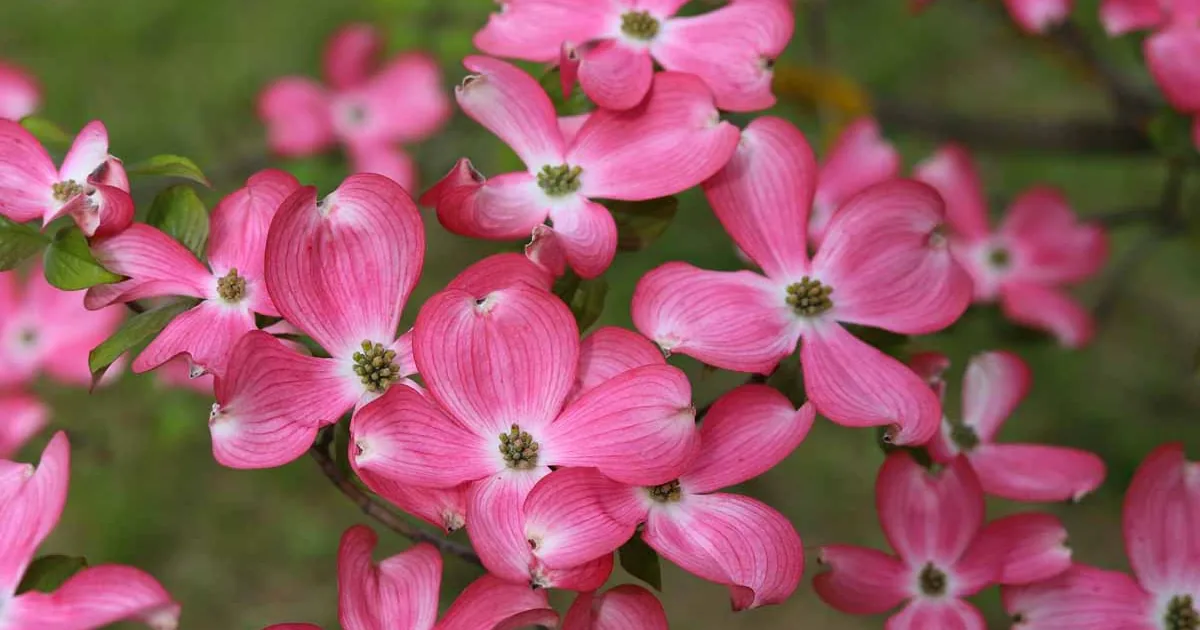
White flowering dogwood in full spring bloom against a dark background of mature forest
Photo: Unsplash

Which dogwood do you have?

Flowering dogwood (Cornus florida)

The native North American dogwood. White or pink four-bract flowers in April–May before or with leaf emergence. Red berries in fall, brilliant red-to-purple fall foliage. Reaches 15–25 feet with a layered horizontal branching pattern. Per Penn State Extension, flowering dogwood "is considered the most beautiful of North American native trees" but "has faced serious decline in many eastern forests and landscapes due to dogwood anthracnose fungus." Hardy in zones 5–9.

Kousa dogwood (Cornus kousa)

Native to Japan and Korea. White or pink four-bract flowers in May–June, about 4–6 weeks after C. florida. Raspberry-like red fruit in fall, excellent fall color, and attractive exfoliating bark on mature trees. Per Penn State Extension, Kousa dogwood is "highly resistant to dogwood anthracnose and powdery mildew that plague C. florida" and has "become the preferred dogwood for landscape use in the mid-Atlantic and Northeast due to its disease resistance." Hardy in zones 5–8. Often a slightly larger tree than C. florida, reaching 20–30 feet.

Rutgers hybrids (Stellar series)

Crosses between C. florida and C. kousa developed by Rutgers University, combining early bloom (closer to C. florida) with disease resistance (closer to C. kousa). 'Stellar Pink,' 'Constellation,' 'Galaxy,' and 'Rutgan' (Aurora) are the main selections. Per Rutgers NJAES documentation on the Stellar series, these hybrids are "resistant to dogwood anthracnose and powdery mildew and perform well in zones 5–8." A practical middle ground for gardeners who want early spring bloom without the disease risk of pure C. florida.

USDA hardiness and where dogwoods grow

Cornus florida is hardy in zones 5–9. C. kousa is zones 5–8. Both are widely adapted across the eastern United States. Per Penn State Extension, flowering dogwood "is native from Maine to Florida and west to eastern Kansas, growing naturally as an understory tree in deciduous forests." In its native habitat it receives filtered light and consistent moisture — understanding this helps explain its care requirements.

Light

Both species prefer partial shade to full sun. In their natural habitat, flowering dogwoods grow at woodland edges and understory positions where they receive morning sun and afternoon shade or dappled light. Per Clemson HGIC, "dogwoods in full sun are more productive but more susceptible to drought stress and heat scorch." In zones 7–9, afternoon shade is protective and recommended. In zones 5–6, full sun to partial shade is acceptable and produces the best bloom display.

Kousa dogwood tolerates more sun than C. florida. Per Penn State Extension, "Kousa dogwood performs better in full sun than its North American counterpart and is more heat-tolerant."

Watering

Dogwoods have relatively shallow root systems and need consistent moisture, particularly during summer heat. Per Clemson HGIC, "dogwoods require about 1 inch of water per week from rainfall or irrigation during the growing season — drought stress is a predisposing factor for anthracnose and other secondary problems." Deep, infrequent irrigation is better than shallow, frequent watering. A 3–4 inch mulch layer over the root zone from the drip line to 6 inches from the trunk is one of the most effective practices for maintaining soil moisture and moderating root temperature.

During establishment (first 2–3 years), water weekly if rainfall is less than 1 inch per week. After establishment, water deeply during dry spells but do not keep the soil constantly wet.

Soil and pH

Per Penn State Extension, dogwoods prefer "moist, well-drained, acidic soil with a pH of 5.5–6.5." They do not tolerate compacted soil or poorly drained sites. The organic matter content of the soil is important — in their native woodland habitat, dogwoods grow in humus-rich soil from decades of leaf accumulation. When planting in typical suburban soil, amending with generous amounts of compost (30–40% by volume mixed into the backfill) improves the soil organic matter content and water retention.

Planting

Plant container-grown dogwoods in spring or fall. Per Clemson HGIC, "fall planting allows root establishment before summer heat stress" and is preferred in zones 6–8. Spring planting works in zones 5–6 but requires more attention to first-summer watering.

The root flare must be at or slightly above soil grade. Per Penn State Extension, "deep planting is one of the most common causes of dogwood decline — the root flare, where the trunk meets the roots, should be visible at the soil surface." Mulch over the root zone to the drip line. Keep a mulch-free ring of 2–3 inches around the trunk to prevent crown rot — dogwood bark is thin and highly susceptible to mechanical damage and fungal infection at the soil line.

Fertilizing

Per Clemson HGIC, "established dogwoods in average garden soil typically need no fertilization." If a soil test shows pH above 6.5 (reducing nutrient availability) or the tree shows slow growth and pale foliage, a light application of an acid-forming slow-release fertilizer in early spring is appropriate. Avoid fertilizing stressed or disease-affected trees — it pushes soft growth that is more susceptible to infection.

Pruning

Minimal pruning is best for dogwoods. Their natural layered branching habit is most attractive without intervention. Per Penn State Extension, "prune dogwoods only to remove dead, damaged, or crossing branches, and do so in late fall or winter when the tree is dormant." Avoid pruning in spring and summer when fresh cuts attract dogwood borers (Synanthedon scitula), which target fresh wounds. If significant pruning is needed, late fall through February is the safest window in zones 5–7.

Common problems

Dogwood anthracnose (Discula destructiva)

The most serious disease of Cornus florida. Per Penn State Extension, dogwood anthracnose "has killed large numbers of flowering dogwood trees in eastern forests and landscapes since the 1970s." Symptoms include leaf blight, tan spots with purple borders, branch dieback, and epicormic sprouting. Management: remove infected branches, improve air circulation, avoid water stress (stressed trees are far more susceptible), and apply a fungicide (propiconazole or chlorothalonil) in spring during wet weather. Per Penn State, "Kousa dogwood and Rutgers hybrids are highly resistant — choose these where anthracnose risk is high."

Powdery mildew

Nearly universal on C. florida in humid climates. White coating on foliage, most severe in late summer. Per Clemson HGIC, powdery mildew on dogwood is "primarily cosmetic" in established trees. Kousa dogwood is much more resistant. Fungicide is rarely warranted for established trees.

Dogwood borer (Synanthedon scitula)

Larvae tunnel under bark, causing progressive dieback and bark damage. Per Penn State Extension, "avoiding bark wounds from lawnmowers and string trimmers is the single most effective preventive — borers target wounded trees." Keep mowers and trimmers away from the trunk base. Preventive permethrin applications to the trunk in May through July can reduce borer establishment in high-pressure areas.

Leaf scorch

Brown leaf margins in summer, particularly in zones 7–8 or during drought. Per Clemson HGIC, "leaf scorch on dogwood is a symptom of drought or root damage, not a disease." Supplemental irrigation during dry spells and mulch over the root zone are the management strategies.

Frequently asked

Which dogwood should I plant — florida or kousa?

In zones 5–7 in the mid-Atlantic and Northeast, Kousa dogwood or a Stellar series hybrid offers materially better disease resistance. Per Penn State Extension, "Kousa dogwood has largely replaced C. florida as the dogwood of choice for new plantings in humid eastern climates." If you specifically want early spring bloom (April vs. May–June), a Stellar hybrid gives disease resistance with earlier bloom than pure Kousa.

Why does my dogwood have spots on the leaves?

Tan or brown spots with purple borders on C. florida in late spring and summer suggest dogwood anthracnose. Small circular spots with yellowing may be spot anthracnose (a different, less serious fungus). Per Penn State Extension, the combination of leaf spots, branch dieback, and epicormic sprouts (small shoots along the main trunk) strongly suggests the more serious Discula destructiva anthracnose.

When do dogwood berries ripen?

Per Missouri Botanical Garden, C. florida berries ripen in September–October and are an important food source for migrating birds. C. kousa produces raspberry-like fruit that ripens in October and is edible (slightly sweet, somewhat insipid to human taste) as well as attractive to birds and wildlife.

Are dogwoods deer-resistant?

No — per Rutgers NJAES's deer resistance ratings, flowering dogwood is "frequently severely damaged." Deer browse on twigs, buds, and bark. Young dogwood trees under 4 feet are at the most risk and should be protected with tree tubes or fencing in high-deer-pressure areas like most of suburban Long Island and New Jersey.

Sources