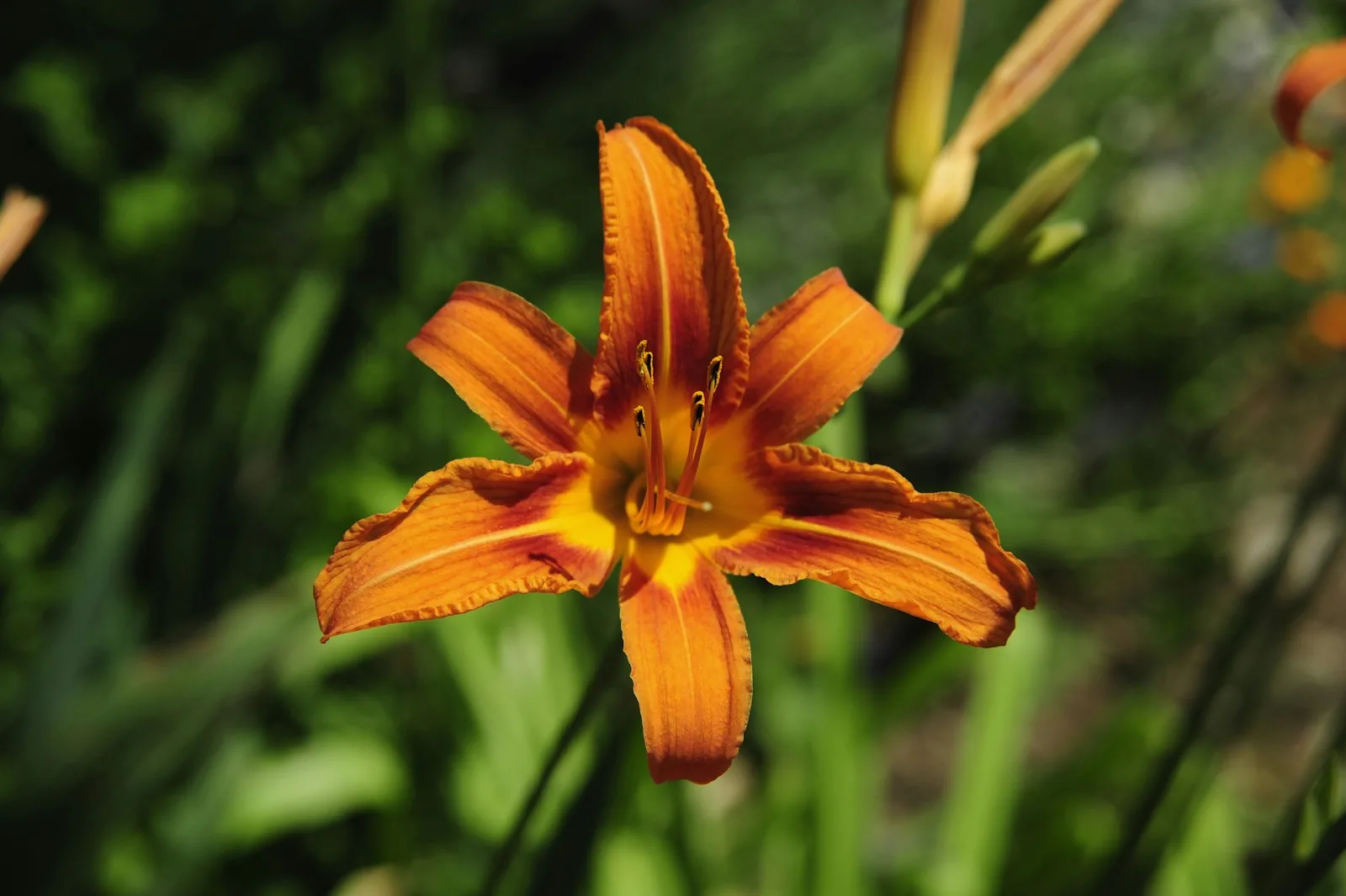
Daylilies are the perennials I'd recommend first to anyone establishing a new garden — Hemerocallis is drought-tolerant, adaptable to a wide range of soils, cold-hardy in zones 3 through 9, and one of the most free-blooming summer perennials available. I grow several cultivars in my Long Island yard, including 'Stella de Oro' (repeat-blooming, yellow, compact), 'Happy Returns' (pale yellow, prolific re-bloomer), and a deep orange unnamed variety that came with the house in 2019 and has spread reliably since. They are the low-maintenance backbone of my sunniest border.
The honest caveat: in high-deer-pressure areas — which includes most of Long Island's suburban landscape — daylilies get eaten. The foliage is palatable; the flower buds even more so. A management strategy for deer is not optional here, it's the first conversation.
This article contains affiliate links. As an Amazon Associate, we earn from qualifying purchases - at no extra cost to you. We only recommend products we have personally tested or that are the universal first recommendation from university Extension publications. See our full disclosure.
Taxonomy and types — orange roadside daylily vs. modern cultivars
A crucial identification point: the daylily commonly seen naturalizing along North American roadsides is Hemerocallis fulva — tawny daylily. Per Missouri Botanical Garden, this is an Asian species naturalized in North America that spreads aggressively by stolons and is considered invasive in some states. It does not produce viable seed in North America but spreads vegetatively.
Modern daylily cultivars (the 80,000+ registered with the American Hemerocallis Society) are primarily derived from H. lilioasphodelus, H. citrina, and other species, and most do not spread aggressively. Per NC State Extension Plant Toolbox, modern cultivars are "clump-forming" without the stoloniferous spreading of H. fulva.
Diploid vs. tetraploid cultivars: Tetraploid daylilies have been bred for larger, more ruffled flowers in more complex colors but often have heavier, coarser foliage. Diploid types have a more graceful, finer texture. Per Penn State Extension, both perform similarly in the garden; the distinction is primarily relevant to collectors.
More like this, monthly
Get the seasonal care notes — no upsell, unsubscribe any time.
One email per month from Thomas: what to plant, what to prune, what's about to break. Cited the same way as the guides.
Free. No spam. Same author as the guide you just read.
Got it — check your inbox to confirm. Welcome.
Kill slugs, safe for pets
Iron phosphate baits stop slugs feeding within a day. Kids and pets can walk on treated soil safely — no metaldehyde poisoning risk. Read our full pick.