Species guide

Crepe Myrtle Care: Pruning Without Crepe Murder

Lagerstroemia indica care from planting to winter — which zones support it, why "crepe murder" destroys flower production, and how to prune properly for the long term.
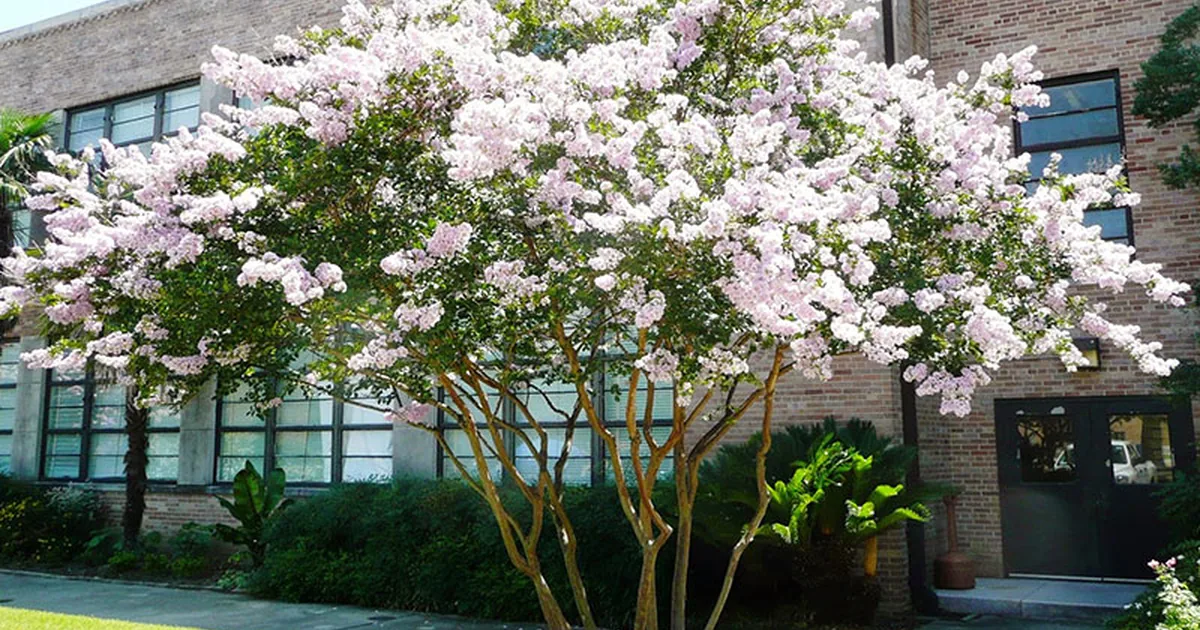
Crepe myrtle tree with clusters of deep pink blooms against a summer blue sky
Photo: Unsplash

Crepe myrtle species and varieties

Most crepe myrtles in North American landscapes are Lagerstroemia indica or hybrids between L. indica and L. fauriei (Japanese crepe myrtle). The species hybrids, bred by the U.S. National Arboretum, introduced mildew-resistant varieties with colorful bark — per USDA, the National Arboretum's hybrids, named after Native American tribes (Natchez, Tuscarora, Sioux, Comanche), are among the most widely planted crepe myrtles in the country and are noted for exceptional disease resistance.

Size categories

This is the most important selection decision — choosing the wrong size creates the conditions for improper pruning. Per Clemson Extension HGIC:

Most of the crepe murder problem stems from planting large tree types in spaces suited to medium or small shrubs, then cutting them back annually to manage the mismatch. Selecting the right size variety at the outset eliminates the "problem" entirely.

USDA hardiness and where crepe myrtles grow

Standard Lagerstroemia indica varieties are hardy in zones 7–9. The L. indica × fauriei hybrids extend hardiness to zone 6, and some newer varieties are reliably hardy to zone 6a. Per Penn State Extension, crepe myrtles in zone 6 "may die back to the ground in severe winters" but often resprout from the root system in spring. In zone 5, they typically do not survive winters even with protection.

Crepe myrtles are native to China and Korea, and perform best in the hot, humid summers of the mid-Atlantic South and Gulf Coast states. They need summer heat to bloom fully — a common client complaint is "it doesn't bloom well" in cooler, cloudier coastal areas within their hardiness zone. Most growers find the most spectacular bloom in zones 7b–9.

Light

Full sun — minimum 6 hours, with 8 or more producing the best bloom. Crepe myrtles planted in shade bloom poorly, become susceptible to powdery mildew, and develop a weak, open form. Per Clemson Extension HGIC, "full sun is essential for best flowering." Do not plant under the canopy of larger trees — as surrounding trees mature, the crepe myrtle will decline in shaded conditions.

Watering

Established crepe myrtles are drought-tolerant and rarely need supplemental irrigation except during extreme drought. Per Penn State Extension, established crepe myrtles "tolerate drought conditions quite well once established." The critical watering period is the first 2 years after planting, during which regular deep watering (once or twice a week in dry periods, soaking the root zone to 12 inches) establishes a deep root system. After year two, most established plants in zones 7–9 thrive on natural rainfall.

Overwatering of established plants promotes excessive vegetative growth at the expense of bloom and increases susceptibility to root rot. Once established, less is more.

Soil and pH

Crepe myrtles are adaptable to a wide range of soils — sandy loam to clay — as long as drainage is adequate. They prefer a pH of 5.0–6.5 (slightly acidic) but tolerate up to 7.5. Per Clemson Extension HGIC, crepe myrtles "grow in a variety of soil types, from clay to sand, as long as drainage is adequate." Heavy clay soils that hold water are the one condition they do not tolerate well; root rot from waterlogged clay is a common cause of decline in poorly sited specimens.

Planting

Spring is the best planting time — it gives the full growing season for root establishment before winter. Plant in full sun in well-drained soil, setting the root ball at the same depth as it was in the container (or very slightly above grade in heavy soils). Space based on the mature size of the variety — a large tree type should be planted at least 10–15 feet from structures and other trees. Per Clemson Extension HGIC, "planting in the right location greatly reduces future maintenance needs."

Mulch with 2–3 inches of organic material over the root zone (keeping mulch away from the trunk) to conserve moisture during establishment and regulate soil temperature.

Fertilizing

Established crepe myrtles in average garden soils rarely need fertilizer. Overfertilizing — particularly with high-nitrogen lawn fertilizer that reaches the root zone — produces lush, soft growth that is more susceptible to powdery mildew and aphids, and may actually delay or reduce flowering by shifting plant energy to vegetative growth. Per Clemson Extension HGIC, "avoid high-nitrogen fertilizers" on established specimens. Young trees (first 2–3 years) benefit from a light balanced fertilizer application in spring to support rapid establishment.

Pruning — the right way and the wrong way

Per Clemson Extension HGIC, "the most common mistake made with crape myrtles is severe pruning, often called 'crape murder.'" Cutting trees back to stubs annually produces several negative results: large, disfiguring knobby stubs at the cut points; a flush of weak, poorly attached water sprouts from each stub; smaller flowers on weaker stems (the sprouts are vigorous but produce inferior flower clusters); and an ugly winter silhouette that never recovers.

What to do instead: Selectively remove dead wood, crossing branches, and shoots coming from the base or trunk interior. If the tree has outgrown its space, the correct response is to remove it and plant a correctly sized variety — not to cut it back annually. Per Penn State Extension, "the best time to prune is late winter or early spring before new growth emerges."

Removing spent flower clusters in midsummer can encourage a second flush of blooms on some varieties. This is the one maintenance pruning practice that genuinely improves bloom — it's done by removing the small clusters of developing seed pods at the tips of flowering branches, not by cutting back major limbs.

Common problems

Powdery mildew

White powdery coating on leaves and new growth, most common in shaded locations and on older varieties. Per Clemson Extension HGIC, the L. indica × fauriei hybrids (National Arboretum series: Natchez, Tuscarora, Sioux, etc.) are "highly resistant to powdery mildew" compared to older pure L. indica varieties. Site selection in full sun is the most effective prevention for susceptible varieties; myclobutanil or propiconazole fungicide controls active infections.

Crepe myrtle aphid (Sarucallis kahawaluokalani)

Yellow-green aphids specific to crepe myrtles, clustering on new growth. Per Clemson Extension HGIC, aphid feeding produces honeydew that supports sooty mold — a black fungal coating on leaves and surfaces below the tree that is unsightly but not directly harmful. Natural predators (lady beetles, parasitic wasps) control populations in most settings. If pressure is severe, insecticidal soap or neem oil applied to new growth is effective; systemic neonicotinoid treatments (imidacloprid soil drench) are very effective but should be avoided on trees that are in bloom, as they kill pollinators.

Cercospora leaf spot

Circular brown spots with red-purple borders on leaves, causing premature defoliation. Per Clemson Extension HGIC, improve air circulation, remove infected leaves, and apply chlorothalonil or copper-based fungicide at first sign. Most established trees tolerate moderate leaf spot without significant health impact; young trees benefit more from preventive treatment.

Frequently asked

Why is my crepe myrtle not blooming?

The most common reasons: insufficient sun (less than 6 hours of direct sun dramatically reduces bloom), late frost damage that killed emerging buds, excessive nitrogen from nearby lawn fertilizer (pushes vegetative growth over flowering), or the tree was pruned so severely that the new growth hasn't had time to mature and set flower buds. Per Clemson Extension HGIC, bloom requires "full sun and warm temperatures" — a site that's shaded by afternoon is the number-one cause of poor flowering.

When do crepe myrtles bloom?

Most varieties bloom mid-summer through fall — generally July through September in zones 7–9. Some varieties rebloom if spent flower clusters are removed. Early-blooming varieties (June) and late-blooming (September–October) exist; select by bloom time if you need coverage at specific points in the season.

Can I grow crepe myrtle in zone 6?

With careful variety selection and siting, yes. Per Penn State Extension, the L. indica × fauriei hybrids bred at the National Arboretum — particularly 'Acoma', 'Hopi', 'Pecos', and 'Zuni' — show "improved hardiness" suitable for zone 6 in sheltered locations. Expect occasional dieback to the ground in severe winters, with regrowth from the base in spring. Avoid planting in frost pockets or exposed north-facing sites.

How fast do crepe myrtles grow?

Most varieties are moderate to fast growers once established — 1–3 feet of new growth per year under good conditions. Large tree varieties like 'Natchez' can reach their mature height of 25–30 feet within 10–15 years. Dwarf types grow much more slowly. The growth rate justifies the emphasis on selecting the right variety for the space at planting time, rather than counting on slow growth to delay a size problem.

Sources