Cosmos Care: Easy Annual Cut Flowers That Self-Sow
Annual Cosmos bipinnatus and C. sulphureus are among the easiest cut flowers to grow from seed, but they bloom later and stay compact when kept lean — this guide covers direct sowing, deadheading, and why fertilizing backfires.
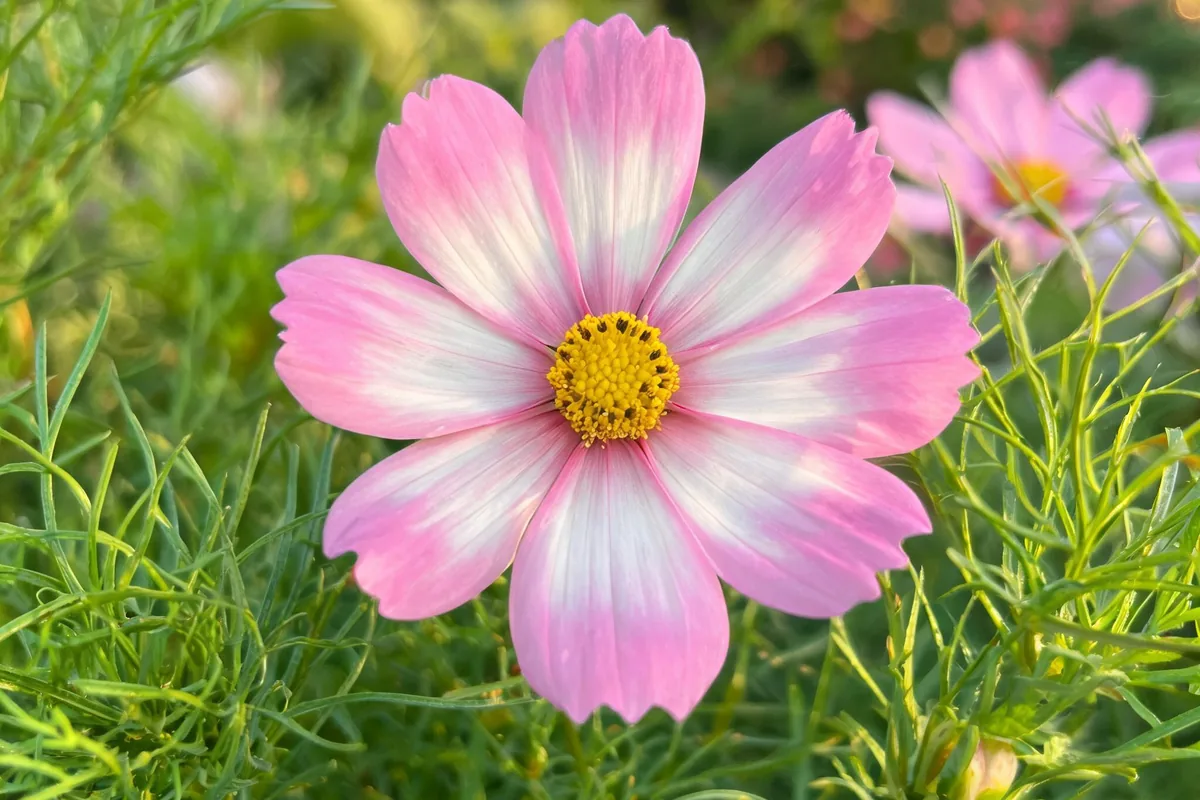
Which cosmos do you have?
Two cosmos species dominate home gardens, and they behave differently enough that identifying them is worth the effort before you plan your planting schedule.
Cosmos bipinnatus — garden cosmos
The classic cosmos. Ferny, thread-like foliage. Flowers in pink, rose, crimson, lavender, and white on stems 3–4 feet tall. Per University of Minnesota Extension, C. bipinnatus "prefers cool nights and may slow blooming in the hottest weeks of midsummer, then rebound in the cooler weather of late summer and fall." It is strictly an annual, killed by frost, but self-sows readily where conditions allow. Popular series include Sensation, Sonata (dwarf), and Purity (white).
Cosmos sulphureus — sulphur cosmos
More heat-tolerant than its cousin. Flowers in gold, orange, and red-orange on shorter, bushier plants (1.5–3 feet). Leaves are broader and darker green than C. bipinnatus. Per University of Minnesota Extension, sulphur cosmos "blooms well even in the heat of midsummer" and is a better choice for zones 7–9 where garden cosmos stalls in July. The Bright Lights and Ladybird series are widely available.
USDA hardiness and where cosmos grow
Both species are frost-tender annuals grown across USDA zones 2–11 wherever there is a frost-free growing season of at least 60 days. Per Oregon State Extension, cosmos are "among the most adaptable annuals, performing well in climates from the Pacific Northwest to the Southeast." They originated in Mexico and Central America and thrive in warm, sunny conditions; the main limiting factor is season length, not cold hardiness.
Most growers in zones 3–5 start with a direct sow after last frost and get 8–10 weeks of bloom before fall frost ends the season. In zones 6–9, a May sow produces flowers from July through October. Self-sowing is most reliable in zones 7–10 where the soil stays warm enough for fall-ripened seeds to overwinter and germinate.
Light
Cosmos require full sun — at least 6–8 hours of direct sunlight. Per University of Minnesota Extension, plants in part shade "become tall and leggy with fewer flowers." Shaded cosmos also develop weaker stems that collapse more easily in wind and rain. For maximum flower production, site cosmos in the sunniest, most open part of the garden. They handle reflected heat from walls and pavement better than most annuals.
Watering
Established cosmos are among the most drought-tolerant garden annuals. Per Oregon State Extension, mature cosmos "tolerate drought once established and actually perform better with less water than with regular irrigation." Overwatering encourages rank foliage growth at the expense of flowers, and wet soils promote stem rot at the base of the plant.
Water new seedlings and transplants regularly until they reach 6 inches of height. After that, water only during extended dry spells — more than two weeks without rain in most climates. If your cosmos are tall, lush, and producing few flowers, reducing water is often the fix. Container-grown cosmos need more frequent watering because pots dry out faster than garden beds.
Soil and pH
This is the counterintuitive part of cosmos care. Per University of Minnesota Extension, cosmos "do best in poor to average, well-drained soil and actually produce fewer flowers when grown in rich, fertile soil." Over-amended beds — lots of compost, manure, or fertilizer — produce plants with abundant dark green foliage and very few flowers. The bloom-to-foliage ratio flips in the grower's favor when the soil is lean.
Target soil pH of 6.0–8.0 — cosmos tolerate a wide range and aren't sensitive to slight alkalinity. Well-drained soil is critical; cosmos will not tolerate standing water or consistently wet conditions. Sandy or gravelly soils that most other annuals struggle in are actually fine for cosmos.
Planting
Direct sowing outdoors is the preferred method. Cosmos can be transplanted from cell trays, but they establish as well or better from direct seed, and transplanting offers no meaningful schedule advantage because germination is fast (5–7 days in warm soil) and the plants grow quickly.
Per University of Minnesota Extension, sow cosmos outdoors after the last frost date when soil has warmed to at least 60°F. Barely cover seeds — press lightly into the soil surface or cover with 1/8 inch of soil. Thin C. bipinnatus to 12–18 inches apart; C. sulphureus to 6–12 inches. In zone 7–8, a succession sow every 3–4 weeks from May through late June extends bloom season.
For a head start in zones 3–5, start seeds indoors 3–4 weeks before last frost. Do not start earlier — large transplants set back badly. Harden off for 5–7 days before planting out.
Fertilizing
In most garden soils, cosmos need no fertilizer at all. Per Clemson HGIC, feeding cosmos "encourages excessive vegetative growth and discourages flowering — the opposite of the intended effect." If your soil is extremely poor (sandy fill or compacted clay), a single application of a low-nitrogen, phosphorus-forward fertilizer (something like 5-10-5) at planting time is acceptable. Avoid any fertilizer program that involves regular reapplication.
Deadheading and pruning
Deadheading — removing spent flowers before they set seed — is the single most effective practice for maximizing cosmos bloom. Per Oregon State Extension, cosmos that are regularly deadheaded "continue flowering for months," while plants allowed to set seed slow their bloom significantly as energy goes into seed production.
Technique: cut or pinch spent flowers back to the next lateral bud or leaf node, not just at the base of the spent bloom. This encourages branching and denser flower production. In practice, the fastest method is to run your hand along each stem and snap off all faded flowers every 5–7 days.
In midsummer when C. bipinnatus gets leggy and stops blooming in heat, cut the entire plant back by one-third to one-half. It will re-branch and bloom again when cooler weather returns in late August and September.
Common problems
Aphids
The most common pest on cosmos. Clusters of green or black aphids appear on stem tips and flower buds. Per UC IPM, a forceful spray of water removes most infestations; insecticidal soap works for persistent colonies. Ladybugs and parasitic wasps typically control populations without intervention if no broad-spectrum pesticides are used nearby.
Stem blight and botrytis
Gray mold (Botrytis cinerea) causes flower blight and stem collapse in cool, humid weather. Per UC IPM's guidance on Botrytis, improving air circulation through thinning and avoiding overhead watering reduces disease pressure substantially. Remove and discard affected plant material rather than composting it.
Powdery mildew
White powdery coating on leaves, usually in late summer when nights cool down. A cosmetic issue on cosmos — it rarely kills the plant but does reduce vigor. Adequate plant spacing (don't skip thinning) is the main preventive measure.
Tall, floppy plants with few flowers
Almost always caused by one or more of: too much shade, too much water, or too much nitrogen fertilizer. Per University of Minnesota Extension, the fix is to site cosmos in full sun, withhold fertilizer, and let the soil dry between waterings.
Frequently asked
When do cosmos bloom?
In zones 5–7, cosmos sown after last frost (late May) typically begin blooming in late July, about 8–10 weeks after germination. They continue until hard frost in October. C. sulphureus blooms a bit earlier and handles midsummer heat without stalling. For earlier bloom in cold climates, start seeds indoors 3–4 weeks before last frost and transplant after danger of frost has passed.
Do cosmos come back every year?
Both species are annuals — they complete their life cycle in one season and die. However, they self-sow prolifically wherever seeds ripen and fall on bare soil. Per University of Minnesota Extension, "cosmos often return year after year through self-sowing, giving the appearance of a perennial." Mulched beds suppress self-sown germination; leave bare patches near established plants if you want them to naturalize.
Can I save cosmos seeds?
Yes. Allow the last flush of flowers to fully mature into dry, dark brown seedheads, then collect and store seeds in a paper envelope in a cool, dry location. Germination rates typically remain high for 3–4 years when stored properly. Hybrid varieties like Sensation may not come true from saved seed — open-pollinated varieties like Purity and Rubenza are better candidates for seed saving.
Are cosmos deer-resistant?
Cosmos are generally avoided by deer — the fine foliage and somewhat bitter taste make them a low-preference browse. Per Rutgers NJAES's deer resistance ratings, cosmos are considered "rarely damaged" in landscapes with moderate deer pressure. That said, hungry deer in high-pressure areas will eat nearly anything.
How tall do cosmos get?
Standard C. bipinnatus varieties reach 3–4 feet in lean soil; in rich soil they can hit 5–6 feet and become prone to flopping. Dwarf series like Sonata and Daydream stay under 18 inches. C. sulphureus is naturally shorter — 18–30 inches in most conditions. Pinching seedlings once at 8–12 inches of height encourages bushier, self-supporting plants.
