Starting a Deer-Resistant Garden: Strategy Beyond Plant Lists
How to start a deer-resistant garden — the strategic approach beyond plant lists, including fencing, repellent rotation, and planting design for genuinely moderate to high deer pressure.
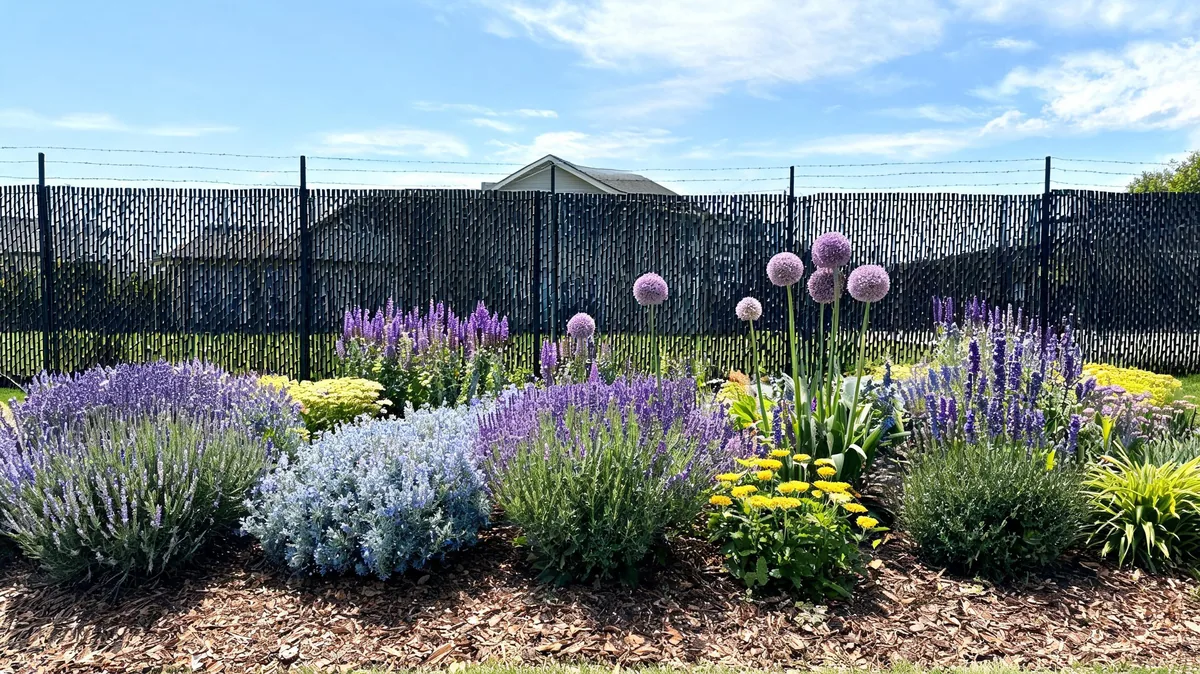
Understanding deer behavior, not just plant lists
Deer are browsers, not grazers — they selectively prefer plants with soft, lush, high-protein foliage. Per Rutgers Cooperative Extension, which maintains one of the most comprehensive deer resistance ratings systems, deer "tend to avoid plants that are aromatic, have leathery or hairy leaves, or produce milky sap." They are highly adaptable — populations that initially avoided catmint or lavender in an area will browse them readily once deer density increases enough that preferred plants become scarce.
Key behavioral context: deer browse most heavily in winter (when food is scarce), in early spring (when does are pregnant or lactating and need protein), and during summer drought (when their preferred plants go dormant or dry out). A plant that was untouched for five years may suddenly be browsed when any of these conditions changes.
The three-level strategy
Level 1: Plant selection
The foundation — but not sufficient alone at high pressure. Per Rutgers Cooperative Extension, plants rated "Rarely Damaged" include:
- Aromatic herbs: catmint (Nepeta), lavender, Russian sage (Perovskia), fragrant salvias
- Plants with leathery or hairy leaves: lamb's ear, yarrow, black-eyed Susan, ornamental grasses
- Toxic or bitter plants: foxglove, monkshood, daffodils (deer avoid all Narcissus), alliums, fritillaria
- Spiny or thorny plants: barberries, hollies, pyracantha
- Ferns: most native ferns are rarely browsed at normal deer pressure
Plants rated "Frequently Severely Damaged" at high pressure include: hostas (essentially irresistible to deer), daylilies, impatiens, tulips, pansies, and most roses. Planting these in a high-deer-pressure area without additional protection is a losing effort.
My experience in zone 7a, moderate-to-high Long Island deer pressure: lavender, catmint, alliums, Russian sage, sedum 'Autumn Joy', and coneflowers are left completely alone through multiple consecutive seasons. My hostas in the shaded front bed required annual repellent treatment through July until I installed deer netting around that entire planting area.
Level 2: Repellent rotation
Repellents work by smell, taste, or both. Per Rutgers Cooperative Extension, "repellents are most effective when rotated because deer habituate to any single repellent over time." The standard protocol is to switch between egg-based repellents (Deer Out, Bobbex, Liquid Fence) and putrescine-based repellents every 4–6 weeks during the growing season. Apply after each significant rain and after new growth emerges — repellent on new growth that wasn't present during the last application is critical. Begin applications in late March before deer establish foraging patterns in a new garden — it's much harder to break an established pattern than to prevent one.
Apply repellent at the current height of the plant and to the surrounding ground — deer scent-mark areas they've browsed and will return to marked spots. Per Penn State Extension, "applying repellent to the soil around plants as well as the foliage increases effectiveness."
Level 3: Physical barriers
The only fully reliable protection. Options:
Deer netting (polypropylene mesh): 7–8 feet tall, supported by posts. The most cost-effective option for protecting a large planting area. Per Penn State Extension, "a fence at least 8 feet tall is necessary to reliably exclude deer" because deer can jump 8 feet from a standing position. However, 7-foot netting often provides adequate protection in tight spaces where deer can't get a running approach. Black polypropylene netting is nearly invisible against a wooded background.
Double-fence trick: Two 4-foot fences spaced 3–4 feet apart provide more reliable deer exclusion than one 7-foot fence in some situations — deer won't jump over one fence if they can't see a landing zone and then jump another immediately after. Per Rutgers Cooperative Extension, "the double fence approach uses deer's tendency to refuse jumps when uncertain of the landing."
Individual plant cages: For specific high-value plants (prized roses, newly planted trees), individual wire cages provide temporary protection while plants establish. Hardware cloth or welded wire formed into cylinders, 4–5 feet tall, deters deer adequately for most individual specimens in lower-pressure areas.
Designing for deer without fencing
The aromatic border strategy
Design the front (deer-facing) edge of any planting with intensely aromatic plants — catmint, lavender, Russian sage, fragrant salvias, and sweet alyssum. Deer typically don't enter a bed bordered by strong-smelling plants. Place desirable deer-attractant plants (hostas, daylilies) in the interior of the bed, using the aromatic plants as a perimeter deterrent. This works at moderate deer pressure; it breaks down at high pressure when deer become habituated to the scent.
The daffodil foundation strategy
Plant the property perimeter with daffodil bulbs — deer avoid all Narcissus species due to their toxic alkaloids. A dense planting of daffodils along the property edge makes deer less likely to enter and forage inward. Per Rutgers Cooperative Extension, daffodils are "consistently rated in the 'rarely damaged' category across all deer pressure levels — one of very few plants that appears truly deer-resistant regardless of density."
Designing for replacement
Accept that some browsing will occur in high-pressure conditions and design for ease of replacement. Use inexpensive annual flowers as sacrificial plants that can be replaced cheaply if deer hit them — this may actually serve as a deterrent because deer will stop at the annuals and feel satisfied before reaching the more valuable perennials behind them.
