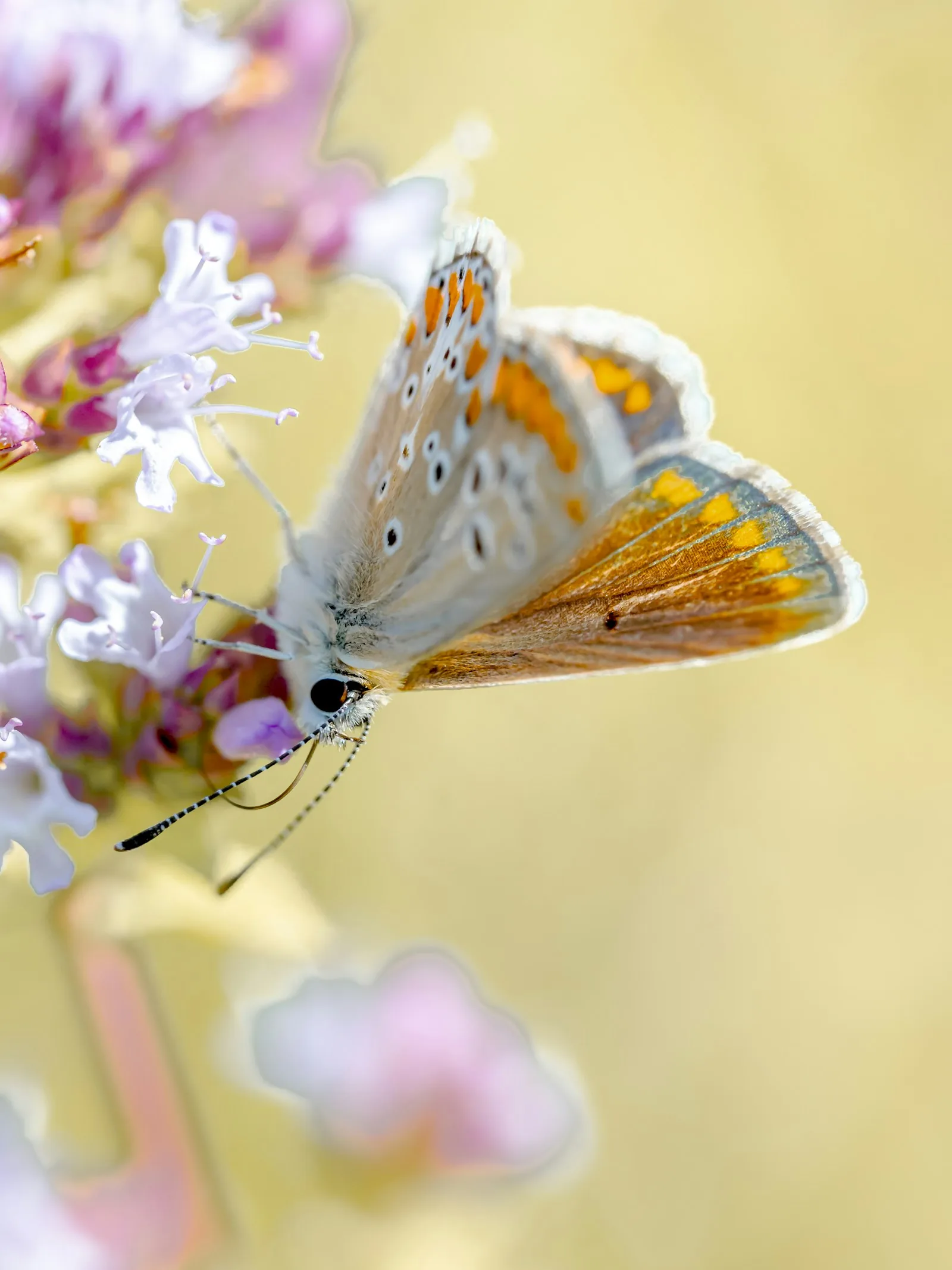
Best Plants for Butterflies: Nectar and Host Plants
title: "Best Plants for Butterflies: Nectar and Host Plants"
—- title: "Best Plants for Butterflies: Nectar and Host Plants" slug: plants-for-butterflies hub: care category: Pollinator description: "Best plants for butterflies, covering both nectar sources and larval host plants by species. Includes a 20-plant table with zones, bloom time, and which butterflies each plant supports." date: 2026-06-10 updated: 2026-06-10 author: "Thomas A." reading_time: 10 —-
Planting for butterflies means planting for two completely different life stages. Adult butterflies need nectar plants for energy. Caterpillars need specific host plants — often a single plant genus or family — to eat. A garden planted entirely with nectar sources will attract passing adults but will not sustain a butterfly population. The larvae have to eat somewhere, and if the host plants are absent, adults lay eggs elsewhere.
Per the Xerces Society's Gardening for Butterflies, most butterfly species have highly specific larval host plant requirements. The monarch-milkweed relationship is the most widely known example, but it is the rule rather than the exception. Black swallowtails (Papilio polyxenes) need plants in the carrot family. Spicebush swallowtails (Papilio troilus) need spicebush or sassafras. Giant swallowtails (Papilio cresphontes) in the South depend on plants in the rue and citrus family. Removing host plants from a landscape — or choosing only ornamental alternatives in different plant families — breaks the reproductive cycle.
Understanding host plant specificity
The relationship between butterfly larvae and host plants is not random. It reflects millions of years of co-evolution, during which caterpillars developed the biochemical ability to detoxify specific plant compounds while using those compounds for their own defense against predators.
Per research published through the University of Delaware's Doug Tallamy lab, native plants support exponentially more butterfly and moth species than non-native ornamentals. Tallamy's research found that native oaks (Quercus spp.) in the mid-Atlantic support over 500 species of caterpillars; a typical ornamental like Buddleja (butterfly bush) supports fewer than five. The difference is the evolutionary relationship.
This matters practically: native trees and shrubs — oaks, cherries, willows, ashes — are often the highest-value habitat additions to a landscape for Lepidoptera, even though they look nothing like a butterfly garden in the conventional sense.
Key host plants by butterfly species
Eastern tiger swallowtail (Papilio glaucus)
Host plants include wild cherry (Prunus serotina), tulip poplar (Liriodendron tulipifera), and birch (Betula spp.). Per Penn State Extension's butterfly guide, this is one of the most wide-ranging North American swallowtails, and wild cherry in particular is its primary host plant across the eastern U.S.
Black swallowtail (Papilio polyxenes)
Host plants are in the carrot family (Apiaceae): wild carrot (Daucus carota), golden alexanders (Zizia aurea), water hemlock (Cicuta spp.), and cultivated parsley, dill, and fennel. Golden alexanders is the recommended native alternative — it is a native woodland-edge perennial with yellow umbel flowers in May that is also a significant early-season nectar source. Per the Illinois Extension butterfly guide, golden alexanders is the most ecologically appropriate host for black swallowtail in Midwest and Northeast gardens.
Spicebush swallowtail (Papilio troilus)
Spicebush (Lindera benzoin) is the primary host, with sassafras (Sassafras albidum) as the secondary. Spicebush is a native understory shrub, zones 4—9, that tolerates part shade — one of the few butterfly host plants that performs well in shadier garden conditions. Per Cornell's Cooperative Extension factsheets, spicebush is also a significant early-spring pollen source.
Painted lady (Vanessa cardui)
The painted lady is a generalist — one of the most widely distributed butterflies on earth. Host plants include thistles (Cirsium spp.), hollyhock (Alcea rosea), and plants in the mallow family (Malvaceae). It will also use native sunflowers and legumes as secondary hosts. Per the Xerces Society, this is one butterfly that will use non-native ornamentals (hollyhock, pearly everlasting, globe thistle) and native plants with reasonable flexibility.
American lady (Vanessa virginiensis)
Host plants are primarily in the aster family: pussy toes (Antennaria spp.), pearly everlasting (Anaphalis margaritacea), and sweet everlasting. Pussy toes is a low-growing, drought-tolerant native groundcover that is rarely included in garden plans despite its specific ecological role. Per UMass Extension, pearly everlasting is also a larval host.
Cabbage white (Pieris rapae)
The cabbage white is a European introduction and is the butterfly most likely to cause actual garden damage. Its host plants are in the mustard family — cabbage, broccoli, kale, and ornamentals like sweet alyssum and candytuft. No native plant strategy manages cabbage white larvae; floating row covers on brassicas is the standard recommendation per Penn State Extension vegetable IPM guidelines.
Nectar plants: what adult butterflies drink
Adult butterflies prefer flat-topped or clustered flowers with accessible nectaries. Long tubular flowers are generally excluded unless the butterfly has a long enough proboscis. Per the Pollinator Partnership's ecoregional guides, the highest-traffic nectar plants vary by region and season, but some perform well across large geographic ranges.
Milkweed (Asclepias spp.) is discussed separately in the monarch waystation guide, but all milkweed species are significant butterfly nectar sources for adults of many species, not only monarchs.
Native asters (Symphyotrichum spp.) are the premier late-season nectar source. Per the Xerces Society, they rank among the top nectar sources for migrating monarchs and painted ladies in fall.
Coneflower (Echinacea purpurea) provides both nectar and a landing platform for large-winged species like swallowtails. The flat exposed disk gives butterfly proboscises easy access to nectaries.
Joe Pye weed (Eutrochium purpureum and allies) is a 4—7 foot native perennial blooming August—September. Per the USDA PLANTS database, it ranges across the eastern two-thirds of North America and is documented as one of the top nectar sources for larger butterfly species, particularly swallowtails and fritillaries.
Ironweed (Vernonia spp.) provides intense purple composite flowers in August—September. Its nectar is highly attractive to swallowtails. Per Missouri Botanical Garden, it prefers consistently moist sites and blooms when most other summer perennials are past peak.
Wild bergamot (Monarda fistulosa) is a primary nectar source for fritillaries and swallowtails in July. I grow coneflowers and black-eyed Susans in Melville, and I see swallowtails on both regularly from late July into September.
Plant table
| Common Name | Scientific Name | USDA Zones | Bloom Time | Height | Butterfly Value |
|---|---|---|---|---|---|
| Wild cherry | Prunus serotina | 3–9 | Apr–May | 20–50 ft | Host: Eastern tiger swallowtail |
| Golden alexanders | Zizia aurea | 3–8 | Apr–Jun | 2–3 ft | Host: Black swallowtail + nectar |
| Spicebush | Lindera benzoin | 4–9 | Mar–Apr | 6–12 ft | Host: Spicebush swallowtail |
| Wild blue lupine | Lupinus perennis | 3–8 | Apr–Jun | 1–2 ft | Host: Frosted elfin, nectar |
| Wild columbine | Aquilegia canadensis | 3–8 | Apr–Jun | 1–3 ft | Nectar: eastern swallowtails |
| Common milkweed | Asclepias syriaca | 3–9 | Jun–Aug | 3–5 ft | Host + nectar: Monarch, others |
| Purple coneflower | Echinacea purpurea | 3–9 | Jul–Sep | 2–4 ft | Nectar: swallowtails, fritillaries |
| Black-eyed Susan | Rudbeckia hirta | 3–9 | Jun–Oct | 1–3 ft | Nectar: generalist |
| Wild bergamot | Monarda fistulosa | 3–9 | Jul–Sep | 2–4 ft | Nectar: fritillaries, swallowtails |
| Joe Pye weed | Eutrochium purpureum | 4–9 | Aug–Sep | 4–7 ft | Nectar: swallowtails, monarchs |
| Ironweed | Vernonia fasciculata | 3–8 | Aug–Sep | 3–6 ft | Nectar: swallowtails |
| New England aster | Symphyotrichum novae-angliae | 4–8 | Aug–Oct | 3–6 ft | Nectar: migrating monarchs, others |
| Pussy toes | Antennaria plantaginifolia | 3–8 | Apr–May | 3–8 in | Host: American lady |
| Pearly everlasting | Anaphalis margaritacea | 3–8 | Jul–Sep | 1–3 ft | Host: American lady, painted lady |
| Violets | Viola spp. (native) | 3–9 | Apr–May | 3–8 in | Host: Fritillaries (critical) |
| Sassafras | Sassafras albidum | 4–9 | Mar–May | 20–60 ft | Host: Spicebush swallowtail |
| Hollyhock | Alcea rosea | 3–8 | Jun–Aug | 5–8 ft | Host: Painted lady, nectar |
| Parsley | Petroselinum crispum | annual/biennial | — | 1–2 ft | Host: Black swallowtail |
| Native sunflower | Helianthus spp. | 3–9 | Aug–Oct | 3–10 ft | Nectar: painted ladies, skippers |
| Buttonbush | Cephalanthus occidentalis | 5–9 | Jul–Aug | 5–12 ft | Nectar: swallowtails, skippers |
Violets: the overlooked fritillary host
Violets (Viola spp.) are the larval host plants for all of the greater fritillary butterflies — great spangled fritillary (Speyeria cybele), Aphrodite fritillary (S. aphrodite), regal fritillary (S. idalia), and others. Per the Xerces Society's fritillary conservation pages, violet species are critically important habitat elements for fritillary populations, which have declined significantly across their range. Native violets spread freely in lawns and garden edges; mowing frequently in spring removes their host plant value. Allowing violets to persist in unmowed areas is one of the simplest interventions for fritillary support.
The butterfly bush question
Buddleja davidii (butterfly bush) attracts adult butterflies reliably — its nectar is accessible and it blooms over a long period. However, per the Oregon Department of Agriculture and Washington State Noxious Weed Control Board, it is invasive in the Pacific Northwest and several other regions, where it escapes gardens and establishes in riparian habitats. It provides zero larval host value for any North American butterfly species. The recommendation from the Xerces Society and most Extension programs is to replace butterfly bush with native alternatives that provide both nectar and host value — Joe Pye weed, ironweed, native asters, and coneflowers provide similar or greater adult nectar value without the invasive potential and with genuine larval host function.
Frequently asked
What is the difference between a nectar plant and a host plant?
Nectar plants provide food for adult butterflies. Host plants are where females lay eggs and caterpillars feed — they provide the foliage the larvae require to complete development. A garden planted only with nectar sources attracts adults passing through but cannot sustain resident butterfly populations. A balanced planting includes both types. Per the Xerces Society's Gardening for Butterflies, the minimum ratio for a functional butterfly garden is roughly equal emphasis on both.
How do I attract swallowtails specifically?
Eastern tiger swallowtails and spicebush swallowtails are the largest and most dramatic species in eastern North America. For swallowtails, plant spicebush and wild cherry as host plants, and Joe Pye weed, coneflower, and wild bergamot as nectar sources. Per Penn State Extension, these species are most common at woodland edges — gardens adjacent to or incorporating native trees and shrubs see the highest swallowtail activity.
Do butterflies need water?
Yes. Adult butterflies extract minerals from moist soil in a behavior called "puddling." Per the North American Butterfly Association, a shallow dish of wet sand or a consistently moist patch of bare soil provides puddling sites. Butterflies rarely drink from open water.
Why aren't there more butterflies in my garden if I plant lots of flowers?
The most common reason is lack of host plants. If caterpillars have nowhere to develop, there is no resident population to produce adults. Per Doug Tallamy's research at the University of Delaware, the most significant intervention for increasing butterfly populations is adding native woody plants — oaks, cherries, willows, birches — that support large numbers of caterpillar species, even if those plants never appear on a "butterfly garden" plant list.
Recommended gear: Best [coneflower cultivars beyond purple](https://outdoorplantcare.com/plants/best-coneflower-cultivars/) — our buyer's guide covering picks for every budget, ranked by Extension publication consensus and personal use.
Sources
- Xerces Society. Gardening for Butterflies. xerces.org
- Penn State Extension. Butterfly Gardening. extension.psu.edu
- Illinois Extension. Black Swallowtail. extension.illinois.edu
- University of Delaware, Tallamy Lab. Native plant research. udel.edu
- Lady Bird Johnson Wildflower Center. Plant database. wildflower.org
- USDA PLANTS Database. plants.usda.gov
- Missouri Botanical Garden. Plant Finder. missouribotanicalgarden.org
- Pollinator Partnership. Ecoregional Planting Guides. pollinator.org
- North American Butterfly Association. naba.org
- UMass Extension. Native pollinators and plantings. ag.umass.edu