Pollinator

Native Plants for the Western US: Prairie, Mountain, Pacific

title: "Native Plants for the Western US: Prairie, Mountain, and Pacific"
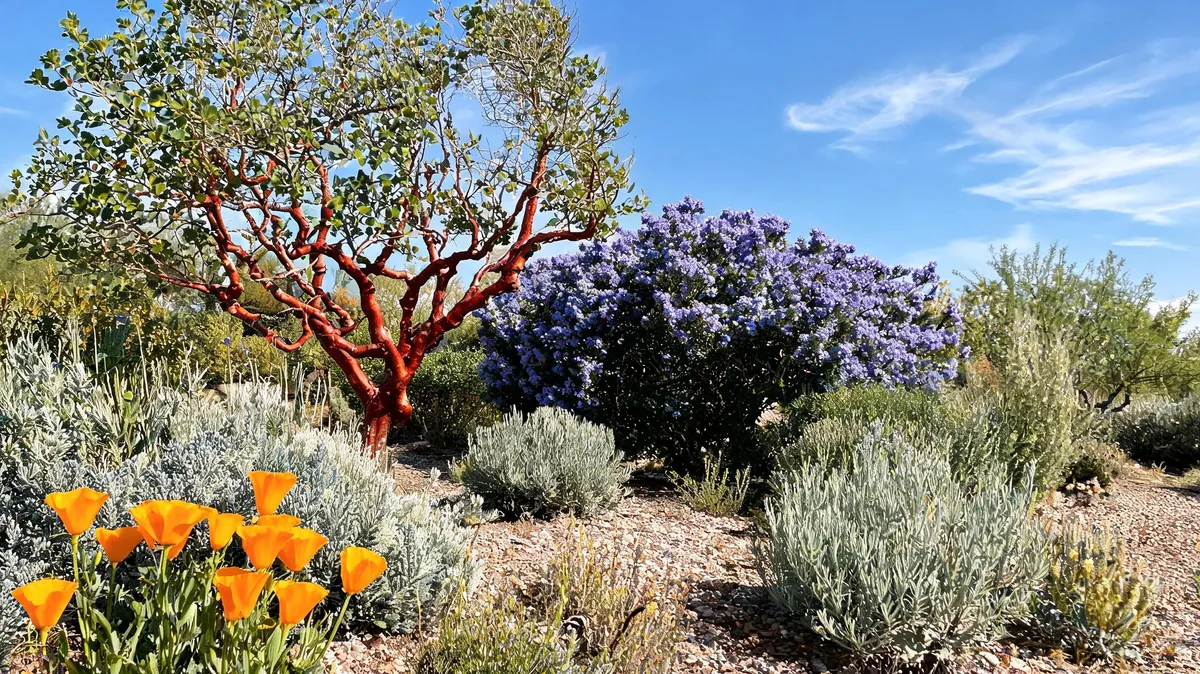
western mountain landscape garden
Photo: Unsplash on Unsplash

—- title: "Native Plants for the Western US: Prairie, Mountain, and Pacific" slug: native-plants-west hub: care category: Pollinator description: "Native plants for the Western US: prairie, mountain, and Pacific Coast species for zones 3–11, backed by UC ANR, Oregon State, WSU, and CSU Extension publications." date: 2026-06-10 updated: 2026-06-10 author: "Thomas A." reading_time: 11 —-

The western United States is not one region — it is several overlapping regions with dramatically different climates, soils, and native plant communities. The Great Basin desert, the California chaparral, the Pacific rainforest of the Coast Range, the Great Plains short-grass prairie, and the Rocky Mountain subalpine all have distinct native plant communities, and a recommendation appropriate for Portland is wrong for Phoenix and wrong for Denver. This guide addresses the three major landscape contexts: the Great Plains and interior mountain West, the Pacific Coast (California, Oregon, Washington), and notes the desert Southwest where it differs substantially.

USDA hardiness zones range from zone 3 in the Rocky Mountain high country and northern Great Plains to zone 11 in the low desert of California and Arizona. Summer drought is the defining challenge in most western landscapes — most precipitation falls October through April, and plants must survive a long dry summer. This is the fundamental difference between eastern and western native gardening.

The Great Plains and Interior Mountain West

The short-grass and mixed-grass prairies of the Great Plains, and the mountain meadows of the Rockies, share a community of drought-tolerant perennials that are among the most pollinator-rich in North America.

Trees and shrubs

Gambel oak (Quercus gambelii): Zones 4—8. The dominant oak of the Rocky Mountain foothills and Colorado Plateau. Per Colorado State University Extension, it is a thicket-forming shrub to small tree, deeply drought-tolerant, fire-adapted, and supports high caterpillar diversity. Wildlife value is very high.

Chokecherry (Prunus virginiana): Zones 2—9. Among the most widely distributed native shrubs/small trees in the West, from the plains to mountain foothills. White flower racemes in May are significant early-season bee forage; dark red-black fruits in late summer feed birds heavily. Per Colorado State University Extension, it tolerates a wide range of soils and exposures.

Rabbitbrush (Ericameria nauseosa): Zones 3—9. The late-season shrub of the Great Basin. Yellow flowers in August—October are the primary nectar source for native bees and migrating monarchs in arid interior landscapes. Per USDA PLANTS database, it tolerates extreme drought, alkaline soils, and disturbed sites. Among the most ecologically important shrubs in the Great Basin pollinator calendar.

Rubber rabbitbrush is the standard name, but the genus was recently split; both Ericameria nauseosa and Chrysothamnus viscidiflorus (green rabbitbrush) perform the same ecological function with overlapping ranges.

Wild plum (Prunus americana): Zones 3—8. See Midwest section — it extends through the Great Plains into the mountain West.

Perennials

Prairie coneflower (Ratibida columnifera): Zones 3—9. A drought-tolerant native of the short-grass prairie with distinctive drooping petals and a prominent central column. Blooms June—October with minimal water. Per Colorado State University Extension, it is one of the most reliable native perennials for western dry conditions.

Blanket flower (Gaillardia aristata): Zones 3—9. Orange-red composite flowers on the native prairie — not to be confused with the heavily hybridized cultivars sold commercially. The straight species grows 1—2 feet in dry, well-drained soils. Per CSU Extension, it is one of the longest-blooming native perennials in the mountain West.

Showy milkweed (Asclepias speciosa): Zones 3—9. The primary western monarch host plant. See monarch waystation article for detail.

Rocky Mountain penstemon (Penstemon strictus): Zones 3—9. A blue-purple flowered native for well-drained, rocky soils. Blooms May—July. The penstemon genus is the most diverse hummingbird genus in the western U.S. Per CSU Extension, it is among the most drought-tolerant native perennials available for Colorado gardens.

Blue wild indigo (Baptisia australis): Zones 3—9. A long-lived perennial of eastern prairies that extends into the central and mountain West. Indigo-blue flowers May—June. Very deep root system (reportedly to 12 feet in some plants) — drought-tolerant once established but slow to establish. Per University of Minnesota Extension, it is one of the longest-lived native perennials in cultivation.

The Pacific Coast: California, Oregon, Washington

The Pacific Coast receives most of its precipitation as winter rain and experiences long dry summers. This climate produces a native plant community — chaparral, coastal scrub, valley grassland, oak woodland — unlike anything else in North America. Per UC ANR, California alone contains approximately 6,000 native plant species, more than any other state.

Trees and shrubs

Pacific wax myrtle (Morella californica): Zones 7—9. An evergreen native shrub of California and Oregon coastal areas. Per Oregon State University Extension, it is a significant pollen source for native bees in late winter and early spring. Tolerates salt, wind, and poor drainage.

Red flowering currant (Ribes sanguineum): Zones 5—8. The premier early-spring hummingbird shrub of the Pacific Northwest. Per Washington State University Extension, ruby-red flower clusters in February—April are the first significant nectar source for Anna's and rufous hummingbirds in many Pacific Northwest gardens. It tolerates part shade and is widely available in the regional nursery trade.

Oregon grape (Mahonia aquifolium): Zones 5—9. An evergreen native shrub with yellow flowers in March—April that are significant early bee forage, followed by blue berries that feed birds. Per Oregon State University Extension, it is one of the most adaptable native shrubs for the Pacific Northwest, tolerating deep shade and dry soils.

Toyon (Heteromeles arbutifolia): Zones 7—10. A California native shrub/small tree (the "Christmas berry" that inspired Hollywood's name). Per UC ANR, toyon provides summer nectar for bees and fall-winter berries for birds — a two-season wildlife value. Tolerates drought and clay soils.

Ceanothus (multiple native species): The California lilacs are among the most important spring-blooming native shrubs in California and the Pacific Northwest. Blue, white, and lavender flower clusters in March—May are intensely visited by native bees. Per UC ANR, the genus includes ground covers (C. gloriosus), shrubs (C. 'Julia Phelps'), and small trees, zones 7—10 for most species.

Perennials

Yarrow (Achillea millefolium): Widely distributed native across western North America, zones 3—9. White flat-topped flowers June—September are significant bee forage. Per Oregon State University Extension, it tolerates drought, poor soils, and a wide range of exposures.

California poppy (Eschscholzia californica): Zones 5—10 (annual in cold climates). The state flower of California — orange-gold cups from March through late summer or fall in cool coastal climates. Per UC ANR, it is one of the most important native bee pollen sources in California, particularly for specialist mining bees.

Farewell to spring (Clarkia amoena): An annual native of California and the Pacific Northwest, zones 4—9. Pink-lavender flowers May—July. Significant native bee specialist species are associated with Clarkia genus. Grown from seed scattered in fall.

California fuchsia (Epilobium canum): Zones 8—11. Red tubular flowers August—November — the quintessential fall hummingbird plant in California. Drought-tolerant once established. Per UC ANR, it is one of the top hummingbird plants in the California native garden and blooms when few other hummingbird plants are active.

Hummingbird sage (Salvia spathacea): Zones 8—10. A California endemic with large rose-magenta flowers January—May. Very high hummingbird and native bee value. Per UC ANR, it tolerates shade and dry conditions — one of the few California natives for woodland garden conditions.

Goldenrod (Solidago californica, S. velutina): Pacific and western species distinct from eastern goldenrods. Yellow fall bloom critical for late-season bees and migrating monarchs in the coastal and interior West.

Plant table

Common NameScientific NameUSDA ZonesBloom TimeHeightPrimary Value
Gambel oakQuercus gambelii4–8Apr–May15–30 ftCaterpillar diversity; mast
ChokecherryPrunus virginiana2–9Apr–May10–25 ftBee pollen; bird fruit
RabbitbrushEricameria nauseosa3–9Aug–Oct2–4 ftCritical late-season arid West
CeanothusCeanothus spp.7–10Mar–May3–12 ftVery high bee value; CA/PNW
Red flowering currantRibes sanguineum5–8Feb–Apr6–12 ftCritical hummingbird; PNW
Oregon grapeMahonia aquifolium5–9Mar–Apr3–6 ftEarly bees; bird fruit
ToyonHeteromeles arbutifolia7–10Jun–Jul8–15 ftSummer bee; winter birds
Showy milkweedAsclepias speciosa3–9Jun–Aug2–4 ftMonarch host (West)
Rocky Mtn penstemonPenstemon strictus3–9May–Jul1–2 ftHummingbird; drought-tolerant
Prairie coneflowerRatibida columnifera3–9Jun–Oct1–3 ftDry prairie; long-blooming
Blanket flowerGaillardia aristata3–9Jun–Sep1–2 ftPrairie; bee generalist
Blue wild indigoBaptisia australis3–9May–Jun3–4 ftDeep-rooted; bumble bees
YarrowAchillea millefolium3–9Jun–Sep1–3 ftWide West native; bee forage
California poppyEschscholzia californica5–10Mar–Aug1 ftPollen; mining bee specialist
Farewell to springClarkia amoena4–9May–Jul1–3 ftClarkia specialist bees
California fuchsiaEpilobium canum8–11Aug–Nov1–3 ftRufous/Allen's migration
Hummingbird sageSalvia spathacea8–10Jan–May1–3 ftHummingbird; shade-tolerant
Scarlet giliaIpomopsis aggregata4–8Jun–Aug1–3 ftHigh hummingbird; montane
Western goldenrodSolidago velutina4–9Aug–Oct2–4 ftLate season; arid West
Blue gramaBouteloua gracilis3–9Jun–Sep1–2 ftPlains/mountain groundlayer

Water and establishment

The core principle for western native gardening, per UC ANR's Water-Wise Gardening resources, is establishment irrigation versus long-term irrigation. During the first two summers, most western natives require weekly deep watering to establish their root systems. After establishment — typically in year 3 — most need little or no supplemental irrigation in their native climate zones.

Per Oregon State University Extension, the most common error is irrigating established California and Great Basin natives on a summer schedule designed for non-native plants. This encourages fungal root rots and actually kills many established natives that expect summer drought stress as a signal to go semi-dormant.

Frequently asked

Do California native plants work in the Pacific Northwest?

Some do, but with important caveats. Per WSU Extension, many California natives are adapted to California's mild, dry winters and are marginal or zone-tender in the Pacific Northwest's colder winters. Red flowering currant, Oregon grape, ceanothus (hardier species), and coast live oak are widely used in the Pacific Northwest. Plants from coastal California with zone 8—10 ratings typically need protection in northern Oregon and Washington.

What are the best native plants for the Colorado mountains?

Per CSU Extension's mountain gardening resources, the high-altitude challenges (short season, late frosts, intense UV, thin soils) favor natives evolved in subalpine conditions. Recommended genera include penstemon (many western species to zone 3), yarrow, blanket flower, blue flax (Linum lewisii), mountain lupine, and rabbitbrush at lower elevations. The general principle is plant species native to your elevation, not just your state.

Are there native plants for the desert Southwest?

The Sonoran, Mojave, and Chihuahuan deserts support extraordinary native plant diversity outside the scope of this guide. Per University of Arizona Cooperative Extension, key pollinator plants for the desert Southwest include desert willow (Chilopsis linearis), saguaro (Carnegiea gigantea), penstemon species, desert marigold (Baileya multiradiata), and brittlebush (Encelia farinosa). The Desert Botanical Garden's plant list is the authoritative resource for Arizona and New Mexico.

What native grasses work in the Great Plains?

Per CSU Extension and University of Nebraska Extension, the most adaptable native grasses for short-grass prairie conditions are blue grama (Bouteloua gracilis), buffalo grass (Bouteloua dactyloides), little bluestem, and needle-and-thread grass (Hesperostipa comata). Blue grama and buffalo grass are the two most drought-tolerant of the group and are used as lawn alternatives in dry climates — they require no irrigation once established and grow 4—6 inches tall without mowing.

Recommended gear: Best [coneflower cultivars beyond purple](https://outdoorplantcare.com/plants/best-coneflower-cultivars/) — our buyer's guide covering picks for every budget, ranked by Extension publication consensus and personal use.

Sources

Sources