Regional

Gardening in the Midwest: Zones 4–6 Regional Guide

title: "Gardening in the Midwest: Zones 4–6 Regional Guide"
A pastoral Midwest farm field under a wide sky
Photo: Unsplash on Unsplash

—- title: "Gardening in the Midwest: Zones 4–6 Regional Guide" slug: gardening-in-the-midwest hub: care category: Care description: "Midwest US gardening guide for zones 4–6 across OH, IN, IL, MI, WI, MN, and IA. Covers clay and loam soils, compressed growing seasons, Japanese beetles, and native prairie plants." date: 2026-06-10 updated: 2026-06-10 author: "Thomas A." reading_time: 11 —-

The Midwest has some of the finest agricultural soil in the world and some of the most demanding gardening conditions in the continental US. The zone 4–5 northern tier (Minnesota, Wisconsin, northern Michigan) delivers winters that kill even well-established zone 5 plants in hard years. The zone 5–6 central corridor (Ohio, Indiana, Illinois, Iowa) is more forgiving but still faces compressed growing seasons, severe summer thunderstorms, and winter freeze-thaw cycles that heave poorly anchored plants from the ground.

This guide is based primarily on research from the University of Minnesota Extension, University of Illinois Extension, Ohio State University Extension, Michigan State University Extension, and Purdue University Extension (Indiana).

Table of Contents

  1. USDA Zones and Regional Geography
  2. Soil: Glacial Loam and Clay
  3. First and Last Frost Dates
  4. Seasonal Planting Calendar
  5. What Grows Best in the Midwest
  6. What Does Not Work
  7. Pest Pressure
  8. Disease Pressure
  9. Native Plant Recommendations
  10. Frequently Asked

—-

USDA Zones and Regional Geography {#usda-zones}

Per the USDA Plant Hardiness Zone Map:

ZoneMinimum Winter TempRepresentative Locations
Zone 4a-30 to -25°FInternational Falls MN, Upper Peninsula of Michigan
Zone 4b-25 to -20°FMinneapolis MN area, Duluth MN, northern Wisconsin
Zone 5a-20 to -15°FGreen Bay WI, central Minnesota, Traverse City MI
Zone 5b-15 to -10°FMadison WI, Lansing MI, Des Moines IA, Omaha NE
Zone 6a-10 to -5°FColumbus OH, Indianapolis IN, Peoria IL
Zone 6b-5 to 0°FCincinnati OH, southern Illinois, eastern Iowa

Lake Michigan moderates temperatures significantly along its western shore (Chicago, Milwaukee). Per University of Illinois Extension, the Chicago lakefront is effectively one zone warmer than inland areas at the same latitude, which has allowed the city's renowned horticultural gardens to grow plants that would fail 30 miles west.

—-

Soil: Glacial Loam and Clay {#soil}

The Midwest's signature soils are among the most productive in the world: deep, well-structured glacial till that became rich Mollisols (prairie soils) under thousands of years of tall-grass prairie. Per University of Minnesota Extension:

Per Iowa State University Extension, Iowa's topsoil averages 14–16 inches deep in native prairie remnants but has been reduced to 6–8 inches in many tilled fields through erosion. Home gardeners generally find soil fertility adequate without heavy amendment, but drainage improvement is often the highest-value first step.

—-

First and Last Frost Dates {#frost-dates}

Per NOAA National Centers for Environmental Information:

USDA ZoneRepresentative CityAverage Last FrostAverage First FrostGrowing Season
Zone 4bMinneapolis, MNMay 10–20October 1–10130–145 days
Zone 5aMadison, WIMay 5–15October 5–15140–155 days
Zone 5bDes Moines, IAApril 25–May 5October 15–25160–175 days
Zone 6aColumbus, OHApril 15–25October 25–November 5180–200 days
Zone 6bCincinnati, OHApril 10–20November 5–15195–210 days

The zone 4b growing season of 130–145 days is one of the shortest in the continental US. Per University of Minnesota Extension, this drives almost every gardening decision in the northern Midwest: indoor seed starting is not optional for warm-season crops, cold-hardy varieties are required for food production, and late-season frost is a perennial threat.

—-

Seasonal Planting Calendar {#planting-calendar}

Late Winter (February–March)

Per University of Minnesota Extension and University of Illinois Extension:

Early Spring (4–6 weeks before last frost)

Late Spring (After last frost)

Summer

Fall

—-

What Grows Best in the Midwest {#what-grows-best}

Based on trial garden performance data from University of Minnesota Extension, Ohio State Extension, and University of Illinois Extension:

PlantZonesNotes
Echinacea purpurea (purple coneflower) — native3–9Thrives across the Midwest; outstanding pollinator value
Hydrangea paniculata (panicle hydrangea)3–8The most reliable hydrangea for zones 4–5; per UMN Extension, blooms on new wood and is cut back each spring
Paeonia lactiflora (peony)3–8Extraordinary cold tolerance; per Iowa State Extension, peonies thrive in Midwest winters
Hosta spp.3–9Outstanding shade plant across all Midwest zones
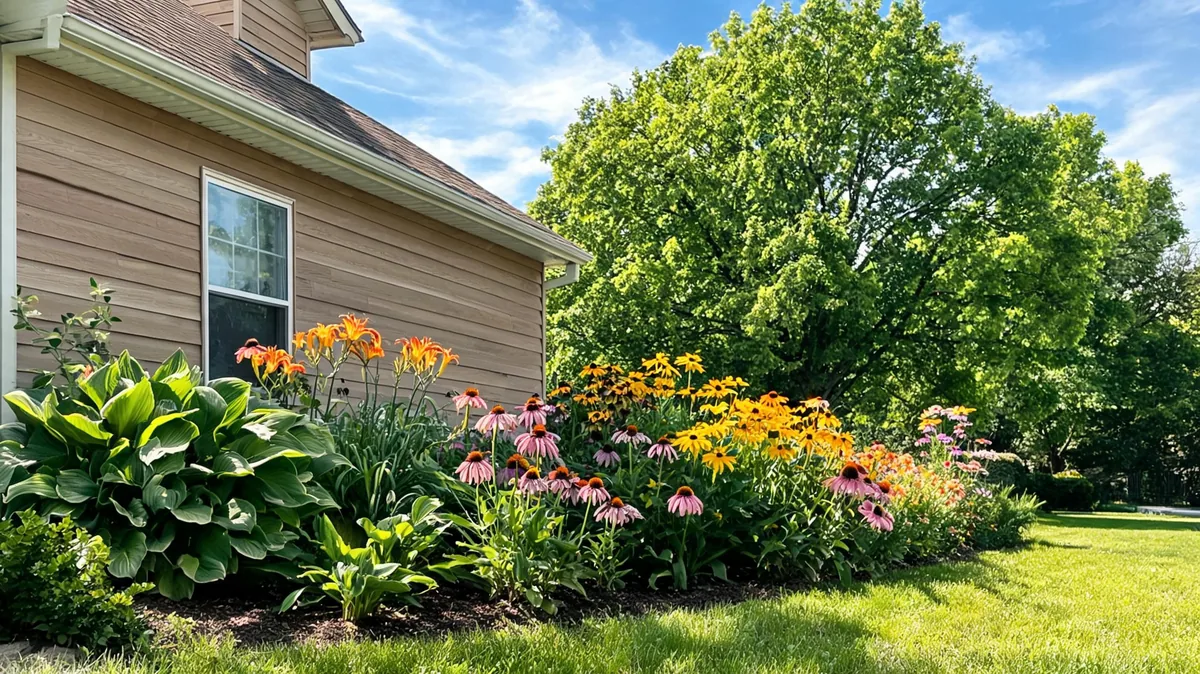
Rudbeckia fulgida 'Goldsturm' (black-eyed Susan) — native3–9Per Illinois Extension, the most reliable mid-summer yellow perennial for zone 5–6
Sweet corn (Zea mays)AnnualThe Midwest is peak sweet corn territory; per Iowa State Extension, choose 65–75 day varieties for zones 4–5
Baptisia australis (blue wild indigo) — native3–9Slow to establish but very long-lived in Midwest conditions
Calamagrostis acutiflora 'Karl Foerster'4–9Upright grass; tolerates clay soils and Midwest winters
Asparagus (Asparagus officinalis)3–8Long-term productive food crop in Midwest sandy to loam soils
Malus spp. (crabapple) — zone-appropriate cultivars4–9Midwest is prime crabapple territory; per Ohio State Extension, choose scab-resistant cultivars
Garlic (Allium sativum) — hardneck types3–8Hardneck garlic thrives in the Midwest's cold winters; per Iowa State Extension, plant in October
Viburnum trilobum (American cranberrybush) — native2–7Native viburnum; outstanding wildlife shrub for zones 4–5

—-

What Does Not Work {#what-does-not-work}

PlantWhy It FailsNotes
Lagerstroemia spp. (crape myrtle)Cold-sensitive; dies to ground or completely in zone 6 most winters; not viable zone 4–5Not suited to the Midwest
Camellia spp.Not cold-hardy below zone 7b; kills in zone 4–6 wintersContainer-only with winter storage in zones 5–6
Gardenia jasminoidesCold-sensitive; not hardy below zone 7bContainer-only in the Midwest
BougainvilleaTropical; not hardy below zone 9bSummer container plant at best
Figs (Ficus carica)Hardy only to zone 7a; die to ground in zones 4–6 most wintersPer University of Illinois Extension, zone 6 gardeners can attempt fig with heavy winter mulching—results inconsistent
Rosemary (Salvia rosmarinus)Not reliably hardy below zone 7a; winter-kills in most Midwest wintersPer UMN Extension, grow as an annual or in containers brought in each fall

—-

Pest Pressure {#pest-pressure}

Japanese Beetle

Popillia japonica is established throughout the Midwest, with particularly severe populations in Ohio, Indiana, Illinois, and lower Michigan. Per Ohio State University Extension, adult beetles feed on over 300 plant species; grub damage to lawns is often more noticeable than adult foliar damage. Per Ohio State Extension, adult flight peaks in early-to-mid July in zone 6; slightly later (mid-July through August) in zones 4–5.

Management per Ohio State Extension: for grubs, apply chlorantraniliprole to lawns in June (before hatch) for best results; milky spore granular (Bacillus popilliae) is effective organically but requires 2–3 seasons to establish. For adults, hand-pick in the morning; neem oil is a deterrent. Do not use Japanese beetle traps—per Ohio State Extension, they attract more beetles than they catch.

Japanese Beetle and Deer — The Midwest One-Two

Deer pressure in the Midwest is highest in the suburban corridors of Ohio, Indiana, and Illinois, where white-tailed deer populations have expanded in the absence of natural predators. Per University of Illinois Extension, deer pressure in central Illinois suburbs has increased significantly since 2000. Physical exclusion (fencing) is the most reliable method.

Corn Earworm/Tomato Fruitworm

Helicoverpa zea is the primary pest of sweet corn and tomatoes in the Midwest. Per Purdue University Extension, corn earworms overwinter in the South and migrate north each summer; populations build through August. Per Purdue Extension, applying Bt (Bacillus thuringiensis (BT spray)) to corn silk at the beginning of silk emergence prevents most earworm damage.

PestTarget PlantsPrimary Source
Japanese beetle (Popillia japonica)Roses, linden, birch, basil, grapesOhio State Extension
Corn earworm (Helicoverpa zea)Sweet corn, tomatoesPurdue Extension
Cabbage worms (Pieris rapae)BrassicasUMN Extension
Squash vine borer (Melittia cucurbitae)Summer squash, zucchiniIllinois Extension
Deer (Odocoileus virginianus)All ornamentals, vegetablesIllinois Extension
Emerald ash borer (Agrilus planipennis)Fraxinus spp.Michigan State Extension

—-

Disease Pressure {#disease-pressure}

DiseasePathogenMost Affected PlantsNotes
Powdery mildewErysiphe spp.Phlox, squash, cucumbers, bee balmPer Illinois Extension, common in Midwest humidity; resistant cultivars and good air circulation are primary controls
Bacterial wilt of cucurbitsErwinia tracheiphila (spread by cucumber beetle)Cucumbers, squashPer Ohio State Extension, cucumber beetles are the vector; controlling beetles prevents bacterial wilt
Septoria leaf spotSeptoria lycopersiciTomatoesPer Illinois Extension, lower-leaf infection begins by late June; copper fungicide slows progression
Fire blightErwinia amylovoraApples, pears, crabapplesPer Ohio State Extension, warm wet spring conditions; choose resistant crabapple cultivars
Verticillium wiltVerticillium dahliaeTomatoes, strawberries, potatoesSoil-borne; per UMN Extension, rotate solanaceous crops on 3-year minimum
Dutch elm diseaseOphiostoma ulmi, O. novo-ulmiAmerican elm (Ulmus americana)Per MSU Extension, introduced fungus spread by elm bark beetles; no cure; use disease-resistant cultivars

—-

Native Plant Recommendations {#native-plants}

Per University of Minnesota Extension, Illinois Extension, and the Lady Bird Johnson Wildflower Center:

PlantUSDA ZonesWildlife ValueNotes
Echinacea purpurea (purple coneflower)3–9Native bees, goldfinches (seed heads)Foundational prairie native
Baptisia australis (blue wild indigo)3–9Native beesSlow to establish; extremely long-lived
Andropogon gerardii (big bluestem)3–9Ground-nesting birds, small mammalsThe signature tall-grass prairie grass
Symphyotrichum oblongifolium (aromatic aster)3–9Monarchs, native beesOutstanding fall-blooming native aster
Lobelia cardinalis (cardinal flower)2–9HummingbirdsMoist garden sites and stream margins
Quercus macrocarpa (bur oak) — tree2–8400+ caterpillar speciesOne of the hardiest native oaks; zone 4 tolerant
Penstemon digitalis (foxglove beardtongue)3–8Native beesEasy native for Midwest gardens
Solidago speciosa (showy goldenrod)3–8Native bees, butterfliesPer UMN Extension, one of the best-behaved goldenrod species for garden use

—-

Frequently Asked {#frequently-asked}

What zone am I in Chicago?

Per the USDA Plant Hardiness Zone Map, Chicago and close northern suburbs are zone 6a. The lakefront areas of the city (within a mile of Lake Michigan) are zone 6b due to the lake's thermal moderation. Suburbs 20–30 miles west are zone 5b. Per University of Illinois Extension, the zone gradient can shift dramatically within a 10-mile distance in the Chicago metro area depending on proximity to Lake Michigan.

Can I grow peonies successfully in Minnesota zone 4?

Yes. Per University of Minnesota Extension, peonies are among the most cold-hardy perennials available—they are reliably hardy to zone 3 and require the cold winters that the Midwest delivers. They need at least 500 chill hours below 40°F to bloom (which the upper Midwest provides in abundance), well-drained soil, and full sun. The "eyes" (dormant buds) should be planted 1–2 inches below the soil surface—deeper planting prevents blooming. Per UMN Extension, mulch crowns lightly in zone 4 the first winter after planting.

What should I do with Japanese beetles in Illinois?

Per Illinois Extension, the most effective integrated approach for home gardens is: (1) hand-pick adults in the morning when temperatures are below 60°F and beetles are sluggish; drop into a bucket of soapy water; (2) apply chlorantraniliprole to lawn areas in June to kill grubs before they damage roots (this also reduces next year's adult population); (3) plant less-preferred species where possible — Japanese beetles show strong preference for roses, lindens, and grapes; they rarely damage ornamental grasses, conifers, or most vegetables. Per Illinois Extension, Japanese beetle traps attract more beetles to an area than they catch; do not use them.

When is the last frost date in Minneapolis?

Per NOAA climate data, the average last frost date in Minneapolis (zone 4b) is May 10–15. But per University of Minnesota Extension, this is a 50% probability date—there is a significant chance of frost after this date in any given year. Use May 20 as a more conservative working date. Do not transplant tomatoes, peppers, or other frost-sensitive crops before May 20 in zone 4b Minneapolis.

—-

Recommended gear: Best Floating Row Covers for Pest Exclusion (2026) — our buyer's guide covering picks for every budget, ranked by Extension publication consensus and personal use.

Sources

  1. University of Minnesota Extension &mdash; <a href="https://extension.umn.edu/">UMN Extension Home</a>.
  2. University of Illinois Extension &mdash; <a href="https://extension.illinois.edu/">Illinois Extension Home</a>.
  3. Ohio State University Extension &mdash; <a href="https://ohioline.osu.edu/">OSU Extension Home</a>.
  4. Michigan State University Extension &mdash; <a href="https://www.canr.msu.edu/">MSU Extension Home</a>.
  5. Purdue University Extension &mdash; <a href="https://extension.purdue.edu/">Purdue Extension Home</a>.
  6. Iowa State University Extension &mdash; <a href="https://www.extension.iastate.edu/">Iowa State Extension Home</a>.
  7. USDA Agricultural Research Service &mdash; <a href="https://planthardiness.ars.usda.gov/">USDA Plant Hardiness Zone Map</a>.
  8. NOAA National Centers for Environmental Information &mdash; <a href="https://www.ncei.noaa.gov/">Climate Data</a>.
  9. Lady Bird Johnson Wildflower Center &mdash; <a href="https://www.wildflower.org/">Native Plant Database</a>.

Sources